Inn with the inn-crowd

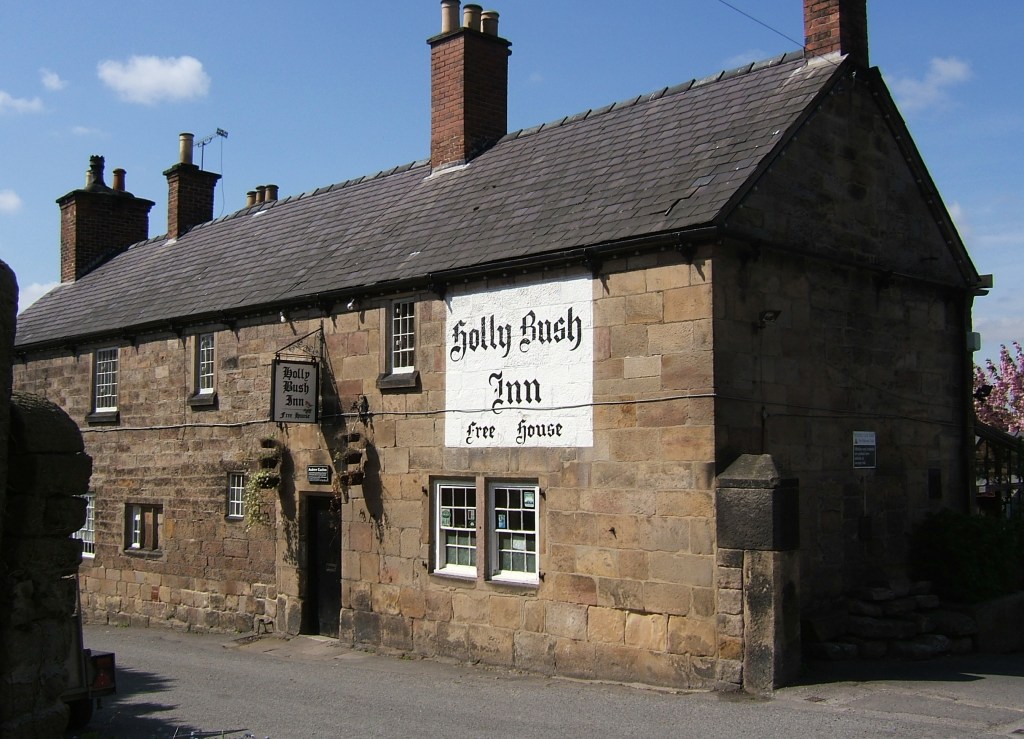
The Holly Bush Inn at Makeney

As turnpike roads made travel more comfortable in the eighteenth century, roadside inns had to provide more services for coach teams as well as refreshments for the passengers. Previously they would have catered for travellers on horseback, or jaggers with their packhorse trains, but by the mid-century they might need stabling for 80 horses, as well as feeding a dozen hungry passengers. Older inns such as The Holly Bush (above) had to expand, while others were developed at strategic locations, like the Peacock at Oakerthorpe, which is at the junction of two turnpike routes (its website claims it is 11th century, which seems unlikely). As the name suggests, this hostelry was once owned by the Duke of Rutland, as was the Peacock at Rowsley: this bird being the family crest.
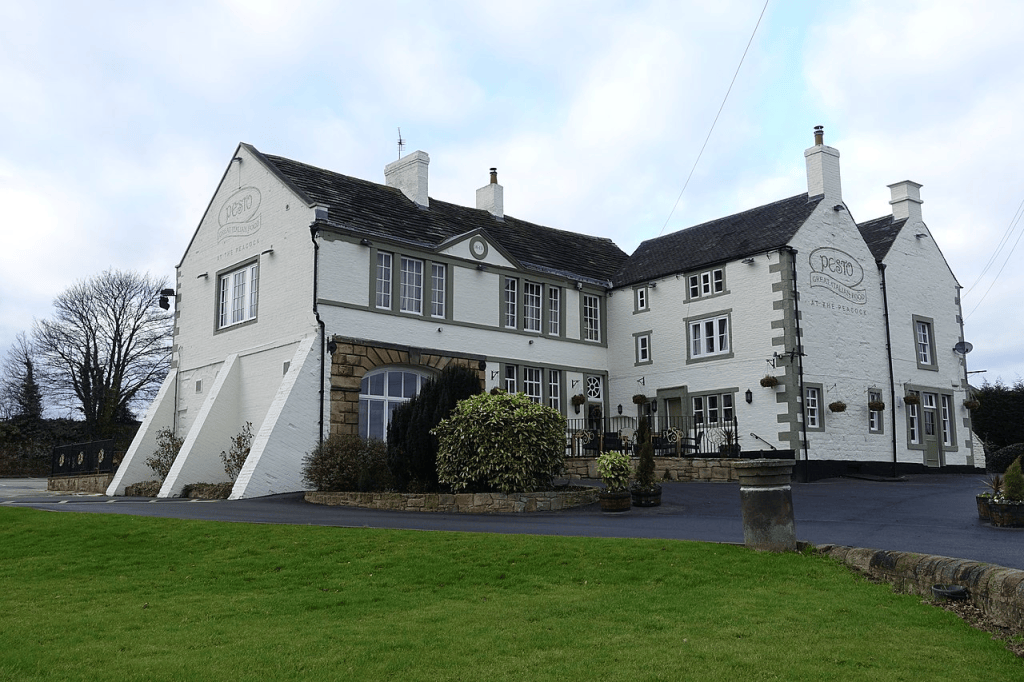
Hospitality at the crossroads: The old Peacock at Oakerthorpe

The heyday of the coaching inn was in the early nineteenth century, when mail coaches joined stage coaches on the roads, and most towns were on the coaching network. This was almost always run from an inn, where seats on board could be booked. These new or expanded inns must have been major employers: horses had to be changed every 10-15 miles, so ostlers and stable lads were needed in the yard to harness the teams, while indoors maids, cooks and waiters served the diners, who had to be fed quickly, before the coach set off again. Dickens provides a lively description of his ideal inn, The Marquis of Granby, in The Pickwick Papers. Oddly, although Dickens sets this perfect pub near Dorking, the Marquis of Granby is a title used by the Manners/Rutland family:

The Marquis of Granby in Mrs Weller’s time was quite a model of the roadside public house of the better class – just large enough to be convenient, and small enough to be snug. On the opposite side of the road was a large sign-board on a high post, representing the head and shoulders of a gentleman with an apoplectic counternance, in a red coat with deep blue facings, and a touch of the same blue over his three-cornered hat, for a sky. Over that were a pair of flags; beneath the last button of his coat were a couple of cannons; and the whole formed an expressive and undoubted likeness of the Marquis of Granby of glorious memory.
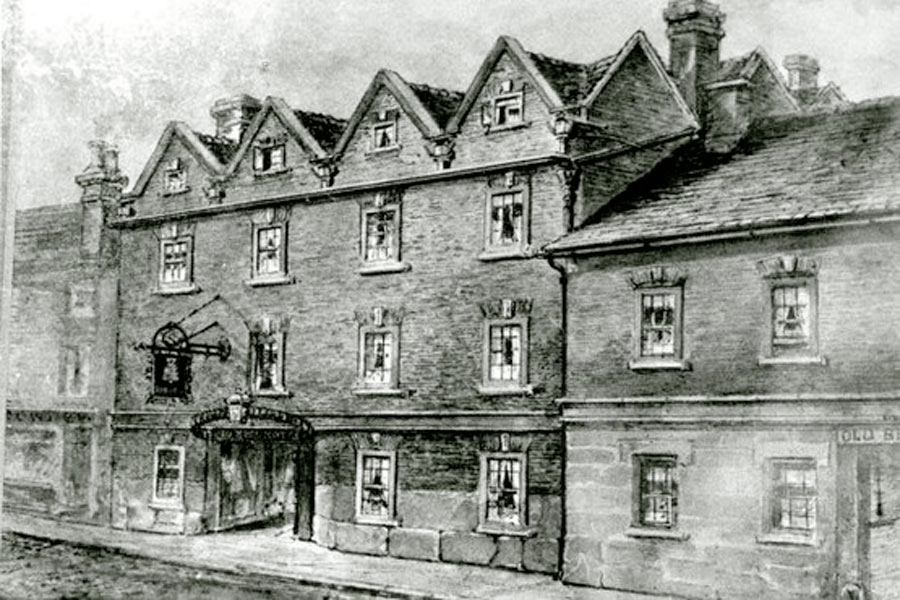
The Old Bell, Sadler Gate, Derby

The Old Bell (above) is a rare example of a coaching inn which has more or less survived, although its facade is now covered in fake half-timbering. Claiming a date of 1650, the drawing shows the elaborate iron sign hanging over the entrance, which led to the stable yard. Most coaching inns had a similar pattern, often with an arched entrance and balconies around the yard, where bedrooms were located. Burdett’s map of Derbyshire (1791 edition) shows all the parks and mansions of the gentry, but only four inns: The Brown Bear near Alderwasley, The New Inn near Quorn, the New Inns (sic) on the Ashbourne to Buxton turnpike, and the New Inn at Hardwick Hall (this last in Nottinghamshire, but still on the map!) Clearly a random collection, but suggestive of the growth of the inn business at that time, especially near the great houses, such as Kedleston. But by 1850 most roadside inns were in decline as the railways took their passengers, and we rely on the nostalgia of Dickens to imagine the lost glories of their golden era.
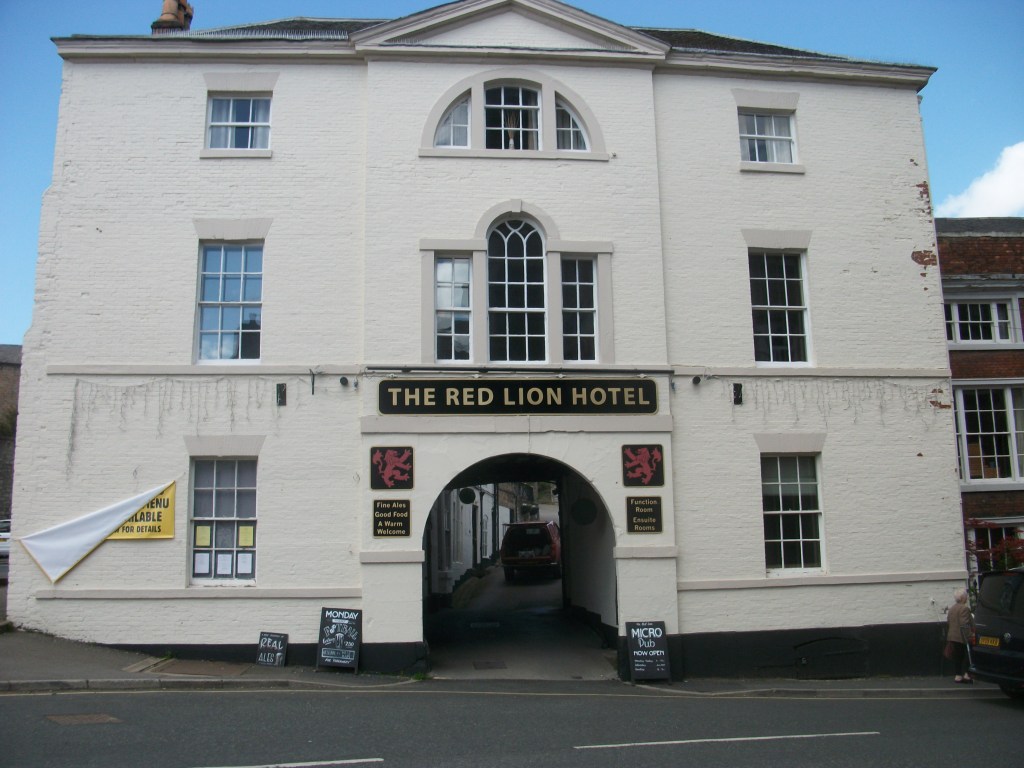
The Red Lion, Wirksworth

Fixing a hole …

The Stonebreakers / Gustave Courbet 1858

Repairing holes in roads must have been one of the worst jobs in the pre-industrial world. Courbet was not the only artist attracted to the subject: his pair of stone breakers represent a class of unskilled labourers never previously regarded as a suitable subject for art, the viewer feels their dusty, sweaty toil . In contrast, John Brett’s The Stone Breaker (also 1858) portrays an almost idyllic scene; lovely weather, a handsome young lad on the job, and his dog amusing itself. The milestone in the corner (London 23) is a reminder that he is also filling in holes, and to do so required stone to be broken into small fragments to create an all-weather surface.

The Stone Breaker/ John Brett 1858

One of the earliest attempts to deal with the problem of road maintenance was made in 1555 when the Statute of Labour was passed, which gave responsibility for this to the parish. They were obliged to choose a Highway Surveyor, who had the unenviable task of getting all householders to work on the roads for four days a year (later increased to six). Farmers with horses and carts were also required to lend these to move stone. Clearly this system was unfair, since if the Great North Road ran through your parish there would be far more wear and tear than if, say, you lived in Bonsall. However, despite the drawbacks, roads were more or less kept open, and people and goods moved around. Even after the main routes were turnpiked from the mid-eighteenth century, unpaid labour was still required. This is shown locally in the diary of Rowsley farmer Mathew Gibbons, who records his father doing roadwork for six days in 1761-2.

That sinking feeling

Clearly this is not a problem that has gone away. A recent report states that potholes are the biggest worry for drivers today, which will surprise no-one who has tried driving or cycling on our Derbyshire roads in the last few years. Perhaps it’s time to go back to the parish system and get everyone out, once a month, for some DIY patching!

The way through the woods

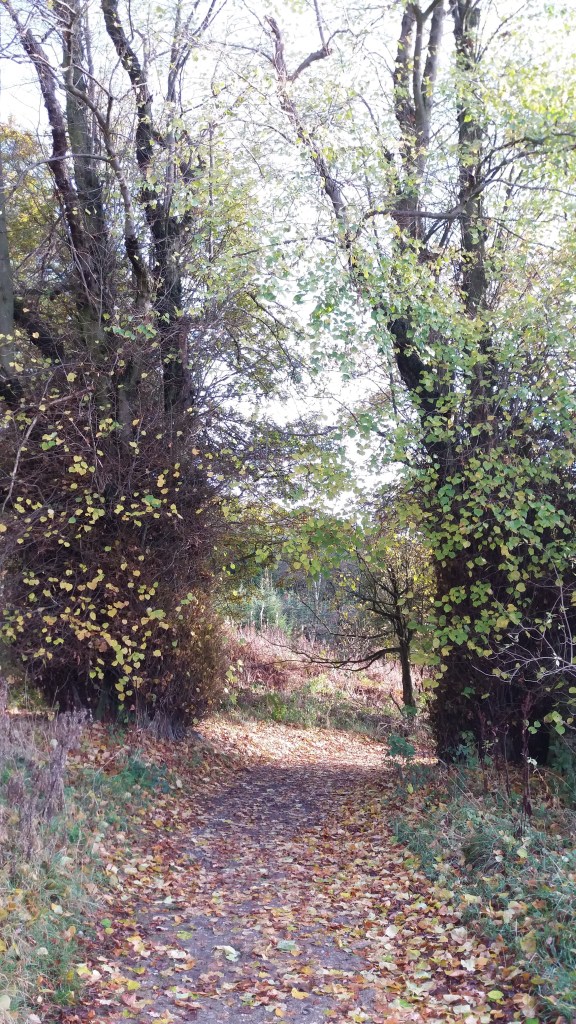
In Bow Wood near Lea Bridge

Over time, many routes have been abandoned, due to changes in settlement patterns, agriculture or the construction of better, easier roads. The medieval route through Bow Wood from Castletop farm to Lea Bridge, shown above, is now a rough track, but its previous status is revealed by the stone gateposts, indicating a width suitable for carts or carriages.

The image of the lost road has always had romantic appeal, an appeal explored by Kipling in his poem ‘The way through the woods’:

They shut the road through the woods

Seventy years ago.

Weather and rain have undone it again,

And now you would never know

There was once a road through the woods

Before they planted the trees.

It is underneath the coppice and heath

And the thin anenomes.

Only the keeper sees

That, where the ring-dove broods,

And the badgers roll at ease,

There was once a road through the woods.

Yet, if you enter the woods,

On a summer evening late,

When the night-air pools on the trout-ringed pools

Where the otter whistles his mate,

(They fear not men in the woods,

Because they see so few)

You will hear the beat of a horse’s feet,

And the swish of a skirt in the dew,

Steadily cantering through

The misty solitudes,

As though they perfectly knew

The old lost road through the woods …

But there is no road through the woods.

The pre-turnpike road from Rowsley to Bakewell

Today some of the ‘lost roads’ survive as footpaths with public rights of way, kept open by dog walkers and hikers. However, especially in high summer when the vegetation reaches shoulder height, and encroaches on the path from both sides, it is easy to see how fast an unsurfaced route can disappear. Perhaps the surprising thing is the number of roads that have survived over hundreds or thousands of years, rather than those that have disappeared.