‘Forgive us our …’

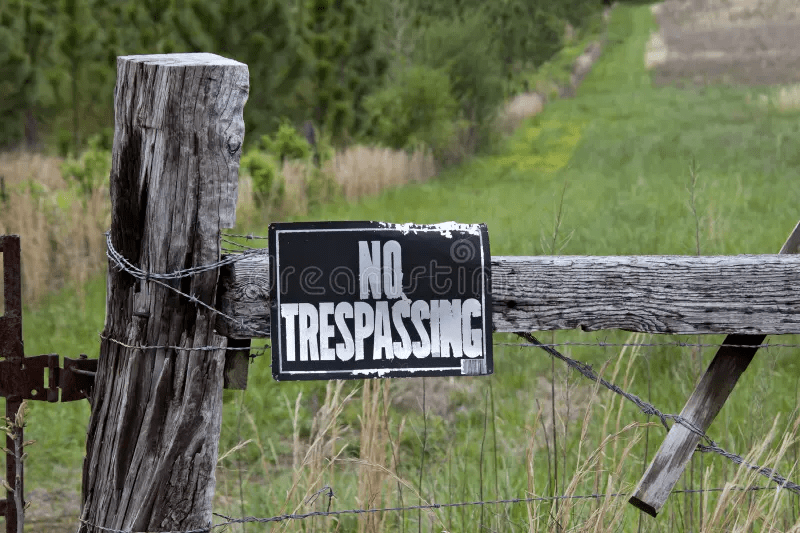
The fear of being caught ‘trespassing’ is still common, which is perhaps why towpaths and ex-railway trails are so crowded with walkers. But defining exactly what trespassing means in law is difficult, and in most cases it is only a civil offence, meaning that few landowners would bother to prosecute. But the fear of being confronted by an angry farmer is still potent, even if the days of gamekeepers and their shotguns, or even mantraps, have long gone.
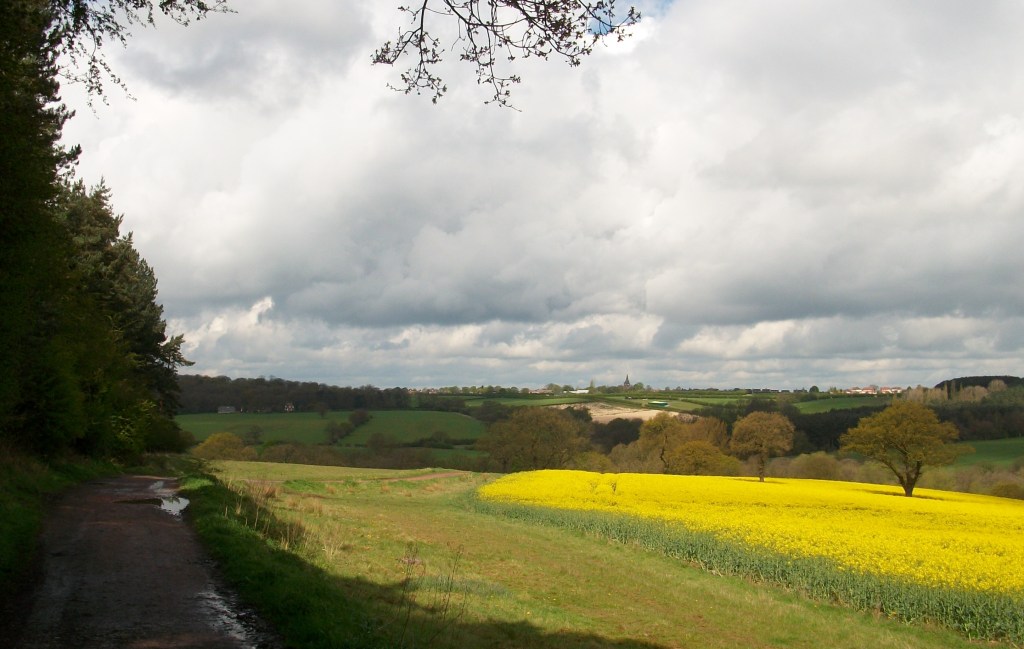
Looking north to Brinsley and Underwood from track by High Park Wood.

The situation is nicely depicted in DH Lawrence’s early (1910) story The Shades of Spring. A young man, Addy, who was brought up in this district on the Derbyshire/ Nottinghamshire border, but who has now moved away, is revisiting his old haunts. He is walking through the woods to the farm where his ex-sweetheart, Hilda, lives, but in the wood his path is blocked by a young gamekeeper:

‘Where might you be going this road, sir?’ The tone of his question had a challenging twang.

The use of ‘sir’ reveals the keeper’s dilemma: was he speaking to a gentleman or one of the local colliers? A guest at the ‘House’ would be free to go where they wished, but in the story Addy tells the keeper, Arthur, that he’s been away from the area for years, and he’s on his way to Hilda’s farm. Arthur then reveals that he’s now courting Hilda, and clearly resents Addy maintaining his friendship with her through correspondence. After a difficult conversation Addy continues on the path to the farm, despite Arthur’s sullen objections.
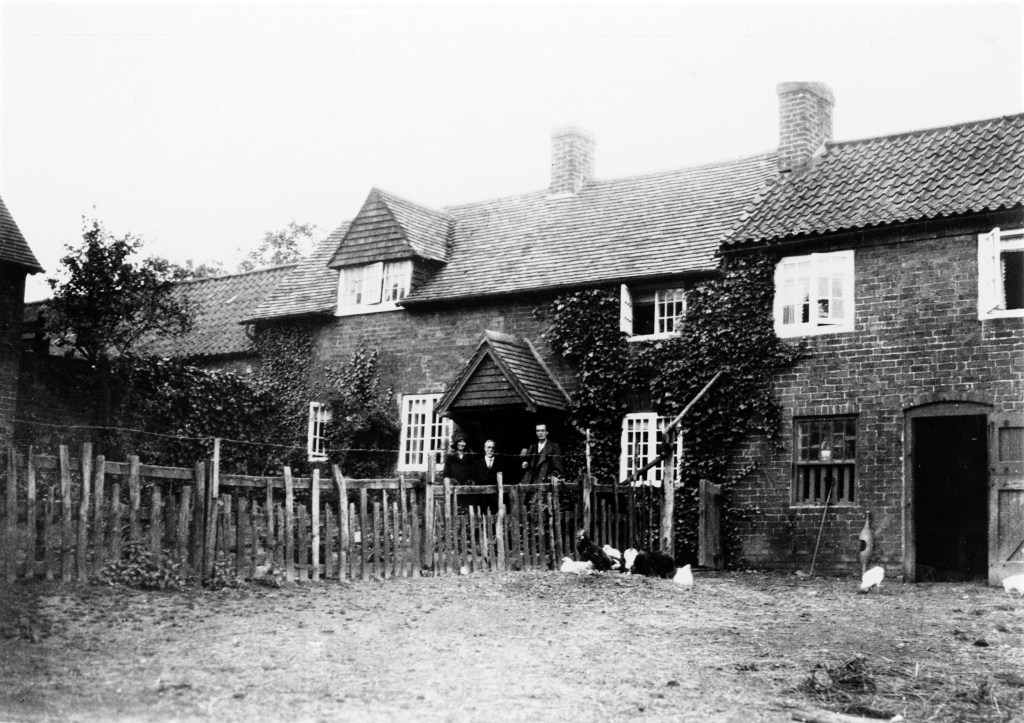
Haggs Farm in the 1930s

Like much of Lawrence’s early fiction this story is partly based on his own life. His unhappy relationship with Miriam Chambers, who lived at Haggs Farm near Felley Mill, Moorgreen, is famously depicted in his Bildungsroman ‘Sons and Lovers’. Lawrence had idealised Miriam as a spiritual being, when, as this story shows, she was more interested in a physical relationship than French poetry. The story concludes with her showing Addy the woodland love nest that Arthur had created for her, a cabin erotically if improbably furnished with animal skins. This is an interesting forerunner to the hut in ‘Lady Chatterley’s Lover’, written much later, in which Mellors had his tryst with Connie. The model for both could have been this rather shabby shack in High Park Wood (below), almost certainly known to the young writer.
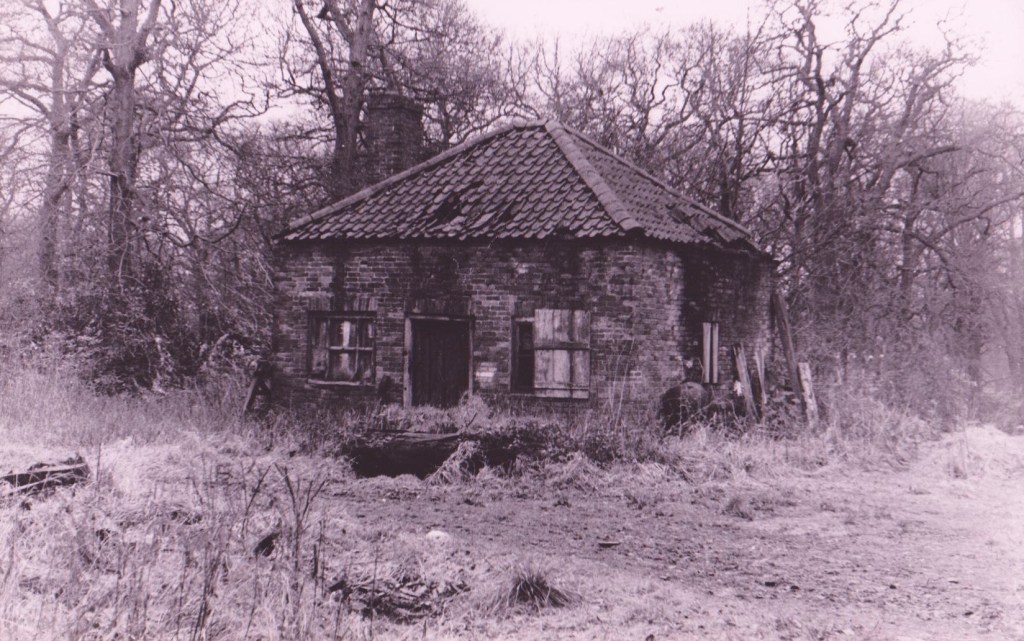
Less than romantic

So the story deals with two kinds of trespass: entering private land, but also Addy’s attempted trespass on Hilda, who Arthur clearly believes is now his private property. The story concludes when Addy is about to reluctantly depart; Arthur is stung by a bee, and, in a powerful image, Hilda sucks the poison from his arm, and oblivious to the now-forgotten Addy, the couple begin a passionate kiss.
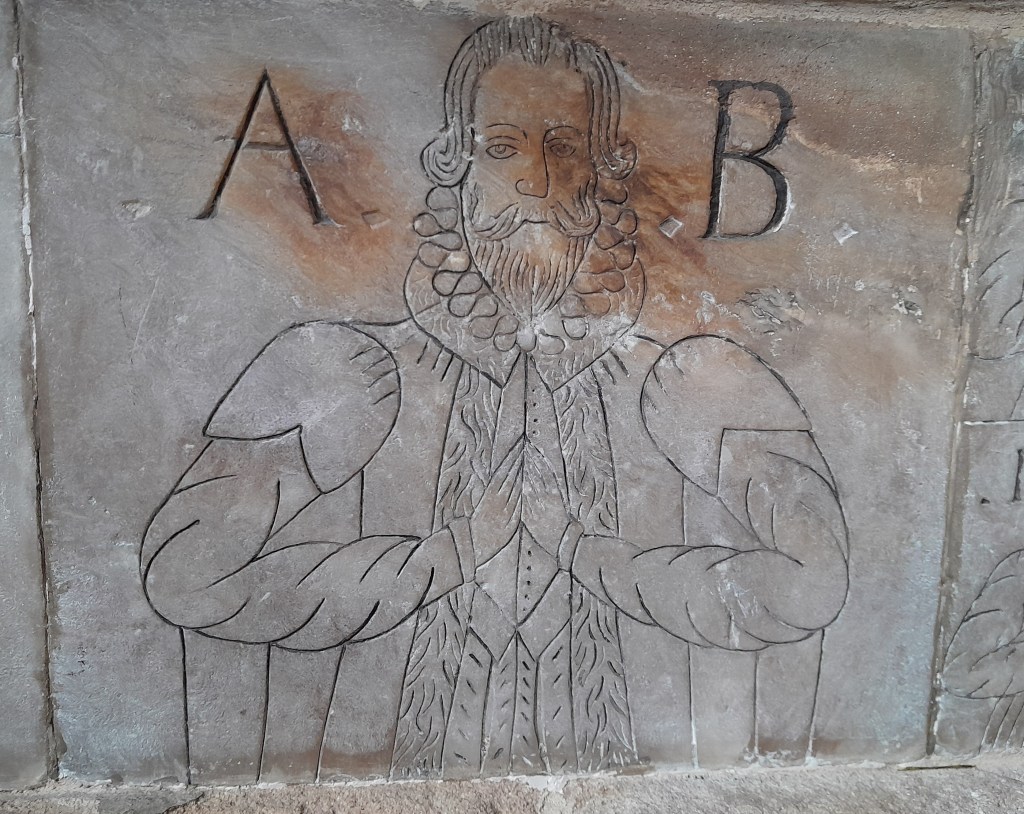
Acrostic Anthonie of the Frith

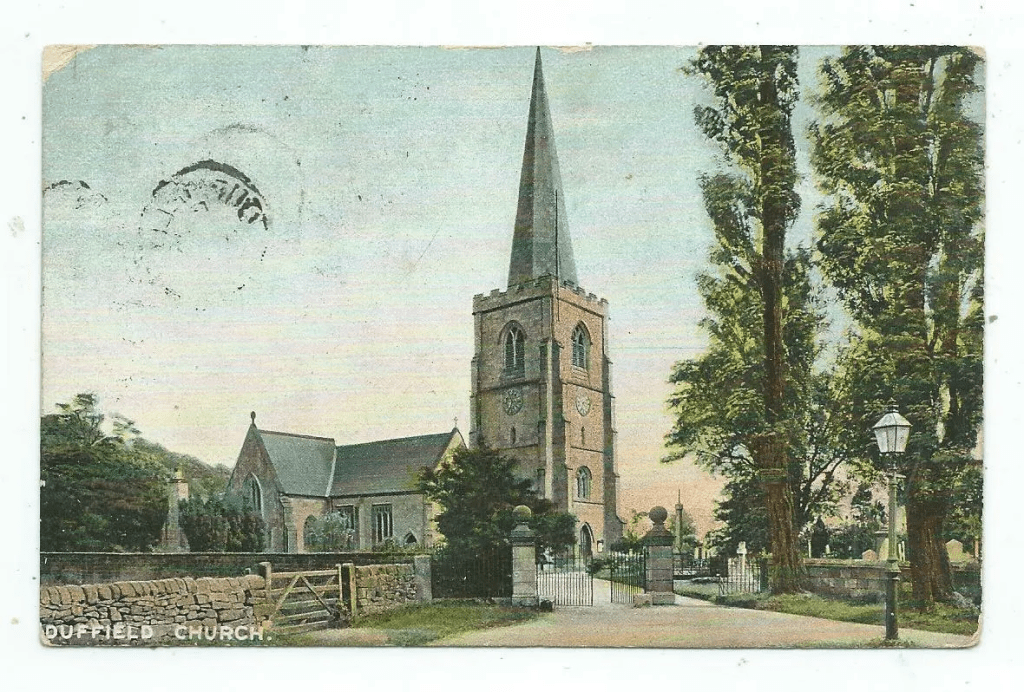
Duffield church, on a dry day

St Alkmund’s, Duffield church, seems to have a curious location. It’s right by the River Derwent and near the confluence with the Ecclesbourne, a position which has led to repeated flooding over the years, though the village was mainly built on higher ground. Yet the church is also on what was the main turnpike route from Derby north to Chesterfield, which crossed the Derwent close by, before heading uphill to Holbrook. Until the early nineteenth century there was no bridge at Milford.

To the north, the ridge of high ground is criss-crossed by many footpaths, and in this web of paths is Day Park, believed to have been the home of the Bradshaw family. In medieval times Duffield parish was much larger than today, including Heage, Belper and Holbrook, and some of these routes would have provided access to the parish church. By the end of the sixteenth century Duffield Frith, once famous for its deer and boar, was a decayed royal hunting park, and Anthony Bradshaw was the Deputy Steward.

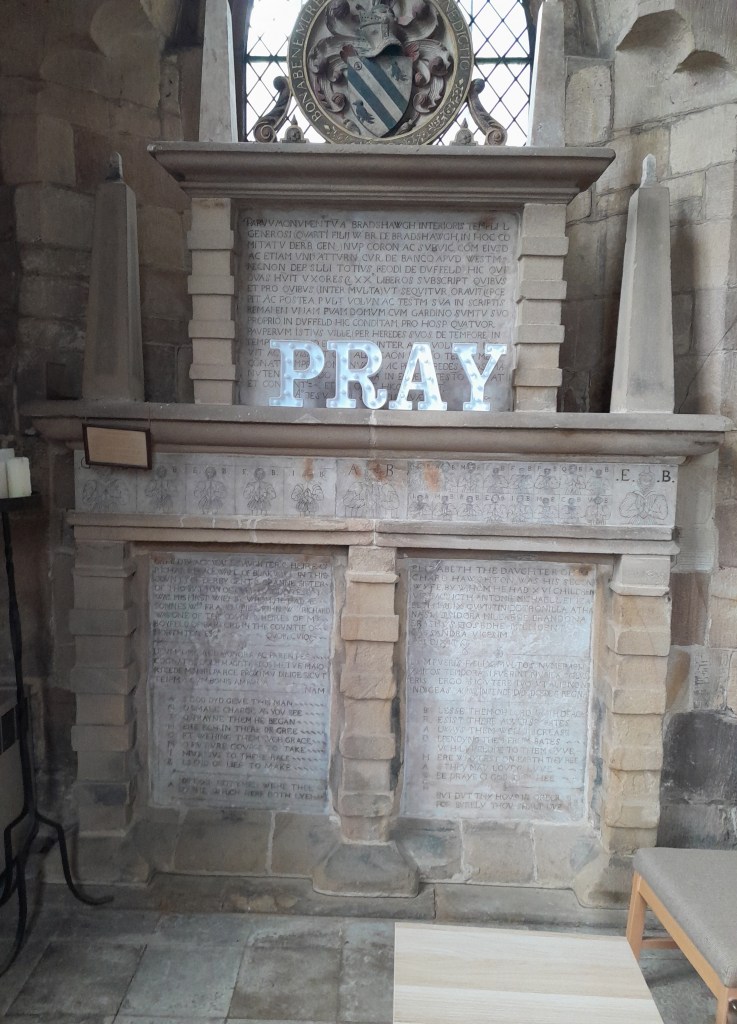
In contrast to many notables of the period we know something of the man’s character, since he left a memorial to himself and his family in Duffield church. Unusually, this was erected in 1600, long before he died in 1614, and clearly was designed by himself. The memorial can be found in a side chapel on the north side of the nave, and has thumbnail pictures of himself and his family, with his first wife on the left and the second on the right.

The Bradshaw Memorial

His first wife was Grisilda Blackwall from Over Haddon, by whom he had four sons (no dates are given), as can be seen in the left-hand strip. Elizabeth Hawghton was his second wife, and she had produced 16 children by the time of the memorial, who are listed as:

Jacinth, Anthonie, Michaell, Elizabeth, Felix, Quyntin, Petronilla, Athanasia, Isidora, Mildrede, Brandona, Erasmus, Joseph, Millicant, Cassandra, Vicesim.

Unwilling to stop at 20, the happy couple went on to have several more after the monument was built, including one called Penultima – clearly finding names had become a problem! Unfortunately we have no record of their dates of birth, nor how many survived infancy. Bradshaw was not just a proud father, but was also a wordsmith, and he devised an exemplary acrostic for the family memorial, setting out his wishes for his children:

B less them O Lord with peace

R esist their adverse fates

A lways them well increase

D efending them from bates

S uch livelode to them give

H ere whylst on earth they bee

A s they may love and live

W e praye O God quoth he

The man himself

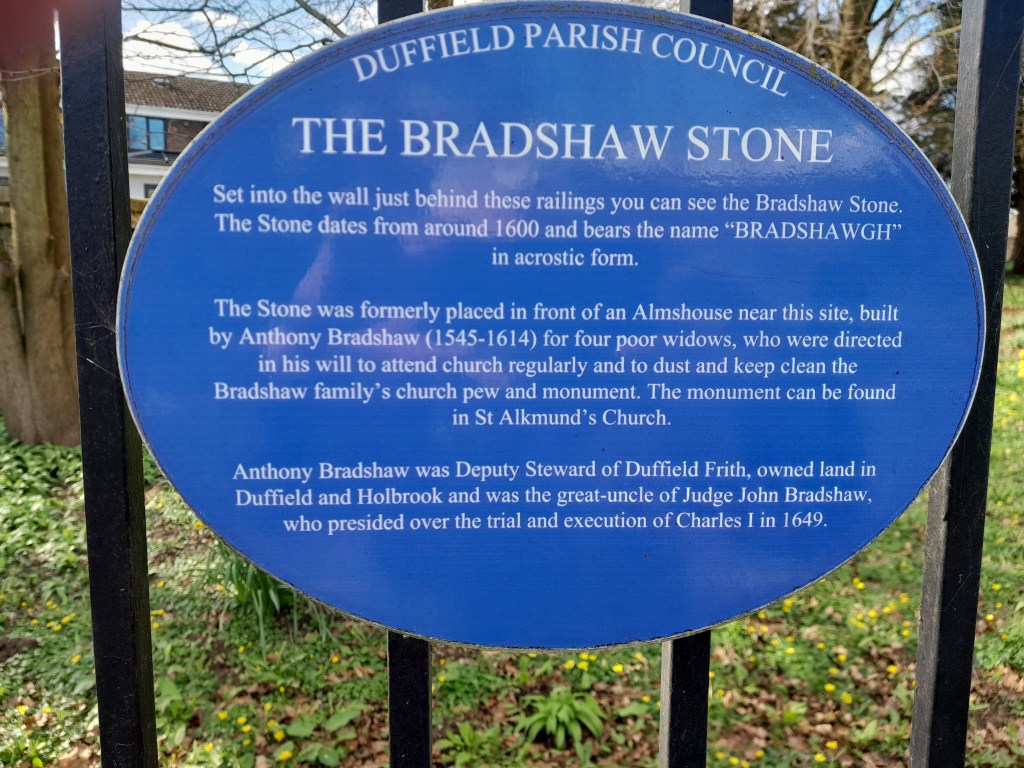
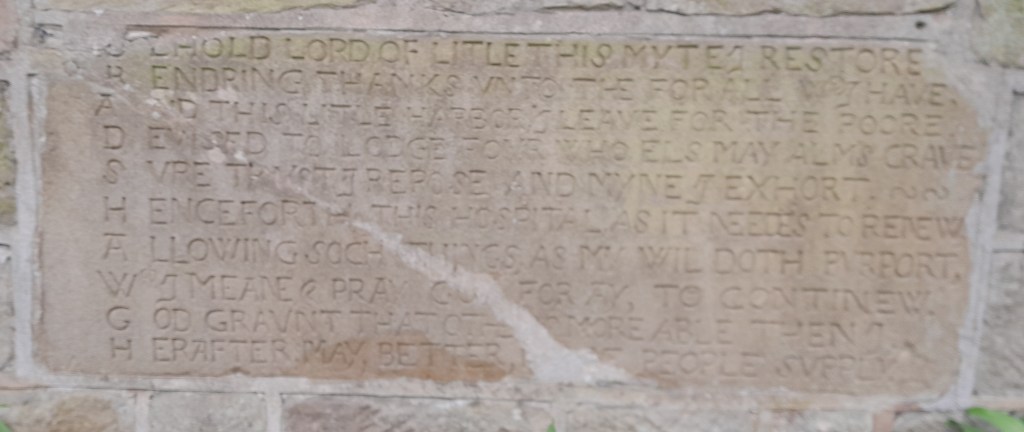
Bradshaw (1545 – 1614) was also a public benefactor, building four almshouses for poor widows on the site of the present Baptist Chapel , just opposite the sign below. In return for their house the widows were required to keep the family memorial clean and dust the family pew – presumably a convenient arrangement all round.

The stone contains another acrostic, on the same lines as the one in the chapel. Consistency was not a feature of Elizabethan spelling, and here is an alternative version of the family name: