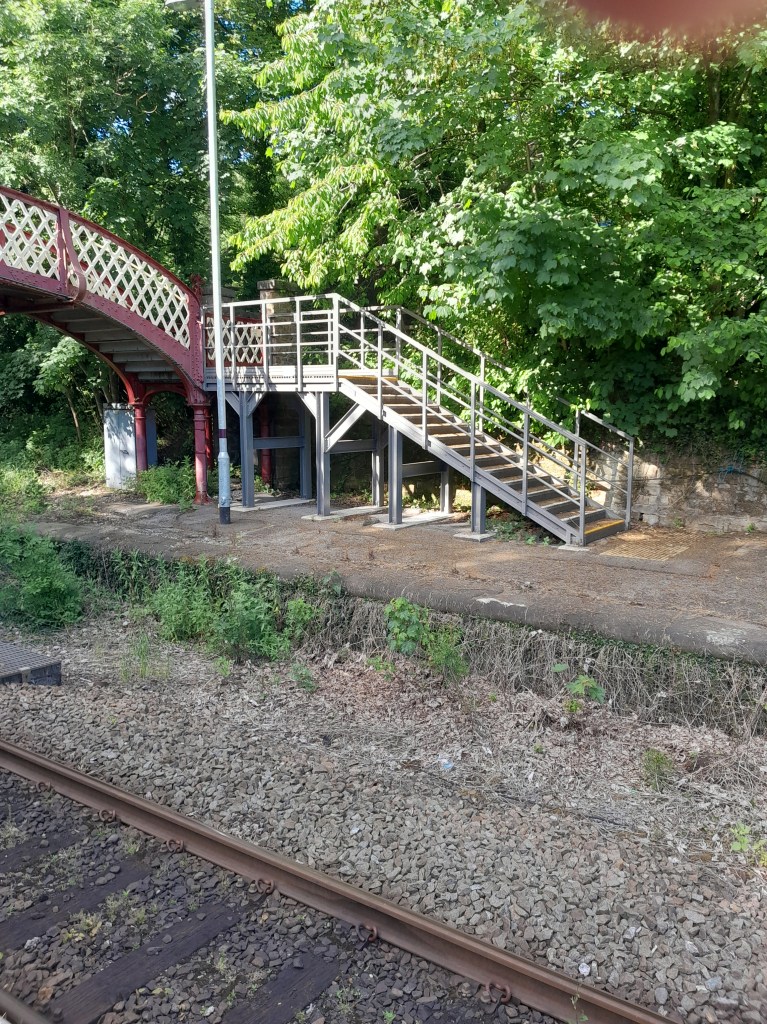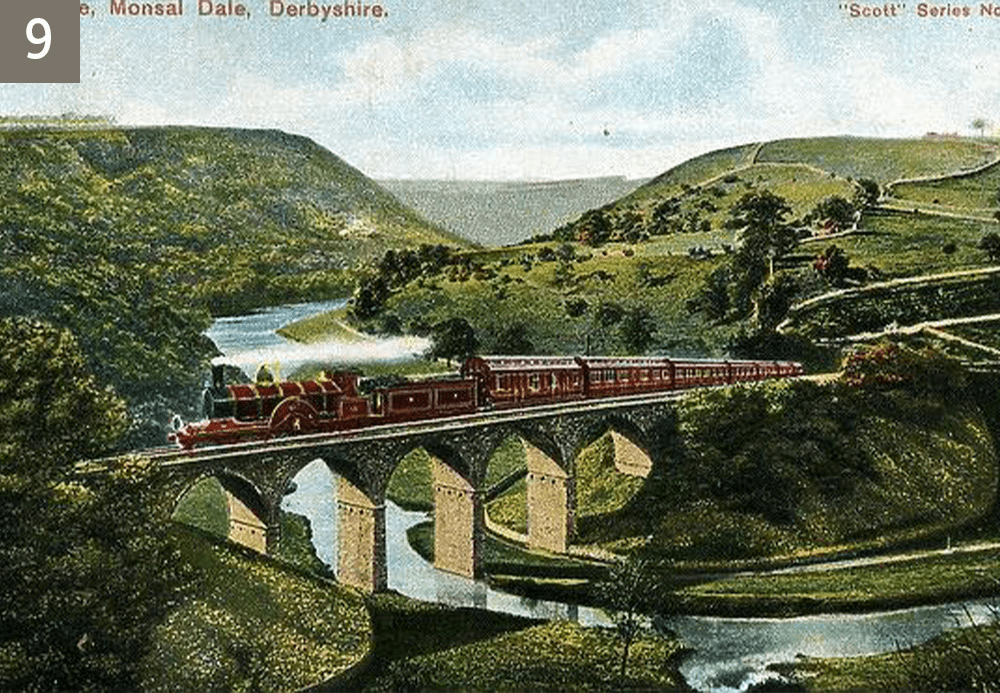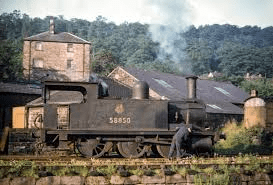
The successive iterations of the Cromford and High Peak Railway are a reflection of modern British history. Originally conceived as a canal in the early 1800s, it was intended to link the Peak Forest Canal with the Cromford Canal, a scheme that involved an ascent of about a thousand feet. But not only was such a high-level canal expensive to build, it would also be difficult to keep in water on the dry limestone plateau. The engineer Josiah Jessop then surveyed the route via Middleton and Hopton as a tramway, and this was authorised by an Act of Parliament in 1825. At that time the 33-mile route was the longest railway in the world, and it was intended to be worked by stationary steam engines on the steep inclines, and horses elsewhere. The line was in use, with horses replaced by engines, until 1967, with a passenger service briefly offered in the mid-nineteenth century. In the early 1970s the Peak Park reopened the route as a walking and cycling trail, which remains popular today.
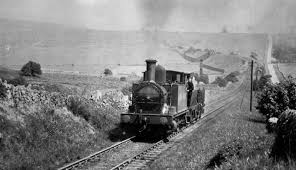
But what was it like to travel on this extraordinary railway? In Frederick William’s Our Iron Roads there is a fascinating account of the writer’s journey from Cromford to Buxton in 1877. He began his trip at a place by the Black Rocks, then called Stone-House, where there was a railway office, now the car park. On enquiring for ‘The Fly’, as the train was known, he was told that it had gone by, but if he walked up the line he would be able to overtake it. Sure enough, he caught up with the train on the Middleton Incline. A railway worker asked if he wanted to catch the train, and on being told that he did, the man worked the signal to halt the train at the top. The only other passengers were a woman and her child, while the guard stood in the middle of the carriage to work the brake through a hole in the floor. At the top of the next incline the train stopped, and the guard explained that they had to wait for the engine to come for them. He warned that it might take a few minutes, or a few hours, and that yesterday it had never arrived!
To pass the time, the writer strolled up the track, while his fellow passengers went mushrooming. After three hours the engine arrived from Whaley Bridge, and they set off to a public house further up the line, where driver, fireman and guard went to have a drink. Higher up they found a flock of sheep on the tracks, but as the guard explained , they were quite capable of jumping the drystone wall back to their field. The train finally arrived at Park Gates, near Buxton, at seven pm, having taken six hours to cover 20 miles. Not difficult, then, to explain the subsequent closure of the passenger service …
Source: Carr, D.P. (1934) ‘Sidelights on the Cromford and High Peak Railway’ Derbyshire Archaeological Journal vol. 55 pp 45-49