Pedalling to freedom

Alan Sillitoe (1928-2010)

‘Escape to the country’ has become a cliche; an empty phrase at a time when the countryside has become increasingly suburban. But a century ago, before mass car ownership, leaving the city was more difficult, dependent on bus, train or bike. Yet factory workers then probably had more incentive to escape, at least for a few hours, the smells and noise of the workplace. Alan Sillitoe, the Nottingham-born author, started work in the Raleigh factory there at the age of 14, and took advantage of owning his first bike to cycle out of the city on the route of the A610, (although the modern dual-carriageway was years in the future):

Beyond Eastwood Hilltop, one free-wheeled down to the Erewash, which was followed by a sure push-up to Codnor and Ripley, and many another walk with the bicycle before coming into Matlock.
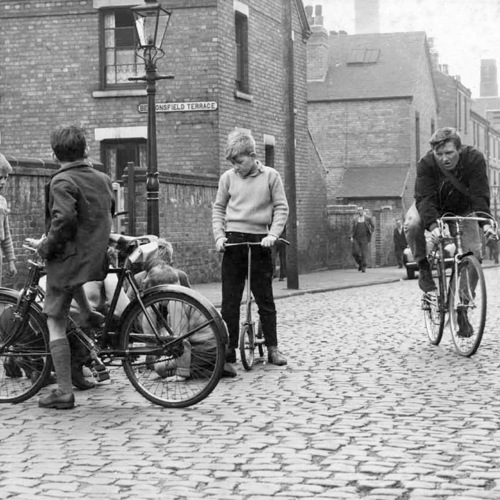
Radford, Nottingham street scene 1950s

Sillitoe says that he often cycled alone, occasionally with friends. These trips would have been made during the last war, though he was then too young to be called up:

I’d go on Easter weekends through Bakewell and Buxton and Chapel-en-le-Frith, and back to Nottingham via Chesterfield and Clay Cross, sleeping in fields or barns by the roadside, or under the lee of those rough stone walls marking off the fields, thinking the hills beautiful and restful, but in no way hating the small hilltop mining towns and settlements when I got back among them.
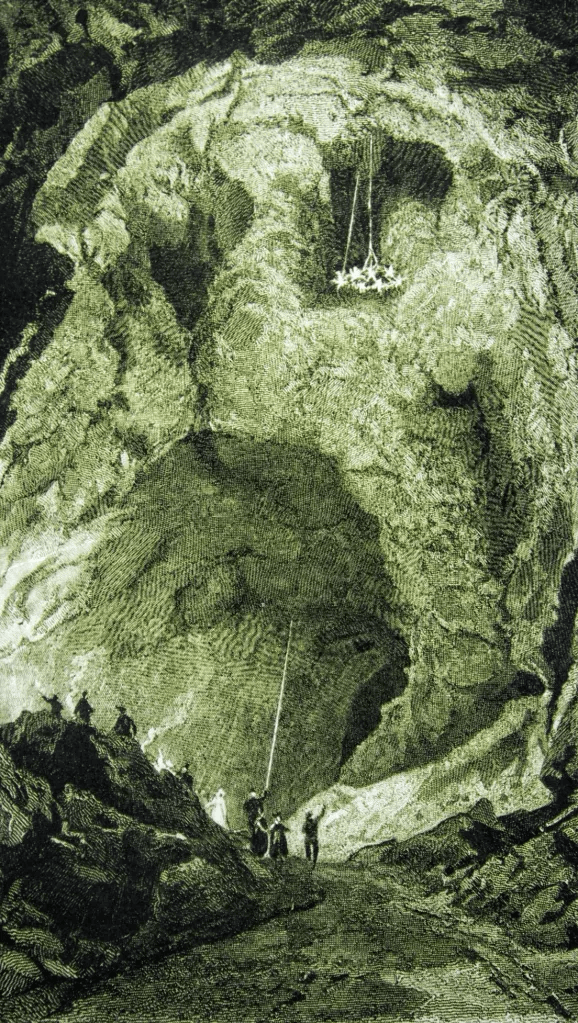
The Rutland Cavern

Like many young cyclists and ramblers from the nearby cities, for Sillitoe Derbyshire meant a complete break from everyday life:

… at Easter the road was often wet, and the wind could be bitter enough, but the real impulse was to wear out the body after a week in a factory, and reach as far a point from Nottingham as a bicycle could go in one weekend. The marathon run on a single day was to cycle the twenty-five miles to Matlock, climb the Heights of Abraham of several hundred feet, visit the ancient lead workings of the Rutland Cavern, row on the slate-grey Derwent for an hour and get as near as one dare to the weir without going over it or be rescued by an irate boatman, then cycle back to Nottingham before darkness set in – usually on a bottle of milk or lemonade and a packet of sandwiches.
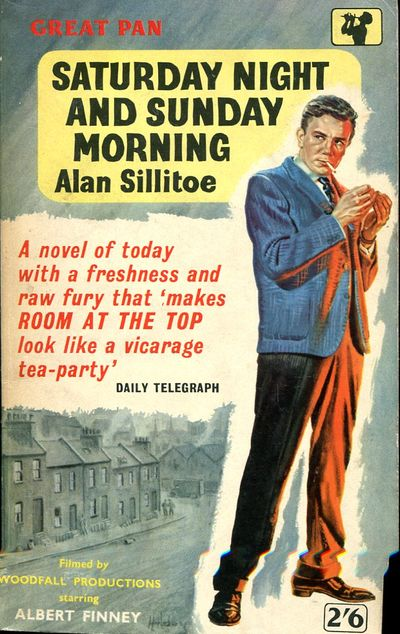
The classic cover – Pan edition, early 1960s

Sillitoe went on from Raleigh to a remarkable career as an author; a rare example of a genuine working-class writer. He subsequently lived in France and Spain after being pensioned off by the RAF, which gave him the freedom to develop his first, brilliant novel, Saturday Night and Sunday Morning. There are many parallels between Sillitoe and DH Lawrence: Eastwood is only a few miles from Radford, both had TB, both lived abroad, and both wrote classic ‘coming of age’ stories.

Source: Lawrence and the Real England, Staple Special (1985) pp 8-11
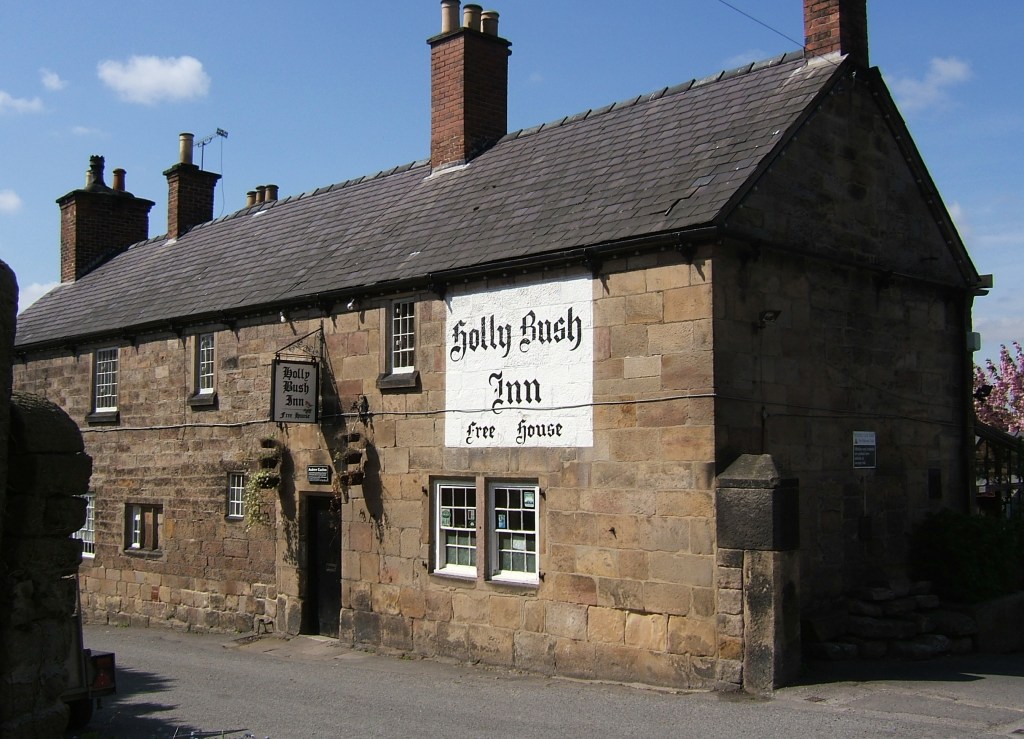
Inn with the inn-crowd

The Holly Bush Inn at Makeney

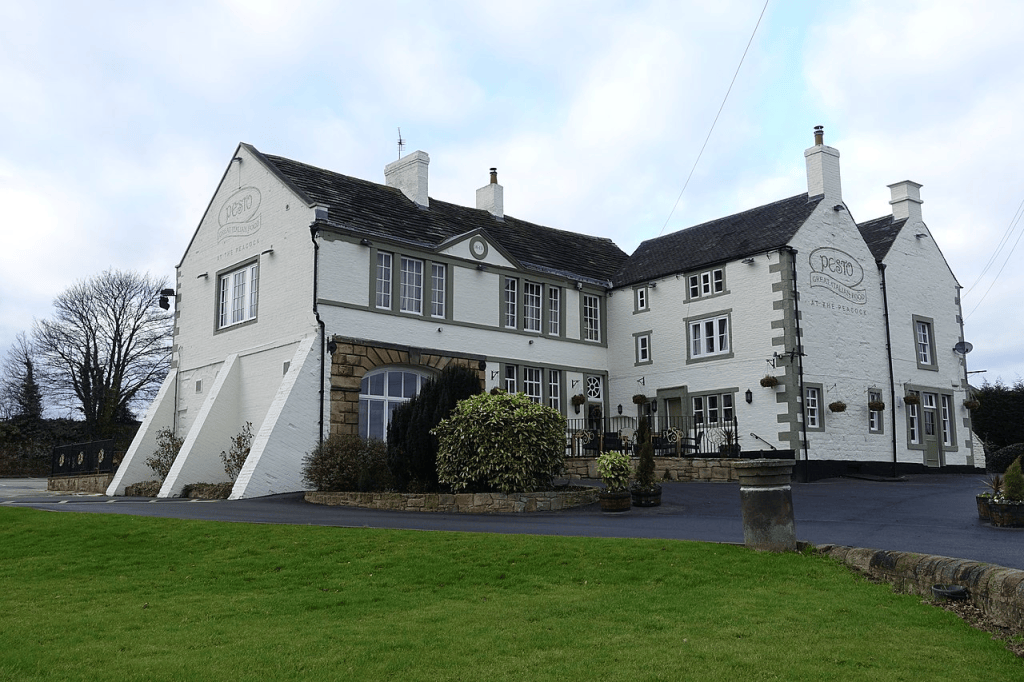
As turnpike roads made travel more comfortable in the eighteenth century, roadside inns had to provide more services for coach teams as well as refreshments for the passengers. Previously they would have catered for travellers on horseback, or jaggers with their packhorse trains, but by the mid-century they might need stabling for 80 horses, as well as feeding a dozen hungry passengers. Older inns such as The Holly Bush (above) had to expand, while others were developed at strategic locations, like the Peacock at Oakerthorpe, which is at the junction of two turnpike routes (its website claims it is 11th century, which seems unlikely). As the name suggests, this hostelry was once owned by the Duke of Rutland, as was the Peacock at Rowsley: this bird being the family crest.

Hospitality at the crossroads: The old Peacock at Oakerthorpe

The heyday of the coaching inn was in the early nineteenth century, when mail coaches joined stage coaches on the roads, and most towns were on the coaching network. This was almost always run from an inn, where seats on board could be booked. These new or expanded inns must have been major employers: horses had to be changed every 10-15 miles, so ostlers and stable lads were needed in the yard to harness the teams, while indoors maids, cooks and waiters served the diners, who had to be fed quickly, before the coach set off again. Dickens provides a lively description of his ideal inn, The Marquis of Granby, in The Pickwick Papers. Oddly, although Dickens sets this perfect pub near Dorking, the Marquis of Granby is a title used by the Manners/Rutland family:

The Marquis of Granby in Mrs Weller’s time was quite a model of the roadside public house of the better class – just large enough to be convenient, and small enough to be snug. On the opposite side of the road was a large sign-board on a high post, representing the head and shoulders of a gentleman with an apoplectic counternance, in a red coat with deep blue facings, and a touch of the same blue over his three-cornered hat, for a sky. Over that were a pair of flags; beneath the last button of his coat were a couple of cannons; and the whole formed an expressive and undoubted likeness of the Marquis of Granby of glorious memory.

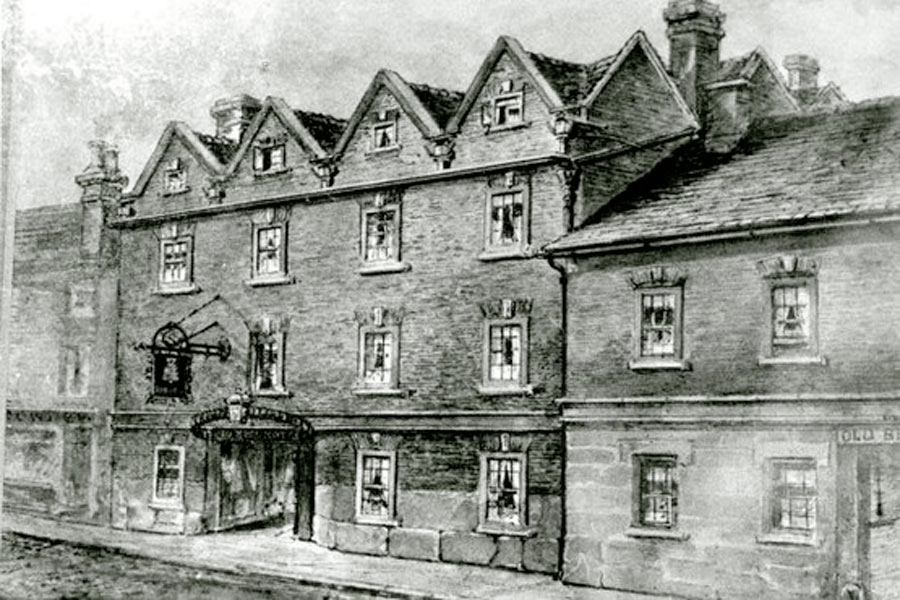
The Old Bell, Sadler Gate, Derby

The Old Bell (above) is a rare example of a coaching inn which has more or less survived, although its facade is now covered in fake half-timbering. Claiming a date of 1650, the drawing shows the elaborate iron sign hanging over the entrance, which led to the stable yard. Most coaching inns had a similar pattern, often with an arched entrance and balconies around the yard, where bedrooms were located. Burdett’s map of Derbyshire (1791 edition) shows all the parks and mansions of the gentry, but only four inns: The Brown Bear near Alderwasley, The New Inn near Quorn, the New Inns (sic) on the Ashbourne to Buxton turnpike, and the New Inn at Hardwick Hall (this last in Nottinghamshire, but still on the map!) Clearly a random collection, but suggestive of the growth of the inn business at that time, especially near the great houses, such as Kedleston. But by 1850 most roadside inns were in decline as the railways took their passengers, and we rely on the nostalgia of Dickens to imagine the lost glories of their golden era.

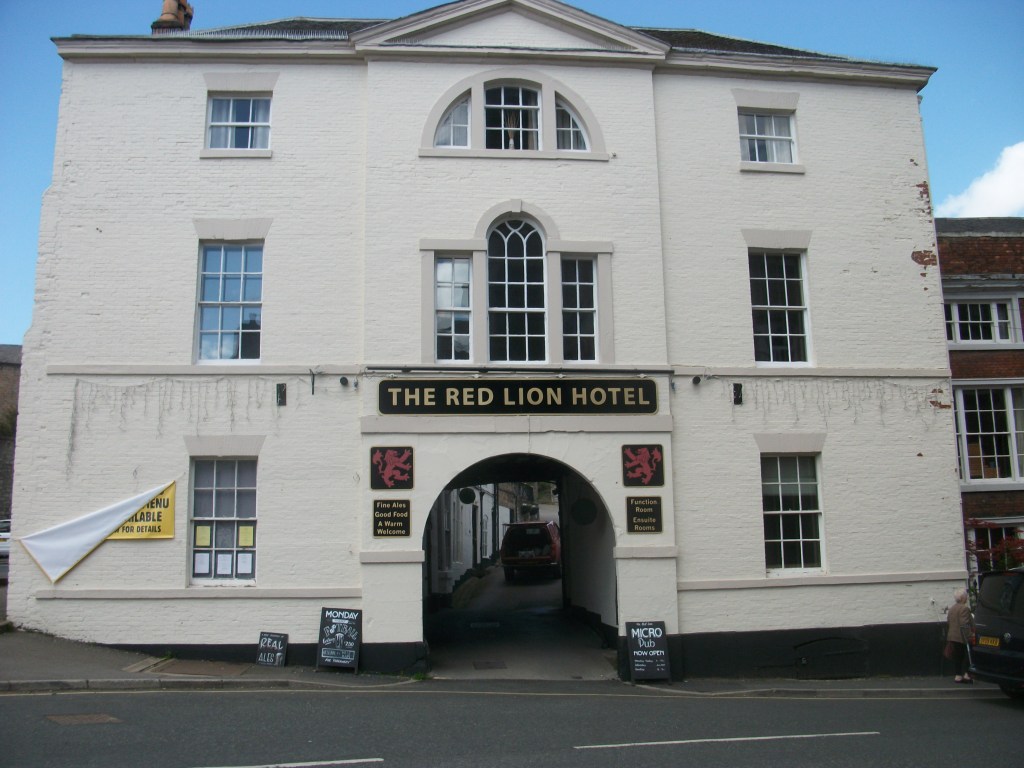
The Red Lion, Wirksworth