


In medieval England many parishes, especially in upland areas. were larger than they are now, and parish churches consequently were more dispersed. Although not everyone attended church regularly, for most people a churchyard burial was critical, since that was the key to an afterlife. As a result coffins often had to be carried several miles to the nearest consecrated churchyard. An extreme example is Edale, where the funeral processions from this scattered community had to cross the ridge into the Hope Valley via Hollins Cross, which marked the site where the coffin could be rested while the pall bearers had a much-needed rest on this four or five mile journey to Hope church.
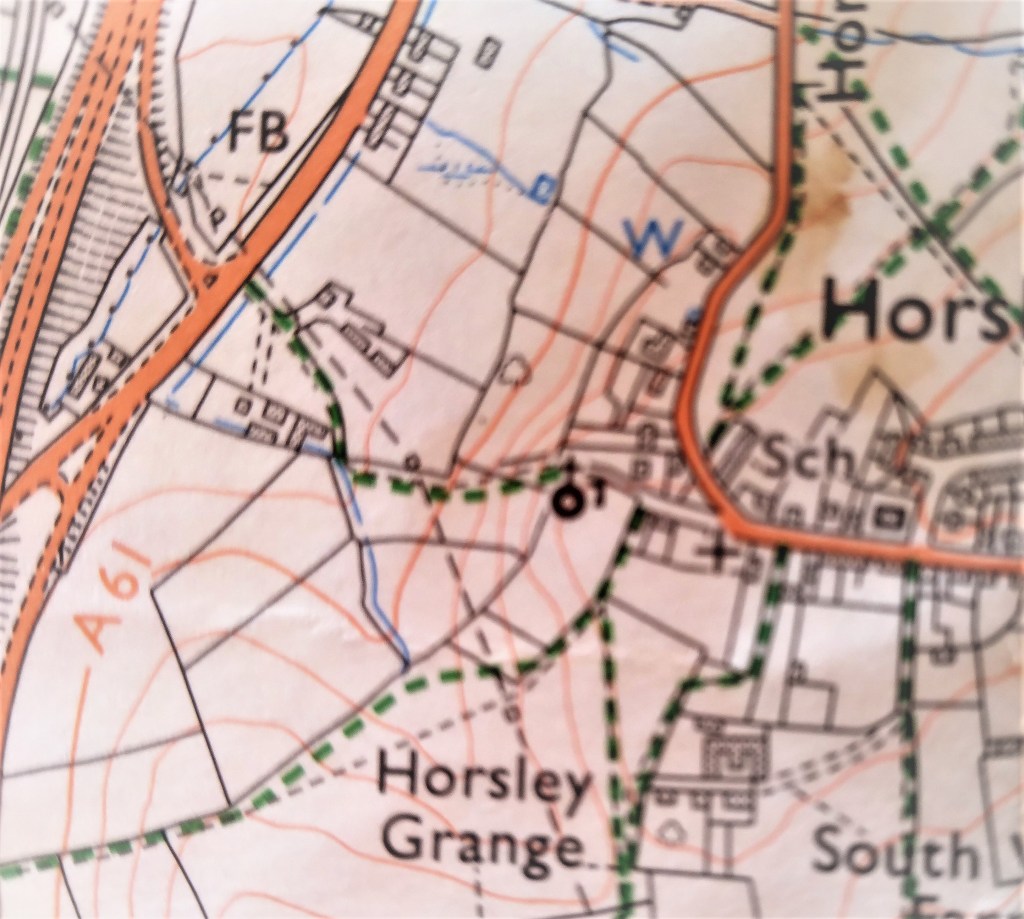
Many churches are at the centre of a network of paths, as can be seen in the case of Horsley, to which at least five footpaths lead. Other examples include Bonsall, Crich and Morley. Of course these routes were not only for funerals – they would also have provided a direct route for Sunday worshippers. Especially before the growth of non-conformist chapels in the eighteenth and nineteenth centuries, many comunities were quite distant from a place of worship; for instance Riber folk had a very steep walk down to St Giles at Matlock.

In some parts of Britain a folklore grew up around these ‘coffin paths’ or ‘lych ways’, which were thought to be haunted by the spirits of the dead. Shakespeare’s Puck, in A Midsummer Night’s Dream, says:
Now it is the time of night,
That the graves all gaping wide,
Every one lets forth his sprite,
In the church way paths to glide.
 The Old Roads of Derbyshire