Farey’s footsteps

John Farey Esq.

John Farey (1766-1826) was a geologist and mathematician who wrote an extensive report on agriculture in Derbyshire, early in the nineteenth century. To research the subject he clearly had to travel widely, and this experience led him to produce a shorter report on the roads of Derbyshire in 1807. Finding his way around was clearly a concern, as he writes scathingly about the state of the milestones (‘too much neglected’) on account of the lack of maintenance: instead they are ‘shamefully defaced’ by ‘idle and disorderly persons’. Similarly the ‘way-posts or finger boards’ (i.e. signposts) ‘are entirely defaced’ with ‘scarcely a single inscription legible’. Despite this anti-social behaviour, Farey also notes the use of Latin on some ‘wayboards’, notably Via Gellia in Bonsall Dale and ‘Equus Via Longford’ near Shirley.

The Rutland Arms, Bakewell

He does, however, approve of the ‘many excellent Inns’ on the county’s turnpikes, and mentions the Rutland Arms at Bakewell, the Eagle and Child at Buxton, the King’s Arms at Derby and the New Inn at Kedleston, among others. As a geologist he notices that Peak Limestone is hard and so good for road building, but that Magnesian Limestone is easily crushed into a ‘gritty mire’. This was probably the first time that a such scientific approach to road construction had been made.

Farey also approvingly describes a feature of roads in the horse era that few historians have noted. He sees that ‘throughout the County’ cottagers’ children, women and old men are seen ‘perambulating certain lengths of the public Roads’, which they patrol regularly ‘carefully picking up every piece of horse-dung that falls’, and then carry their collections in baskets on their heads for sale to local farmers. Apparently shepherds on the few remaining commons did the same. Farey does not provide details of the going rate for a basket of horse dung, but the practice is an indicator of the depths of poverty in the pre-industrial world. He goes on to complain of the practice of turning cattle and horses out into the lanes to feed on the verges, saying that his horse had been upset by these semi-feral creatures. However, despite his criticisms, Farey rates this county’s roads positively: ‘… after paying a good deal of attention to this subject in most parts of England, I think few of the counties excel Derbyshire as to its roads …’ .

Romantic Buxton?

Arnold Bennett’s masterpiece, The Old Wives’ Tale, published in 1908, is set in the mid-nineteenth century, and tells the contrasting stories of two sisters, Sophia and Constance. The latter spends her life running the family drapers’ shop in Stoke on Trent, while her sister has a more adventurous life in Paris. When Constance marries, Buxton is chosen for their honeymoon, a relatively short ride on the then North Staffordshire Railway:

“They had a way of saying: ‘Yes, we always go to Buxton. We went there for our honeymoon, you know.” They had become confirmed Buxtonites, with views concerning St Anne’s Terrace, the Broad Walk and Peel’s Cavern. They could not dream of deserting their Buxton. It was the sole possible resort. Was it not the highest town in England? Well, then!

The man himself

Bennett, who was a francophile and had lived in France since 1903, was clearly being satirical at the expense of these provincial folk:

“They always stayed at the same lodgings, and grew to be special favourites of the landlady, who whispered of them to all her other guests as having come to her house for their honeymoon, and as never missing a year, and as being most respectable, superior people in quite a large way of business. Each year they walked out of Buxton station behind their luggage on a truck, full of joy and pride because they knew all the landmarks, and the lie of all the streets, and which were the best shops.”

Park views

However, any holiday would be a luxury for working people in the 1870s, and ten days in Buxton would demonstrate that Mr and Mrs Povey were prosperous folk. The spa waters of the town have attracted visitors since Roman times (and probably earlier), though tourists in the eighteenth century frequently complained of the quality of accommodation. It was not until the Dukes of Devonshire made serious investments, such as building The Crescent, and the arrival of the railway in 1863, that large number of visitors began arriving. Today a rejuvenated town still attracts holidaymakers, although unfortunately the excellent Museum and Art Gallery has been closed indefinitely due to the discovery of dry rot.

Come back, Blind Jack

John Metcalfe relaxing in Knaresborough

John Metcalf, known as ‘Jack’, was a pioneer road builder in Yorkshire and Derbyshire, despite being blind from the age of six. His remarkable career began in 1717, when he was born to a poor family in Knaresborough. He was given fiddle lessons as a source of future financial support, and at age 15 became fiddler at the Queen’s Head in Harrogate. Horse trading, swimming and diving were other occupations, while his detailed local knowledge gave him employment as a guide. Among other achievements he ran a carrier business, using a stagecoach which he drove himself.

Jack on a rare sunny day in Yorkshire

His career as a road builder began in 1765 when he tendered to build a section of turnpike road between Harrogate and Boroughbridge. Presumably his work as a carrier had given him insight into the problems of road maintenance, and his road engineering was based on the need for effective drainage, via a convex surface, into adequate culverts at the road side. He was also the first to find a way of laying a route through bogs, using floating rafts of ling and gorse as foundations. But his success must have also been down to effective calculation of costs when bidding for contracts, plus his man-management skills, such as being on site at 6 a.m. In total he was responsible for 180 miles of new or improved roads, mainly in Yorkshire but also in north Derbyshire, especially the roads around Buxton.

A well-stocked pub

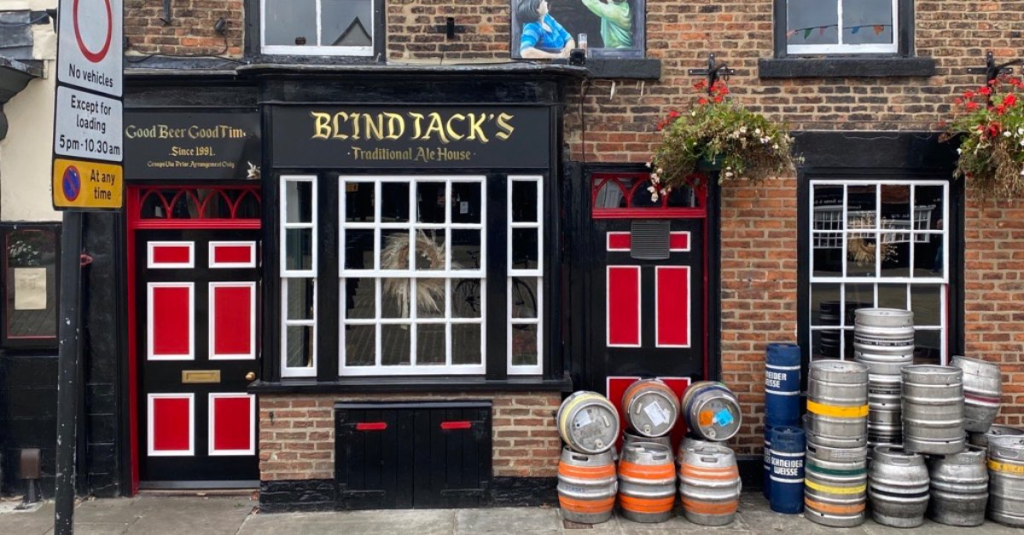
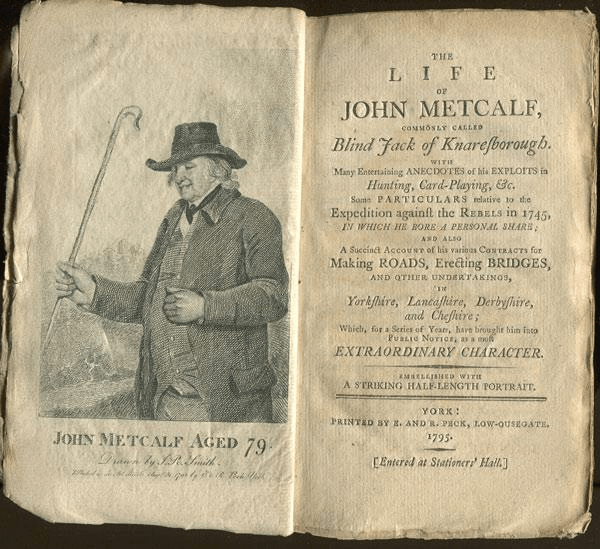
Today Jack is remembered in his home town by a seated statue (top) outside the pub that bears his name. His road-building contemporaries, Thomas Telford and John MacAdam, are better-known, but his triumph over disability is quite remarkable. In old age he lived with one of his daughters, and at the age of 77 walked to York and told his life story to a publisher, who produced this volume (below).

Given the current state of Derbyshire roads, we might wish for Jack to get off his bench and come back to show us how to fill in the potholes …

“A fine lady upon a white horse …”

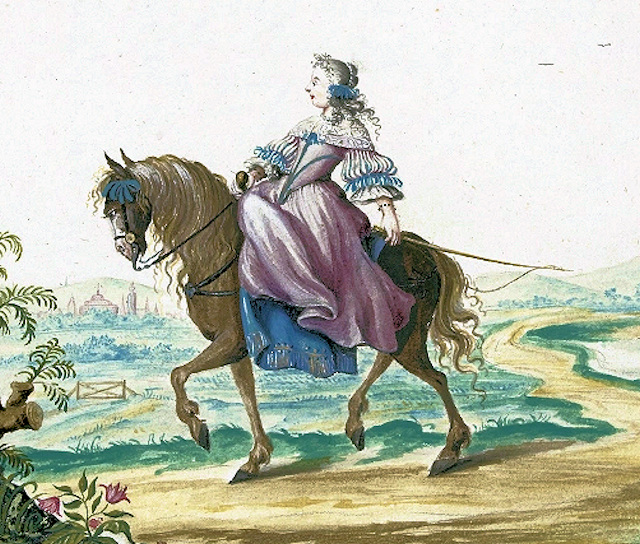
Woman riding side-saddle: No portrait of Celia appears to exist.

Celia Fiennes (1662-1741) was a well-connected lady who toured much of England on horseback around the end of the seventeenth century. Her journal provides a rare insight into the Peak District at this time, before turnpikes but when ‘tourism’ was just beginning. Although independent female travelers were rare at that time, her wealth allowed her to have two servants: an entourage that did not always protect her from the difficulties of travel. As the unmarried daughter of a Cromwell-supporting nobleman, Celia lived partly with a married sister in Hackney and seems to have traveled for both health and curiosity.

Woodcut of the old Buxton bathhouse

Like many more modern travelers Celia found much to complain of. At Buxton, where her party stayed at the Duke of Devonshire’s Buxton Hall, the beer was so bad that ‘very little can be dranke’. Worse were the bedrooms, which were overcrowded: ‘sometimes they are so crowded that three must lye in a bed’. Needless to say: ‘Few people stay above two or three nights it is so inconvenient’. It is easily forgotten that modern notions of privacy were quite foreign at this time. The main attractions were the bath and the water from St Anne’s Well. The former was about 40 feet long by 30 feet wide, and it was barely warm: ‘Just enough to open the pores of ones body’. Worryingly, the flow of water was weak, so that: ‘Its not capable of being cleansed after everybody has been in’. She must have questioned the health benefits of the process, but nevertheless plunged in.

Memorial to Celia in the (suitably named) No Mans Heath, Cheshire

Celia Fiennes visited the so-called ‘Wonders of the Peak’ in the same way a modern tourist might tick off the local attractions in their guidebook. But equally interesting are her comments on travel generally, which she seems to have found extremely difficult in this area:

Indeed all Derbyshire is but a world of peaked hills, which from some of ye highest you discover ye rest like steeples or tops of hills as thick as can be, and tho’ they appear so close yet ye steepness down and up takes up yr time…

Even the guides couldn’t be relied on:

The country here about is so full of moore or quagmires and such precipices that one that is a stranger cannot travel without a guide, and some of them are put to a loss sometymes.

Her journals were not published in her lifetime, but eventually appeared in 1888 with the title Through England on a Side-saddle. The full text can be found at:

https://l4.tm-web-01.co.uk/lib/celia-fiennes-M171235.webp

All roads lead to ….?

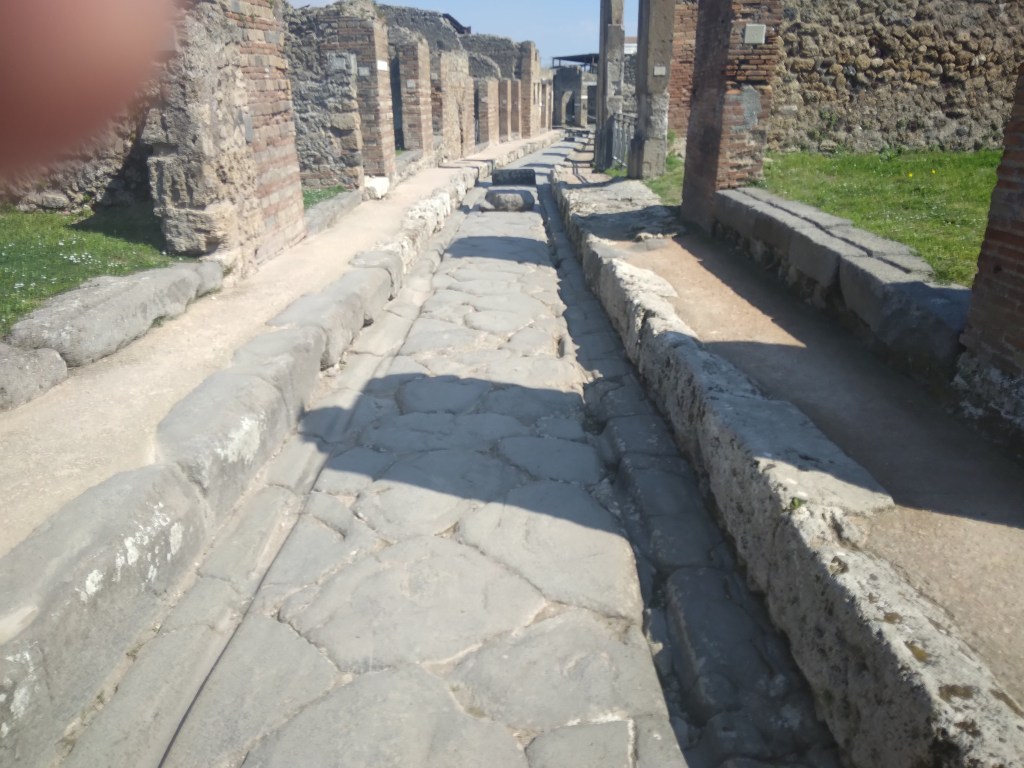
A street in the ruins of Pompeii

Pompeii may provide us with a good idea of what a Roman road looked like. Until its destruction in 79 CE Pompeii was a medium-sized town with good public facilities such as baths and temples – and well-paved streets complete with raised pavements. The photo shows the ‘crazy paving’ surfacing, kerb stones and also the ruts worn in the stone by carts with iron-rimmed wheels. In the distance blocks can be seen in the roadway to allow pedestrians to cross without getting too muddy. Perhaps the most surprising feature is the narrowness of both road and pavement – you wonder what happened when two carts met, or was there a one-way system?

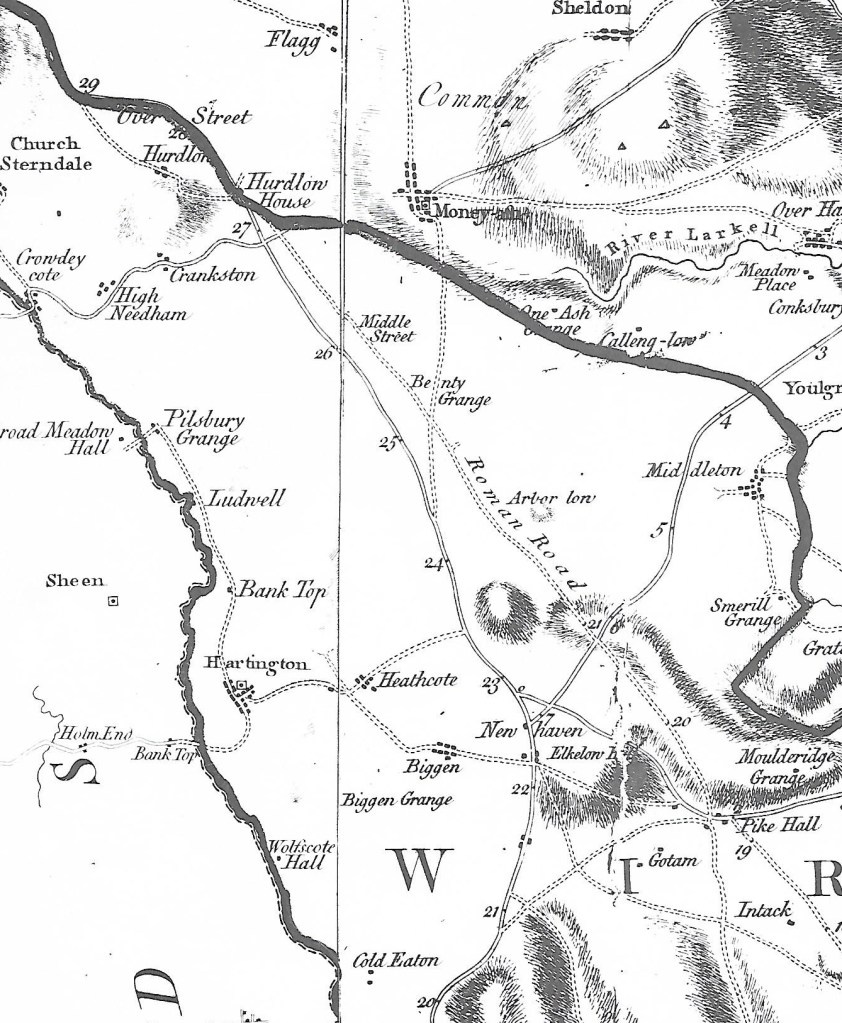
Burdett’s Derbyshire map of 1767 showing The Street north of Pike Hall

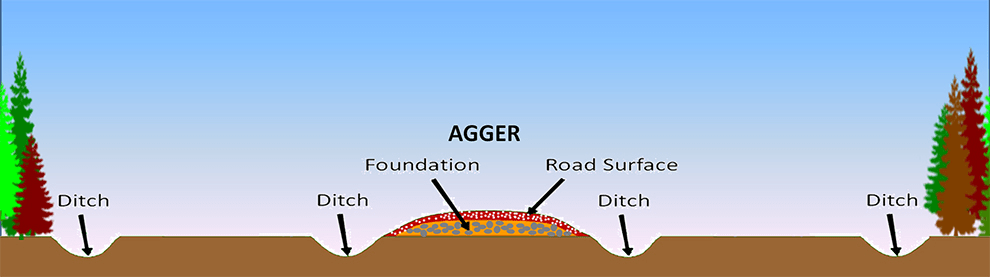
The Street, the Roman road that ran between Wirksworth and Buxton, is one of the best examples of a Roman road in Derbyshire. Clearly marked as such on Burdett’s map, it was still in use in the eighteenth century before the Ashbourne-Buxton turnpike was built, although today there is little visible evidence of its route. The Romans would have used whatever building material was available, so in the Peak District there was plentiful stone for foundations and kerbs, although the surface was probably something like gravel. Their roads were generally constructed on an agger, a raised platform about two or more metres wide.

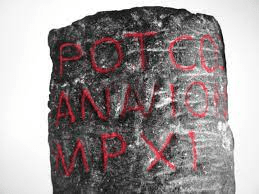
Roman milestone found in Buxton. It gives the distance to Navio as 11 miles.

The Street has been thoroughly researched by the Wirksworth Archaeological Society and various sections have been excavated. There has been endless debate about the southern destination of this route, and their research establishes that it reached Wirksworth, although the route beyond is unknown. The excavations also found that the road was no wider than two metres in places, so it should be seen as a relatively minor route, just wide enough for one wheeled vehicle. Given the number of pre-Roman sites which lie next to the Street, such as Arbor Low and Minninglow, it seems that the Romans actually followed and engineered a prehistoric route rather than create a brand-new road.

The theory

Although it is claimed that some stretches of Roman road survive in the Peak, for example near the Snake Pass, in fact it is impossible to know if these fragments are medieval or earlier. In general, over the last two thousand years almost all traces have vanished, due to weathering (stone tends to sink into the ground under its own weight; ditches fill up) and robbery of stone for wall or barn building.

Source:

The Street: A re-evaluation of the Roman road from Buxton to Wirksworth.

Wirksworth Archaeological Society, 2019

Reinventing the wheel?

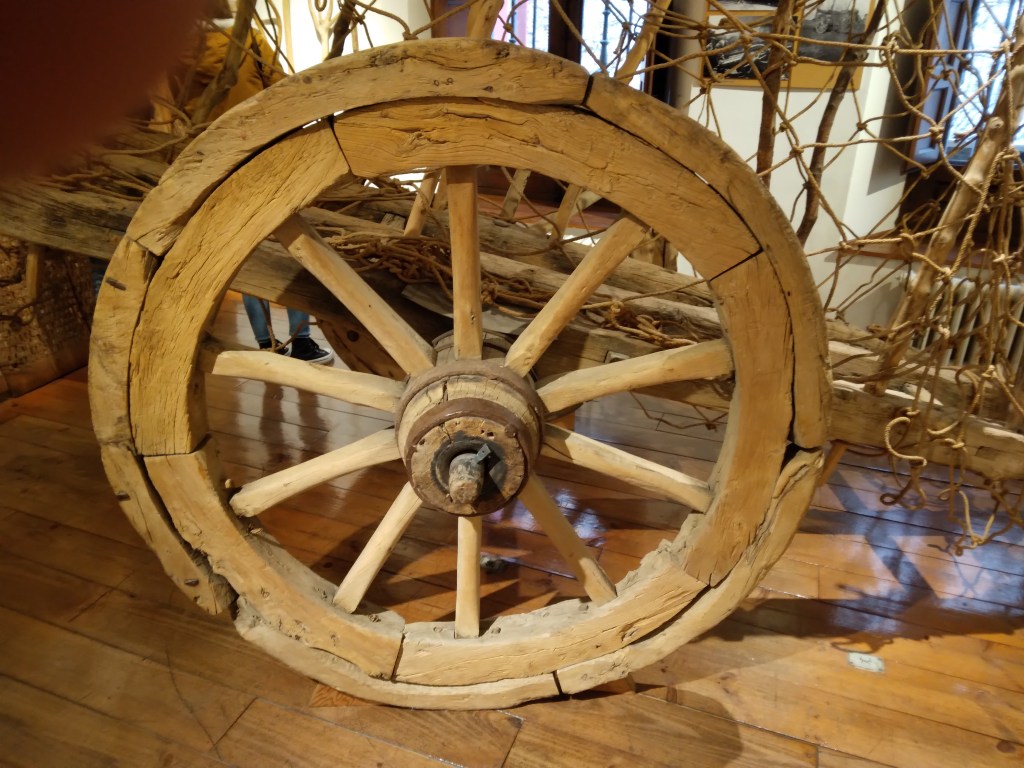
The wheel is often cited as a critical invention in the development of our civilisation, and today wheels are so abundant it is difficult to imagine life without them. Yet they arrived in Britain relatively late – Stonehenge was built by a wheel-less society. The earliest wheel found so far, in Flagg Fen in Cambridgeshire, dates from about 1,600 BCE and is a solid wooden disc. The wheel above, from a museum in Avila, Spain, is over 3,000 years newer, and illustrates the complexity of making wheels almost without metal. It consists of five curved wooden sections, reinforced by a rim of five narrower pieces, all held together by ten spokes radiating out from a wooden hub strengthened by iron bands. Clearly the use of spokes makes for a much lighter wheel, reducing the effort for the carthorse.

These iron wheel rims were found in a chariot burial in northern Greece. They are thought to be Thracian, dating from the Roman period, and, remarkably, the skeletons of two horses were found in the tomb, buried in a standing position. The wooden part of the wheel has disappeared, but traces left in the soil show that it had spokes. Similar chariot burials have been found in Britain, notably in East Yorkshire, where a site at Pocklington in 2018 yielded the remains of a high-status burial of a chariot, thought to belong to the Iron Age (roughly contemporary with the Greek tomb), containing a man’s skeleton, along with the bones of two horses.

Wheeled vehicles such as carts, waggons and coaches were historically less common in north Derbyshire, due to the steep, poor roads and use of packhorses. However, for working lowland farms and for market journeys carts were more efficient than packhorses, needing only one horse to carry a ton of goods. With the improvements in road surfacing brought about by turnpike roads in the second half of the eighteenth century, all major Derbyshire towns were connected by regular coach services by the early nineteenth century. The picture above shows a passenger-carrying brake or charabanc outside the Sun Inn at Buxton, perhaps waiting for a tourist party to finish their lunch?

Snowmotion

A recent winter view of Youlgreave

Winter has never been the best season for travel, but in the past it must have been far more difficult than today. Not only were roads much worse, but at times the weather seems to have been much colder. Especially in the upland areas of Derbyshire farms and villages were likely to be cut off by snowdrifts, with the constant threat of hunger if people were unable to reach markets. According to the Youlgreave Churchwardens’ records:

This year 1614 began the greatyst snow that ever fell within many memorye. And for heaps or drifts of snow they were very deep; so that passengers both horse and foot, passed over gates and hedges and walls it fell at ten severall times, and the last was the greatest … it continued by daily increasing until 12th day of March …

Snowdrifts at Farley above Matlock in 1947

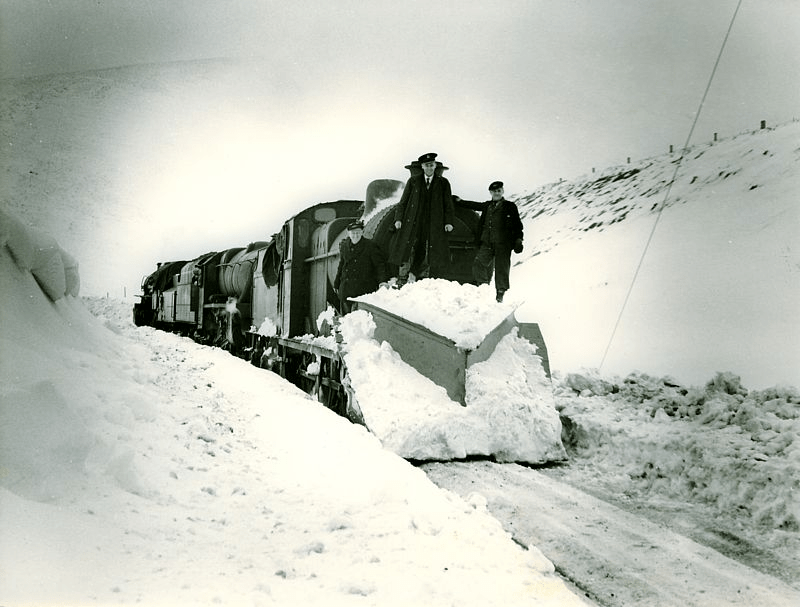
The freezing winter of 1947, still within living memory, was made worse by the decrepit nature of the country’s infrastructure, worn out by years of war. Heavy snow began in late January and continued well into March. Conditions were primitive in many parts of Derbyshire, as recorded by a Mrs Alsop of Hulland Ward near Ashbourne:

All the local men were called by the council to leave their jobs to help clear the roads. This was all done by hand and shovels – no mechanical diggers in those days. The strong northeast, gale-force winds daily filled the roads. The men worked seven days a week for six weeks or more. … Younger folk trudged to Ashbourne (five miles or more) for bread.

In the Peak conditions were worse and neither roads or railways could be kept open, despite heroic efforts. Around Buxton, Longnor and the Staffordshire side of the Dove valley bombers were used to supply isolated settlements. Thousands of pounds of flour, sugar, jam and tinned goods were dropped by parachute. Tragically, one of the planes crashed on Grindon Moor, killing all eight on board. The weather finally relented in early March, when the landlord and landlady of the Barrel Inn at Bretton could leave the bedroom where they had been trapped for the past five weeks, having been dug out by rescuers.

Source: The Derbyshire and Nottinghamshire Weather Book (1994) Markam, L.

Defoe’s Derbyshire tour

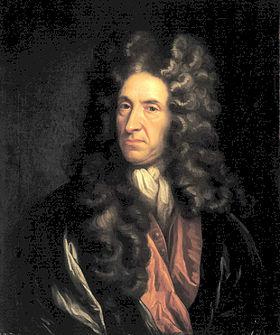
Biography of Daniel Defoe author of "Robinson Crusoe"
An early tourist

Few people living in Derbyshire in the eighteenth century have left an account of their travels; clearly they didn’t feel any need to describe their everyday experiences. Therefore it is left to the handful of early tourists to provide an impression of journeying in the county three hundred years ago. Daniel Defoe was an early novelist and journalist who visited many English counties in the 1720s in order to produce his A Tour of England and Wales.

Beginning at Derby, he had clearly chosen a wet season for his visit, since he had to abandon plans to visit Ashbourne on account of ‘the river drowning the low-grounds by a sudden shower, and hastening to the Trent with a most outrageous stream’, a reminder that, not so long ago, travel was very much at the whim of the weather. There are other references to the Derwent as ‘a frightful creature when the hills load her current with water’.

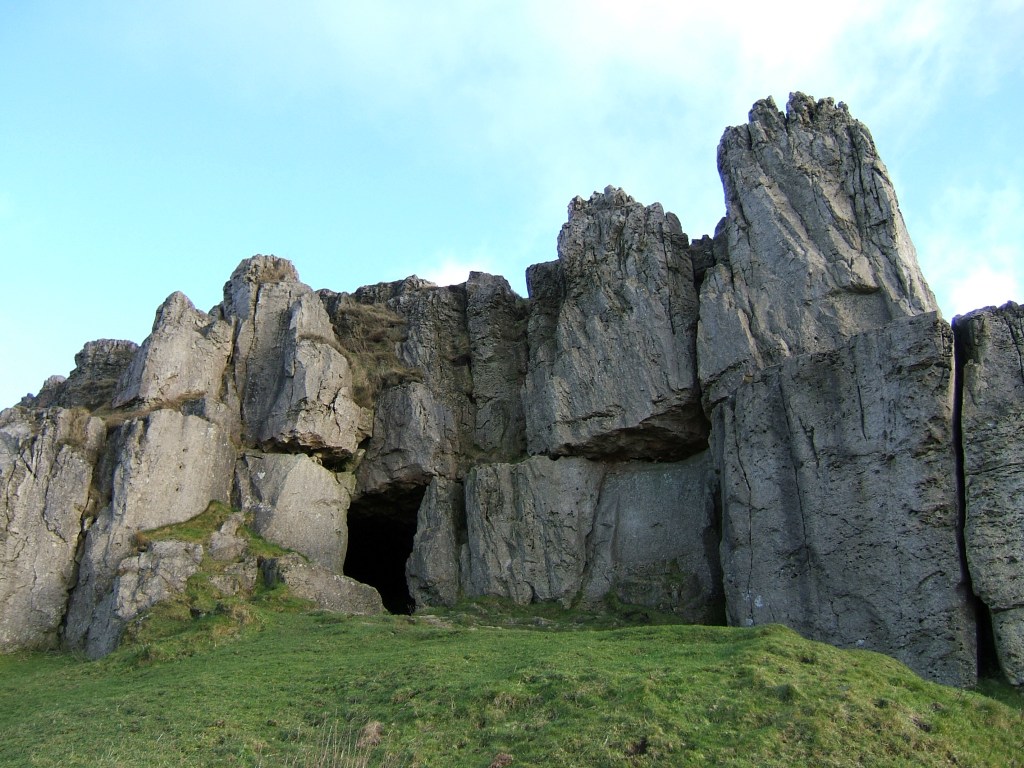
Cave at Harborough Rocks

Defoe’s next stop was Wirksworth, which he found interesting due to the lead trade, despite the inhabitants being ‘a rude boorish kind of people’. The most remarkable part of this visit was an excursion to Harborough Rocks, which was called the Giant’s Tomb at that time. Here he found a lead miner’s family living in a cave, which had been lived in by his family for several generations. Defoe was both horrified, and impressed that people could cope with such crude conditions: ‘they seemed to live very pleasantly, the children look’d plump and fat’. Defoe’s party had a whip-round and gave the miner’s wife several shillings. (Today the cave can be visited quite easily by climbing up from the High Peak Trail).

Other items on his itinerary were more predictable: the Wonders of the Peak, and a focus on spas, which were just beginning to be significant destinations at this time. He is suitably impressed by Chatsworth, but comments about the moor above the house: ‘a waste and howling wilderness, over which, when strangers travel, they are obliged to take guides, or it would be next to impossible not to lose their way’. As for getting to Matlock (which he labels as a village), Defoe maintains that the warm springs would be worth visiting if access was not by ‘ a base, stony, mountainous road’ – presumably the route over Scarthin, which was eventually superseded by blasting the present road through the rocks at Cromford.

Nineteenth-century painting of High Tor, Matlock

Saints and sinners

Carving of pilgrim, Youlgrave church

This figure from Youlgrave church is thought to represent a pilgrim, with his (or her) staff and waist-hung satchel. We often think of pilgrimage in terms of the great medieval shrines of Christianity such as Santiago or Canterbury, but during the high middle ages (about 1100 – 1300 CE) many pilgrimages must have been more local, perhaps within a day’s journey of the pilgrim’s home. In Derbyshire, abbeys such as Dale as well as churches like St Alkmund’s in Derby would have attracted pilgrims. The main draw was the burial place of a saint or the ownership of a holy relic, such as a flask of Mary’s milk.

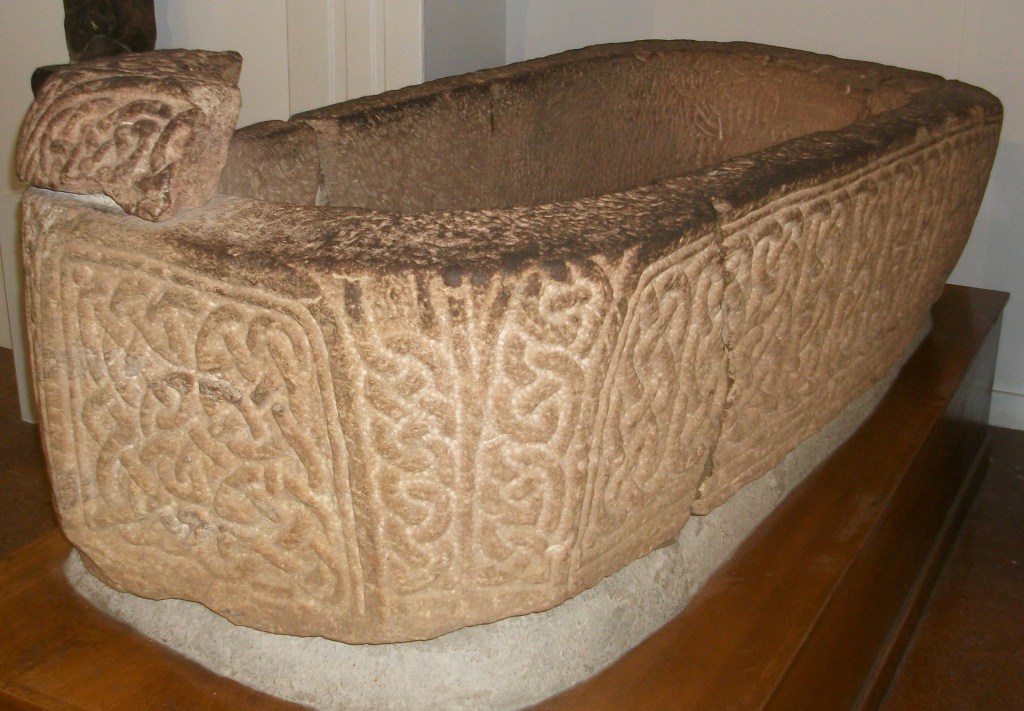
Sarcophagus in DerbyMuseum

Pilgrims hoped that being close to the remains of a holy person would benefit them in some way. Many were seeking a cure for an illness, often with the belief that a particular saint would help with certain conditions. Others might be making the journey as a penance, to compensate for some crime or misdemeanor. St Alkmund was a local saint who was murdered in Derby in the eighth century, and whose impressive stone sarcophagus can be seen in Derby Museum – the (rebuilt) church was demolished to make way for the city’s ring road.

St Bertram’s church, Ilam

Another local saint, although actually in Staffordshire, is St Bertram at Ilam near Ashbourne. He also lived in the Saxon period, becoming a hermit after his wife and child were eaten by wolves. One unusual feature of the church is that the shrine of the saint has survived, perhaps due to the remote location of the village. Most aspects of pilgrimage, such as shrines and relics, were removed during the Protestant Reformation of the sixteenth century. Yet although discouraged, pilgrimage was hard to suppress, and saw an effective revival in the growth of spa towns such as Buxton in the eighteenth century.

Ex-votos, Passau, Bavaria

In Britain there are few relics of pilgrimage, but in Catholic areas of Europe such as Spain or Bavaria it is possible to find displays of ex-votos such as the example above. These are often small paintings of a miracle rescue or healing brought about by the local saint, and given to the church in thanksgiving. In other places models of the afflicted body part, such as arm, foot or head, are displayed. Clearly, in an age of very limited medical knowledge, making a pilgrimage was often seen as an effective remedy.

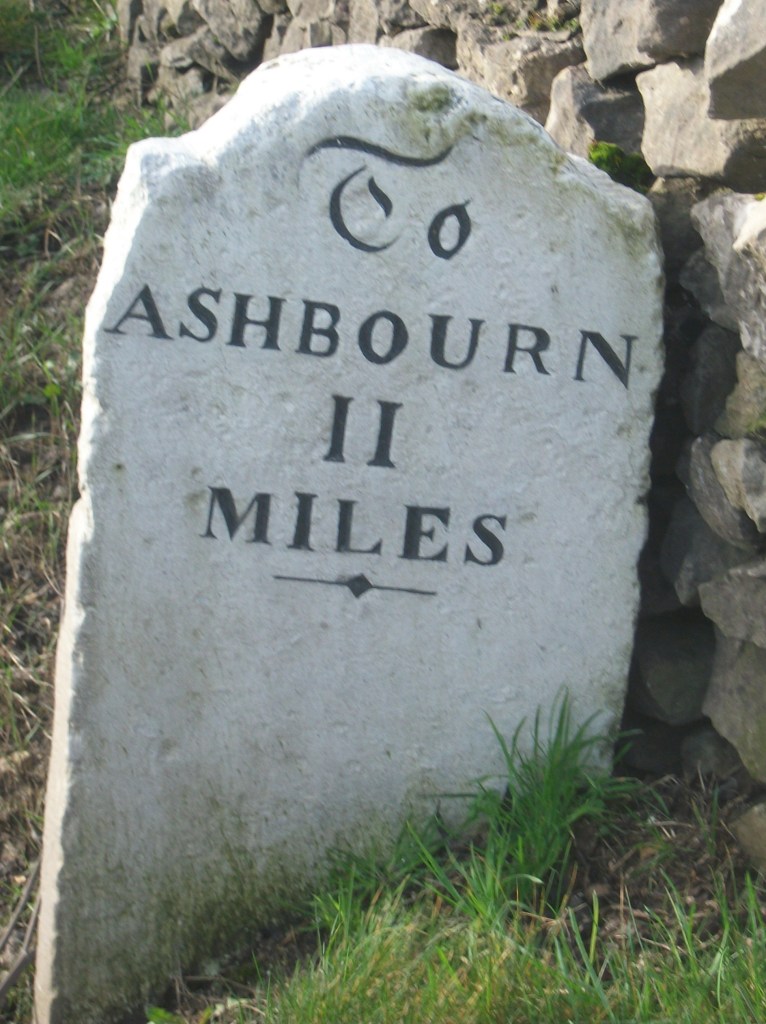
Milestoned?

Milestone from Bakewell to Ashbourne turnpike, near Winster

As might be expected, the Romans were the first to use milestones in Britain. Theirs were usually stone cylinders, and a fragment of one is in Buxton Museum. Clearly, they had two useful functions: not only did they tell travellers how far they had to go, but at the same time they provided reassurance that they were on the right road. Unsurprisingly, no Roman milestones survive in situ, and they were not seen here again until the eighteenth century.

Milestone near Matlock Bath

The turnpike trusts seem to have re-introduced milestones on their routes, with each trust using a slightly different style, as seen in the two examples above. Spelling of place names is also non-standardized. Many of these survive, and provide a useful indicator of the routes of different trusts. For instance, on the Alfreton to Ashbourne route, between Crich and Carsington almost all the stones are still in place, although sometimes they are hidden in the undergrowth.

Milepost at Fritchley

In the early nineteenth century some trusts began using iron, possibly because it was cheaper to letter. The above example is on the Cromford to Langley Mill turnpike near Fritchley, and gives more information than the earlier models.

This super-milepost is also made of iron, and is found opposite the Red Lion in Wirksworth. Unusually, it has the name of the iron founders (Harrison of Derby) at the base. Wirksworth was on the route of the Nottingham to Newhaven turnpike, and horses were probably changed at the Red Lion. Newhaven was an important turnpike junction, where coaches would join the Ashbourne to Buxton road.

Finally, it’s worth noting that although today few people use milestones for travel, we still talk about them in everyday conversation, as in ‘she had reached a critical milestone in her life …’. Perhaps a reminder that, at least for pedestrians, every milestone passed was an achievement!