

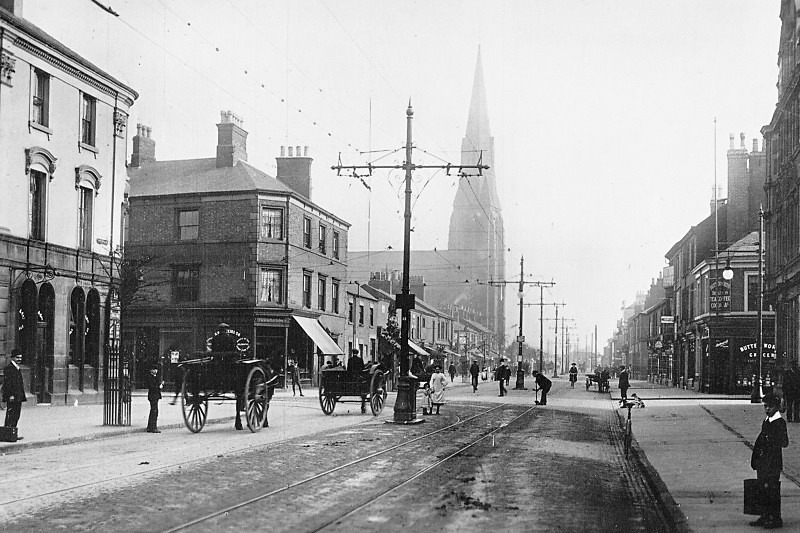
Although few people could have predicted it, in 1900 thousands of years of horse-drawn transport were coming to an end. Since the Bronze Age horses had provided the fastest means of movement, and thanks to better roads the range of vehicles increased dramatically in the nineteenth century, becoming more lightweight. For moving goods the two-wheeled tradesman’s cart, as seen above, was most common, but for personal transport there was a wide variety of choice. Many men and some women preferred the flexibility of riding, but for the elderly, or those who had never learned to ride, light, two-wheeled vehicles like gigs were an option in fine weather.

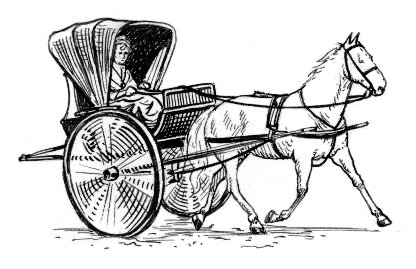
Readers of nineteenth-century novels may feel understandably confused by mention of phaetons, Broughams, Tilburys, Stanhopes, dogcarts and chaises. Clearly, only the wealthier classes could afford to keep any kind of carriage, as this would often mean stabling a horse and employing a driver. But there was considerable social prestige in keeping one’s own carriage, and savings could be made if the carriage could be driven by the owner and pulled by a single horse, such as with Tilburys, chaises and dogcarts.
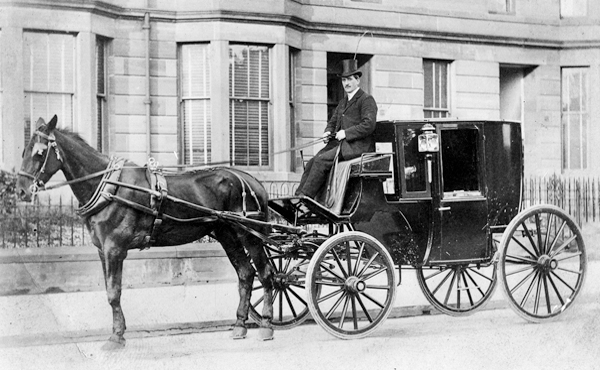
Richer folk could buy a four-wheeler which provided more protection from the weather but needed a pair of horses – an imposing status symbol. Examples include Clarences, Broughams and Victorias, the latter, of course, being the queen’s choice. No doubt she could afford the expense, which Charles Dickens in 1879 calculated at 45 guineas a month for keeping a two-horse carriage, including the coachman. In modern terms that is over £50,000 a year, which makes owning the flashiest car seem like a bargain!
 The Old Roads of Derbyshire
Love those carriage pictures, they seem to hark back to a gentler time than we are in now
LikeLike
You’d certainly have a different sense of distance if your average speed was only ten miles an hour!
LikeLike
You would certainly have a different sense of distance if your average speed was only ten miles per hour!
LikeLike