The Tunnel Road

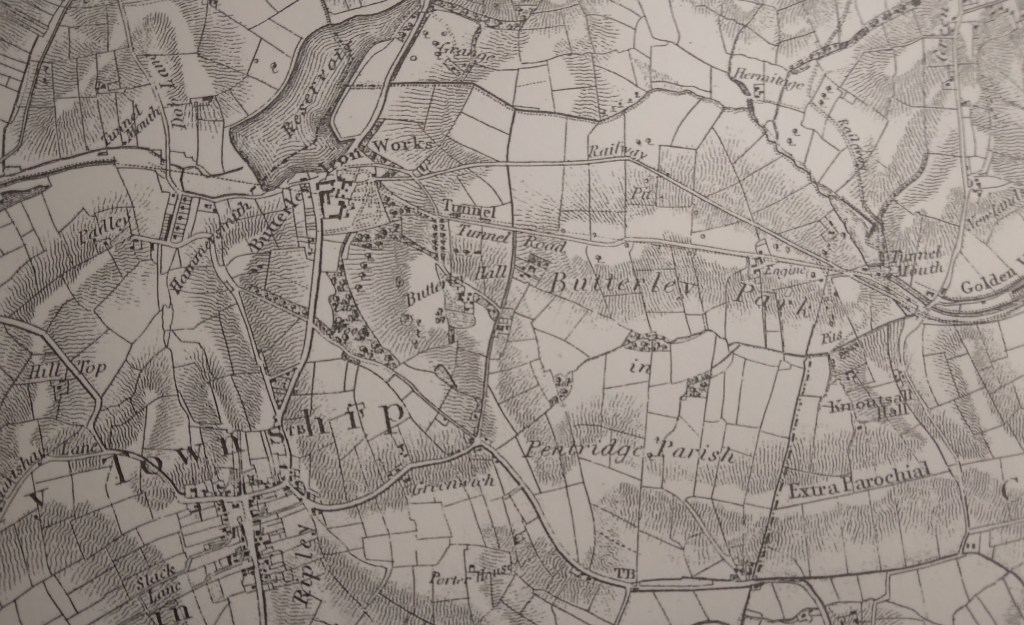
Butterley and Ripley from Sanderson’s map of 1835

The Butterley Tunnel, shown on the map above, was one of the biggest engineering challenges in the construction of the 14 mile-long Cromford Canal, opened in 1794. Just over 3,000 yards (1.75 miles) long, the tunnel was only eight or nine feet wide, for reasons of economy. Clearly this did not allow space for a tow-path, and so the horses had to be walked over the hill, on the Tunnel Road which can be seen near the centre of the map. To avoid underground collisions there were strict rules for using the tunnel in different directions, for example barges travelling west could only enter the tunnel between five and six in the morning or one and two in the afternoon. They were expected to clear the tunnel in at least three hours. As the barges had to be ‘legged’ through, with the bargees lying on their backs, you can only hope they didn’t suffer from claustrophobia! The view of the eastern tunnel mouth today, below, gives an indication of how narrow the opening was, although when in use it would have been deeper than this photo sugests.

The Butterley Ironworks, a major factor in the growth of Ripley in the nineteenth century, was founded at the same time as the Canal was developed. Coal was mined from several pits in the area and iron ore was also quarried locally. The company went on to develop forges and blast furnaces at Butterley and Codnor Park. Clearly the canal was vital for the business, carrying both coal and finished products: an underground wharf still exists so that boats could be loaded directly below the Ironworks. One iconic product from Butterley was the steel frame of the roof of St Pancras Station.

At the end of the nineteenth century the tunnel suffered from mining subsidence, with rock falls, and was finally closed to traffic in 1900, so that the Cromford Canal, already suffering from railway competition, was cut in half. Today the Tunnel Road can be walked from the back of the Ripley Police HQ to Golden Valley, and several brick air shafts can be seen on the route. A path to the north of this road leads to the Britain Pit (photo above), whose winding wheel and engine house give an indication of the industrial past of the area. Sunk in 1827, this shaft is now part of the museum of the Midland Railway Centre, which operates trains on both standard and narrow gauge tracks nearby.
…and miles to go before I sleep

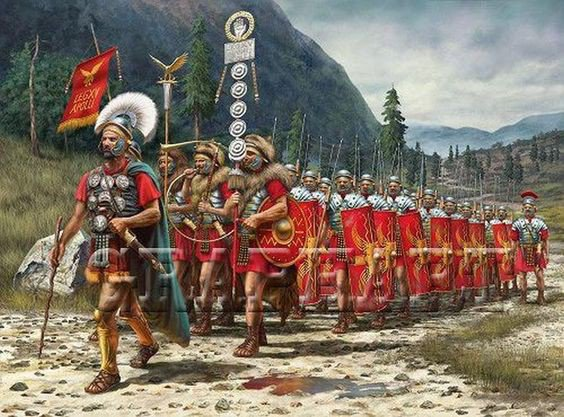
The Roman legions are supposed to have been capable of marching 20 miles per day. Even allowing for the Roman mile being slightly shorter than the modern mile, reducing the length to about 18 miles, this still seems very ambitious. It assumes they were walking on fairly well-surfaced roads rather than rough ground, but they must have been burdened by heavy equipment like shields. I imagine that this distance might have been possible in brief spurts, but for longer journeys something like 15 miles seems more realistic. However, the question of how far people could and did walk in a day is interesting, and can have surprising answers.

Looking down into Edale from Hollins Cross

There are many nineteenth-century examples of people walking remarkable distances to their work, especially in rural areas such as Derbyshire. It is easy to forget the complete lack of public transport in the days before bicycles became a practical solution. The 1851 Census records about 50 mill hands living at Castleton who worked at the cotton mill in Edale – their daily commute was about 3 miles each way but involved a climb of about 800 feet over Hollins Cross – in all weathers! Thomas Hardy’s novel Jude the Obscure describes Jude’s ten-mile walk to work as a stonemason; a figure which seems fantastic now but which must have been less remarkable when published in 1895. Even the walk to school could be arduous for children from outlying farms: Alison Uttley recalls her daily trudge from Castletop Farm near Cromford to Lea School, via Bow Wood – about a mile and a half each way. At the beginning of the twentieth century DH Lawrence, when a schoolboy in Nottingham, had to walk over two miles from his home in Eastwood to Kimberley station to catch a train into the town. As fictionalised in Sons and Lovers:

‘Mrs Morel was rather anxious about his health. But she herself had had to put up with so much that she expected her children to take the same odds’.

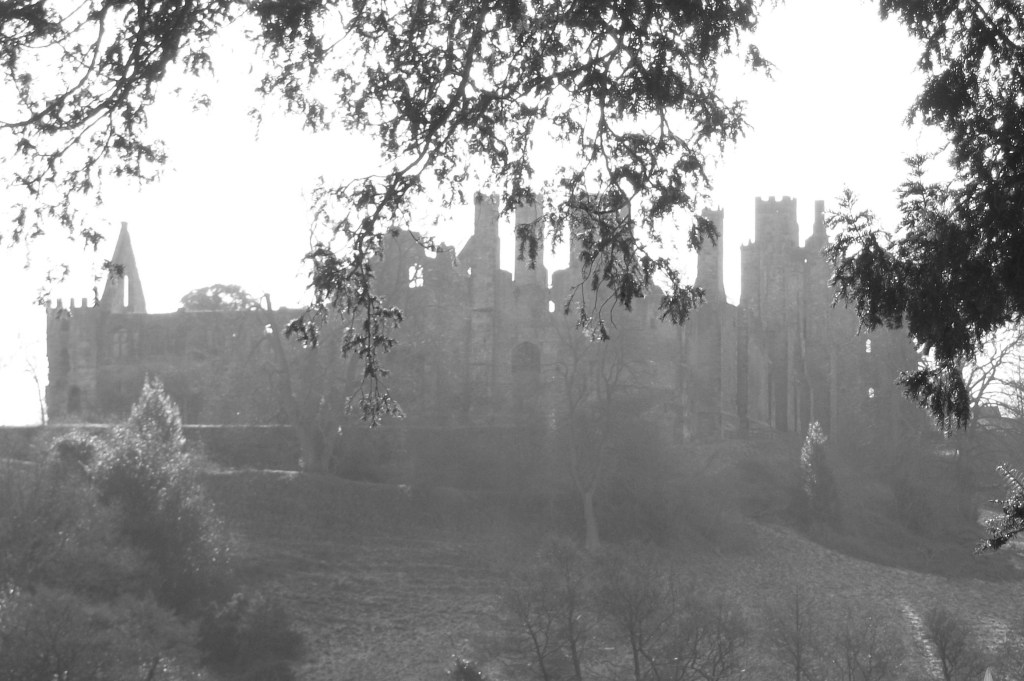
The romantic ruins of Wingfield

Lawrence also provides a good illustration of the popularity of hiking in the early twentieth century among the more radical working classes. For the first time, people had sufficient energy to go walking in their free time – something that would have been unthinkable for a labourer a hundred years earlier. In Sons and Lovers he describes a walk taken by a group of young folk, all from the Congregational Church in Eastwood, from Alfreton station via Crich to Ambergate station. Here he fictionalises an actual walk he led at Easter 1905, in which they visited Alfreton church, Wingfield Manor and Crich Stand (clearly not the present tower). On arrival at Whatstandwell:

They managed to procure a loaf and a currant loaf, which they hacked into pieces with shut-knives, and ate sitting on the wall near the bridge, watching the bright Derwent rushing by, and the brakes from Matlock pulling up at the inn’.

Given that all the walkers had to walk to and from the station at the start and end of the walk, the minimum distance they would have walked is about sixteen miles – a distance that would give many modern (and better-shod) hikers a real challenge!

Sources:

Robert Frost ‘Stopping by woods on a snowy evening’

Fletcher, A.J. (1971) ‘The Hope Valley in 1851’. Derbyshire Archaeological Journal 91:169-182

Lawrence, D.H. Sons and Lovers, Penguin, Harmondsworth, 1948

All roads lead to ….?

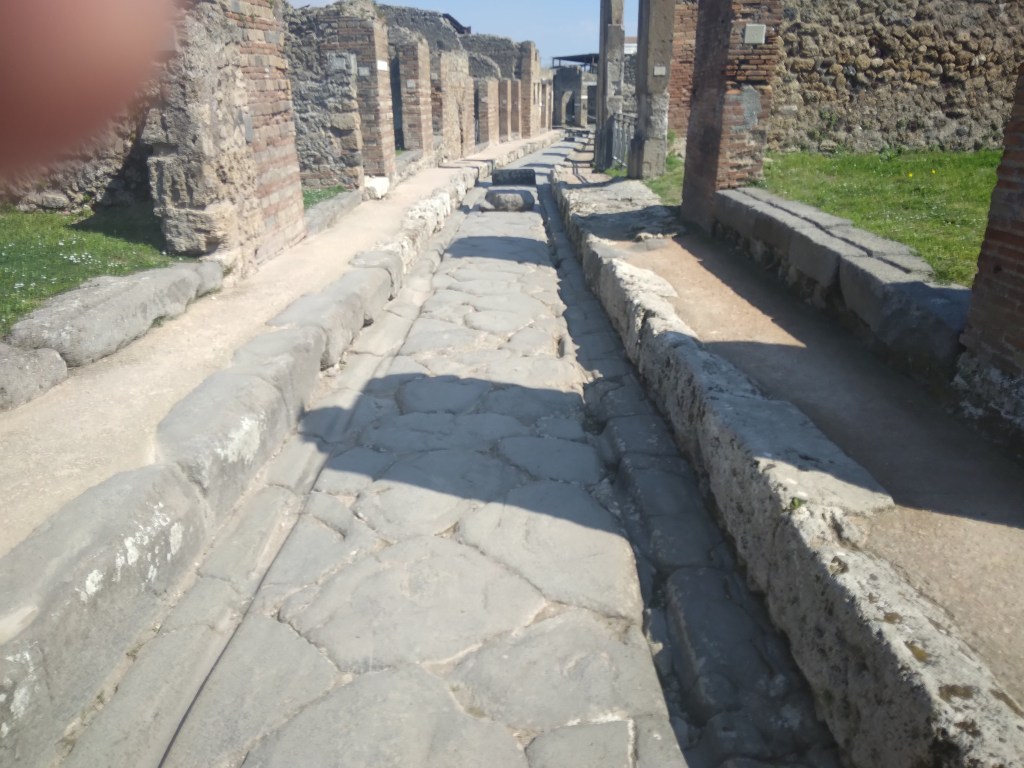
A street in the ruins of Pompeii

Pompeii may provide us with a good idea of what a Roman road looked like. Until its destruction in 79 CE Pompeii was a medium-sized town with good public facilities such as baths and temples – and well-paved streets complete with raised pavements. The photo shows the ‘crazy paving’ surfacing, kerb stones and also the ruts worn in the stone by carts with iron-rimmed wheels. In the distance blocks can be seen in the roadway to allow pedestrians to cross without getting too muddy. Perhaps the most surprising feature is the narrowness of both road and pavement – you wonder what happened when two carts met, or was there a one-way system?

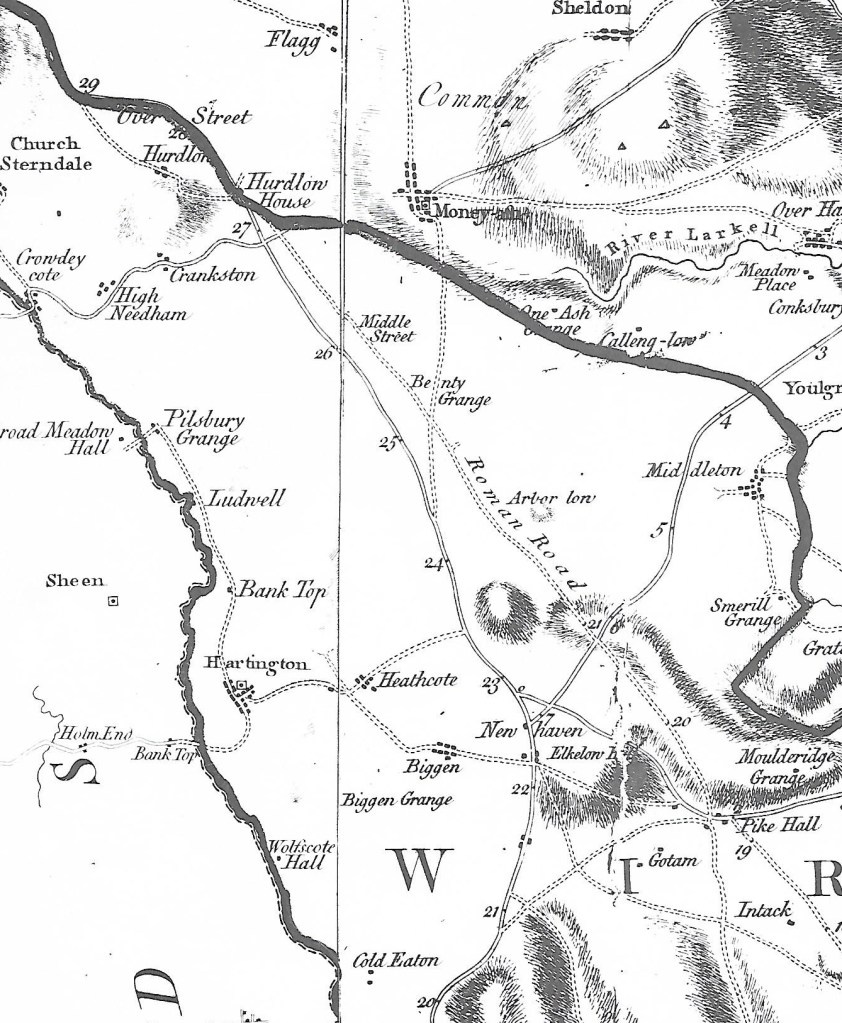
Burdett’s Derbyshire map of 1767 showing The Street north of Pike Hall

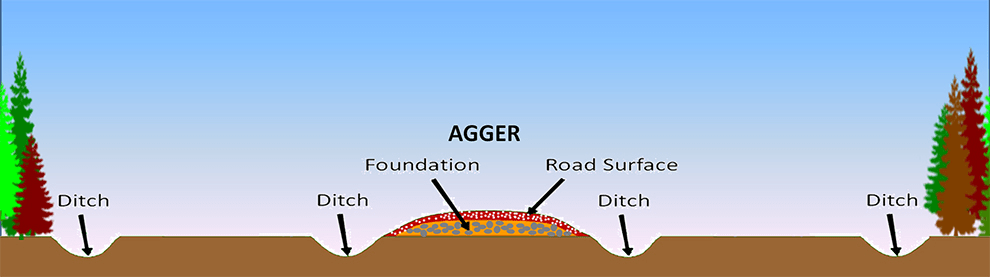
The Street, the Roman road that ran between Wirksworth and Buxton, is one of the best examples of a Roman road in Derbyshire. Clearly marked as such on Burdett’s map, it was still in use in the eighteenth century before the Ashbourne-Buxton turnpike was built, although today there is little visible evidence of its route. The Romans would have used whatever building material was available, so in the Peak District there was plentiful stone for foundations and kerbs, although the surface was probably something like gravel. Their roads were generally constructed on an agger, a raised platform about two or more metres wide.

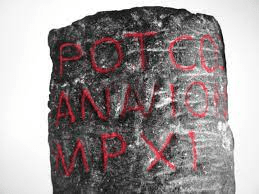
Roman milestone found in Buxton. It gives the distance to Navio as 11 miles.

The Street has been thoroughly researched by the Wirksworth Archaeological Society and various sections have been excavated. There has been endless debate about the southern destination of this route, and their research establishes that it reached Wirksworth, although the route beyond is unknown. The excavations also found that the road was no wider than two metres in places, so it should be seen as a relatively minor route, just wide enough for one wheeled vehicle. Given the number of pre-Roman sites which lie next to the Street, such as Arbor Low and Minninglow, it seems that the Romans actually followed and engineered a prehistoric route rather than create a brand-new road.

The theory

Although it is claimed that some stretches of Roman road survive in the Peak, for example near the Snake Pass, in fact it is impossible to know if these fragments are medieval or earlier. In general, over the last two thousand years almost all traces have vanished, due to weathering (stone tends to sink into the ground under its own weight; ditches fill up) and robbery of stone for wall or barn building.

Source:

The Street: A re-evaluation of the Roman road from Buxton to Wirksworth.

Wirksworth Archaeological Society, 2019