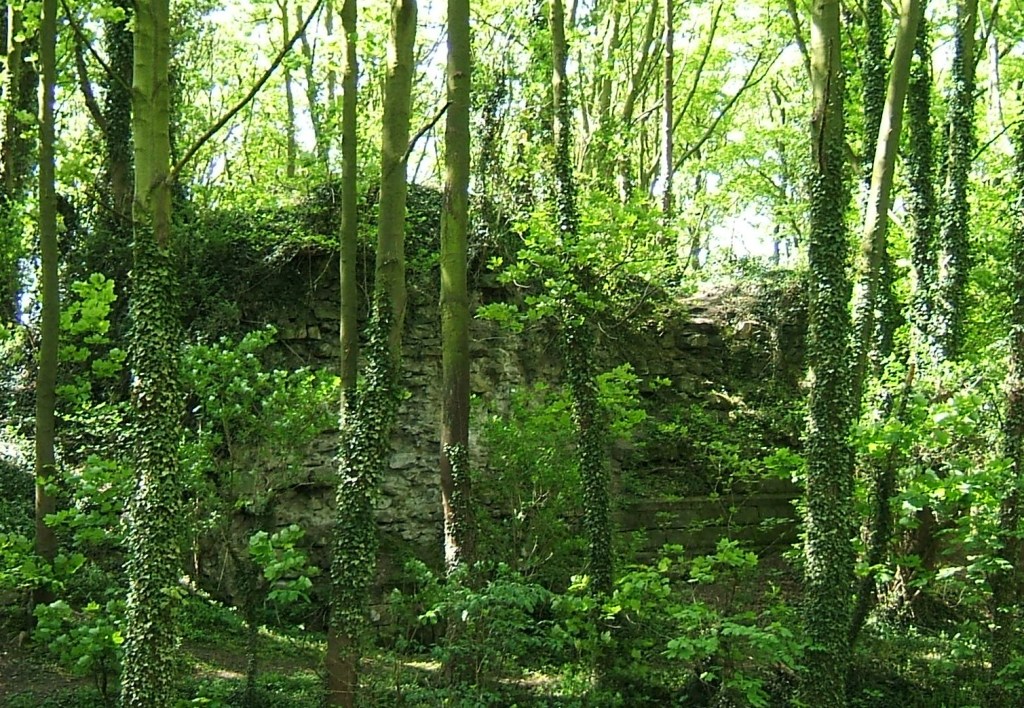
Rambling around Ryknild

Ryknild Street was the only long-distance Roman road that crossed Derbyshire, coming from Lichfield to the camp at Little Chester and then on to Chesterfield. Part of its route is still used today, notably the A61 from Higham through Stretton and Clay Cross to Chesterfield. There is little trace of the first part, through Breadsall and up to Brackley Gate, but then the route is picked up by Golden Valley and runs very straight to Smithy Houses and Street Lane. This last name, of course, and the village of Stretton, are reminders that Roman roads were always ‘streets’. Ryknild Street is the name given on the OS map, but there are many variations of the spelling, and this name was almost certainly not used by the Romans. The map above, of the area around Pentrich, is one place where public footpaths give access to the line of the road.
There’s a road here somewhere

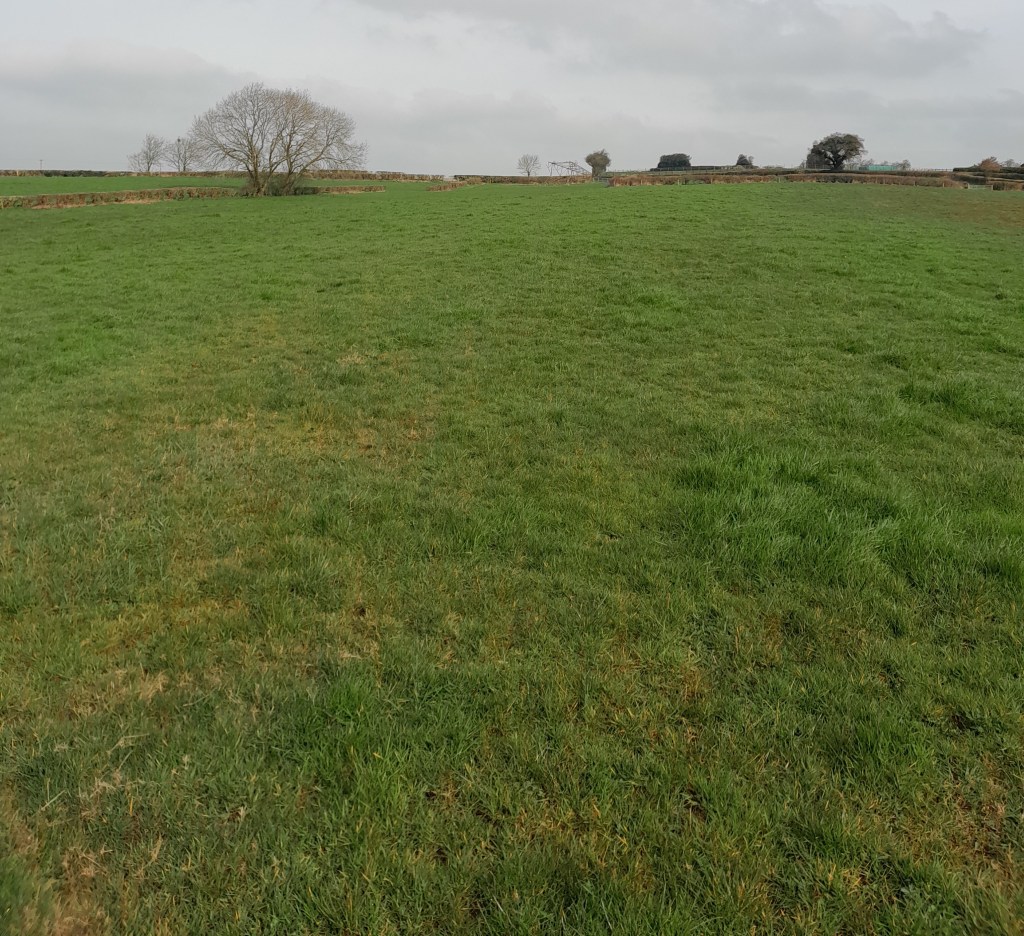
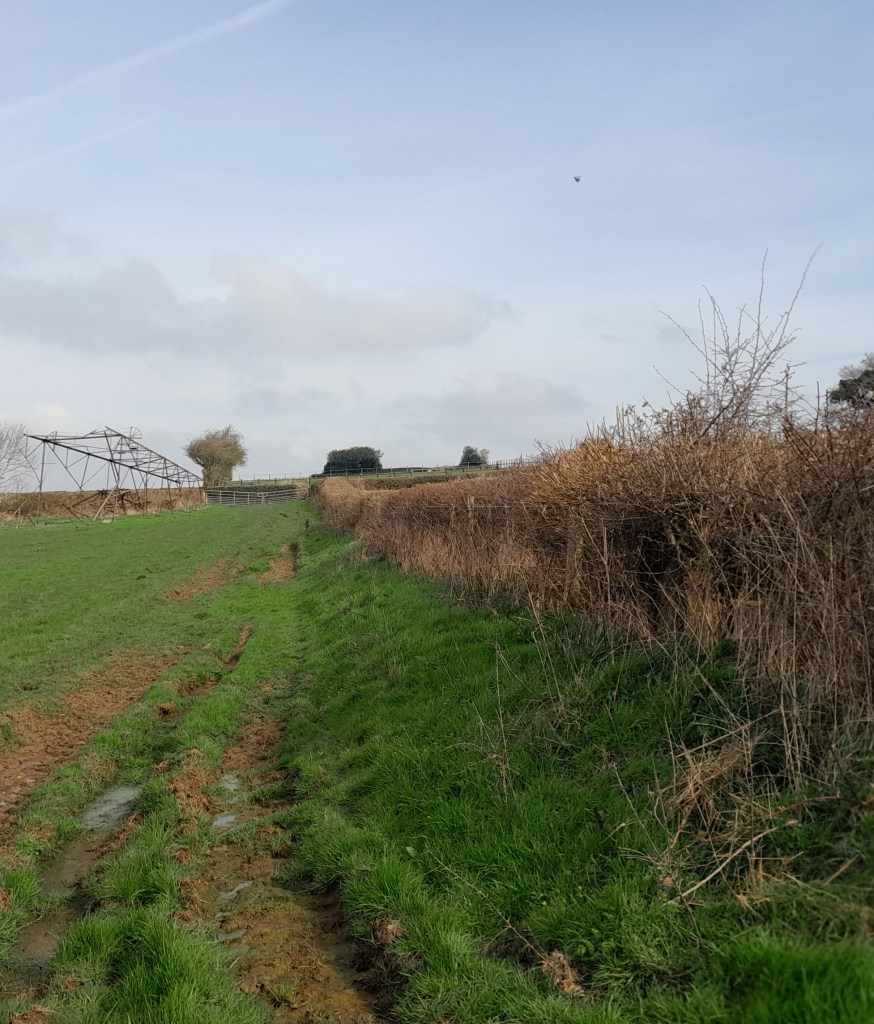
The footpath due west from Pentrich Church crosses the line of the old road at the top of a rise, and the raised platform for the road (known as an ‘agar’) can be just made out in the grass. Following this line north you come to another section of path which runs alongside a hedge – this is one of the few places Ryknild Street can actually be followed (see lower photo). On the other side of Riley Lane there is no trace of the road as it runs through ploughed fields east of Coneygrey Farm. However, just west of the road’s course, on Castle Hill, is what the OS map calls a ‘Roman Fortlet’.
The view is worth the climb

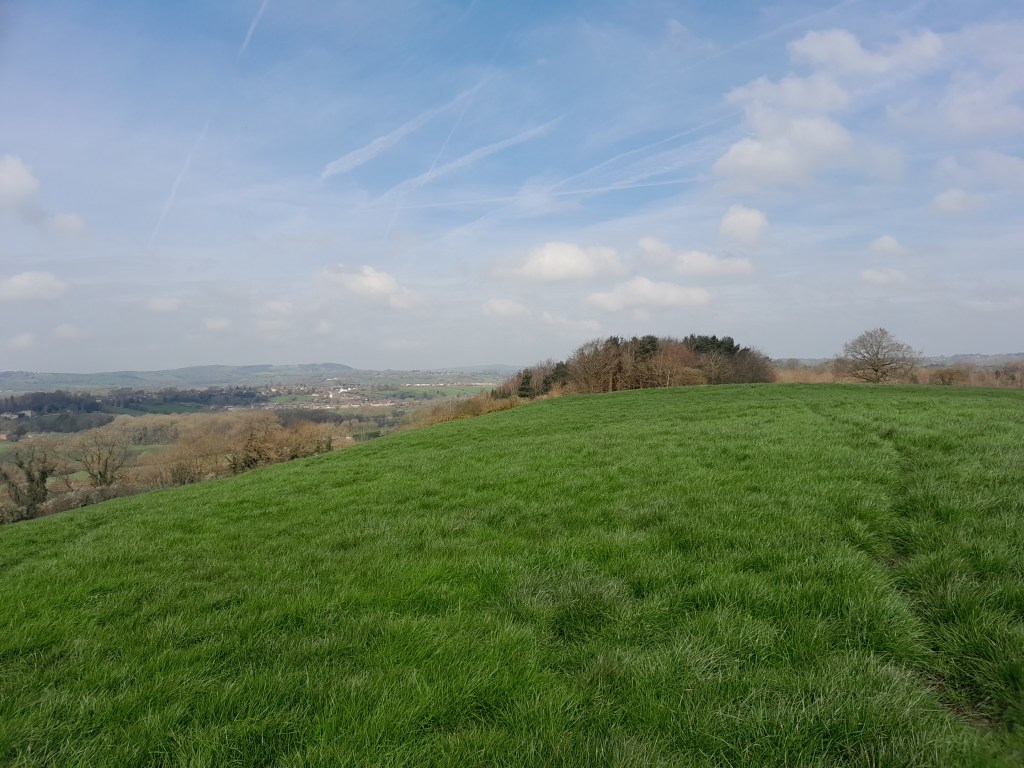
Roughly half-way between Little Chester and Chesterfield, this fort might have offered some shelter to road users but was unlikely to be manned regularly. It can be reached by climbing the quite steep bank from the Oakerthorpe road, but the view from the top is brilliant, and shows that the road builders were keeping to high ground, well away from the Amber floodplain to the west. Possibly they were just upgrading an older route which followed the ridge?
All roads lead to ….

One obvious question is why such well-built roads as the Romans constructed were allowed to go out of use? Of course, in places they were maintained and improved, such as the modern A38 from Lichfield to Derby but other areas such as this may have preferred older routes, or have been unable to organise maintenance, for instance when trees were blown down or drains and culverts became blocked.

For a detailed report on the fortlet see:

A walk around Horsley Castle

This 4-5 mile walk includes a medieval castle and a section of the Portway, plus another ancient holloway. Parking is available at various points, but perhaps the simplest is at Coxbench, on the road parallel to the A38 embankment that leads to the kennels, marked MP on the map above. Follow the path up by the kennels, and then take the right-hand path up into the wood. The area to the west has been extensively quarried and the path is effectively following the edge of these quarries. The path then changes direction, turning east, and the ruins of Horsley Castle can be seen on the right.

Like several other Derbyshire castles (Duffield, Pilsbury) little remains of this one, beyond a clump of rough masonry on a mound. It is easier to see the layout in winter, before the trees are in leaf. Little is known of the history of the castle, which is dated to the twelfth century. Clearly most of the stone was robbed when it went into decline. It is nearly a mile from Horsley village, and is presumably sited here to take advantage of the high ground and possibly the proximity of the Portway, which is the route of the footpath, offering good views to the north and west. On the Historic England website it is said that the castle ‘overlooks the strategic Derwent Valley’: clearly impossible given the high ground between here and Duffield!

The castle ruins

From here continue eastwards to Sandy Lane, and then follow this uphill to the settlement of Brackley Gate. The route turns sharp right here, downhill towards Horsley Carr, but note that if you continue on the top road to Quarry Road you will cross the line of Ryknild Street, one of the most important Roman roads in Derbyshire, although now invisible here. The track descends through dense woodland, and when this opens up on the right, take the path that leads you to a tunnel under the A38 road. You now cross, in quick succession, the road to Little Eaton, the Bottle Brook, and the course of the old railway, before turning left on the Alfreton Road for a few hundred yards. Just past the Bell and Harp pub take the road to the right which runs up past houses before climbing more sharply through the wood. This track, in part a holloway, may have been a church path to Duffield church (but also to Duffield bridge).

After half a mile turn right onto the field path running north, and then bear right beyond Daypark, where several tracks lead down to the Holbrook road, here named as Port Way – the only surviving ‘official’ naming of this old route. From here it is less than a mile downhill to Coxbench, where you turn right and then left under the A38 again, back to the starting point.

Church path to Horsley from the Holbrook Portway