Mr Brown’s girls

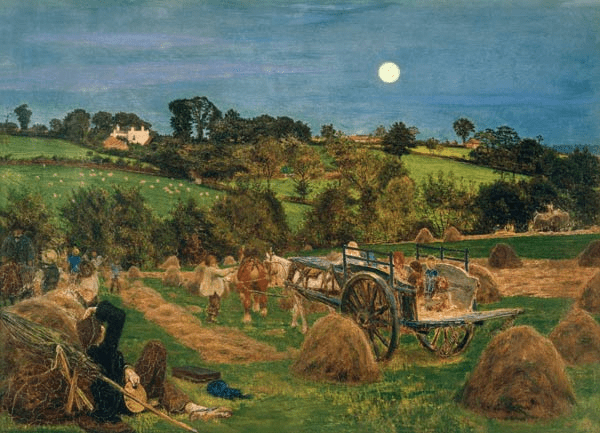
Ford Madox Brown – The Hayfield (1855)

By 1878 the painter Ford Madox Brown, at the age of 57, was suffering from severe gout, that classic Victorian ailment. His wife and model Emma had become alcoholic, probably as a result of the cuckoo in their nest, the 37-year-old poet Mathilde Blind, the object of his unresolved passion. It was Mathilde who proposed a family holiday in the fashionable resort of Matlock Bath that summer, along with his daughter Lucy and Lucy’s husband Frank. They would presumably have come by the Midland railway from their London home, and then by station fly to the house they had rented, ‘Belmont’, high above the river on Waterloo Road. The August weather allowed the younger members of the party to enjoy long walks along the valley, but Madox Brown was unable to join them, being literally bedridden with gout for most of the holiday. Perhaps that’s why he produced no Derbyshire paintings to rival those he painted in the London area, such as The Hayfield (above). As an associate of the Pre-Raphaelites he was faithful to their principle of working outdoors for authentic lighting effects, as can be seen in his iconic painting The Last of England.
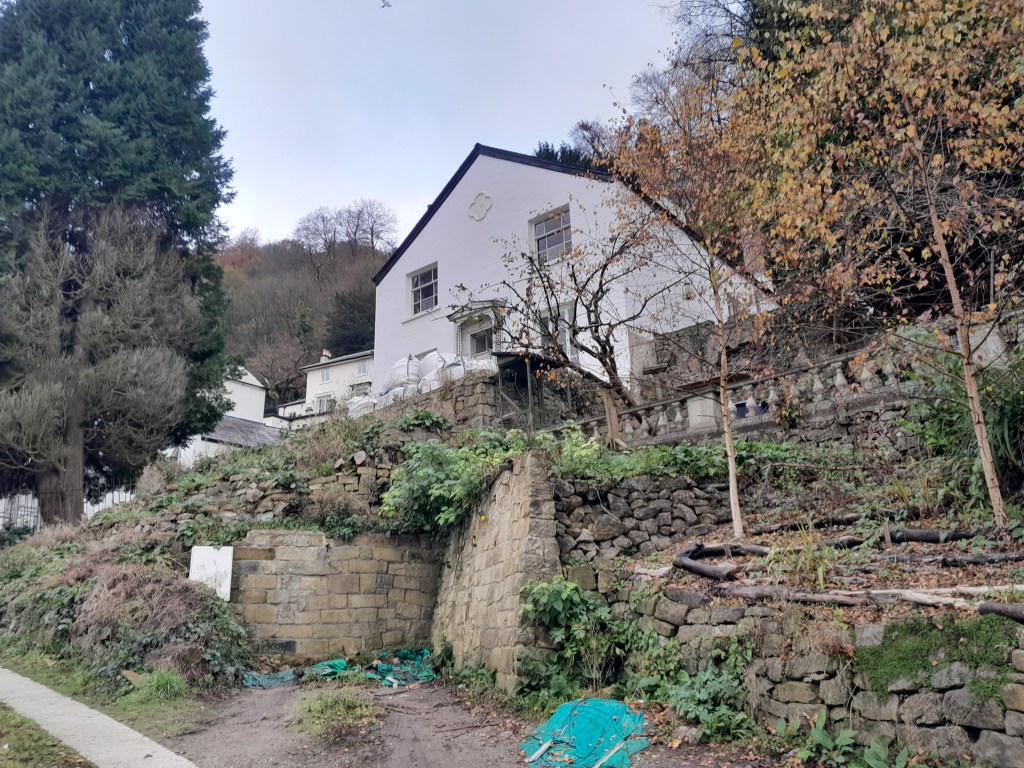
Belmont survives, a Grade II listed building which was constructed in 1847, one of the earliest houses on Waterloo Road. By 2021 it was in a dilapidated condition, and was auctioned that year for £203,000. Today it is freshly renovated and repainted, tucked away off the road, with views over towards High Tor.
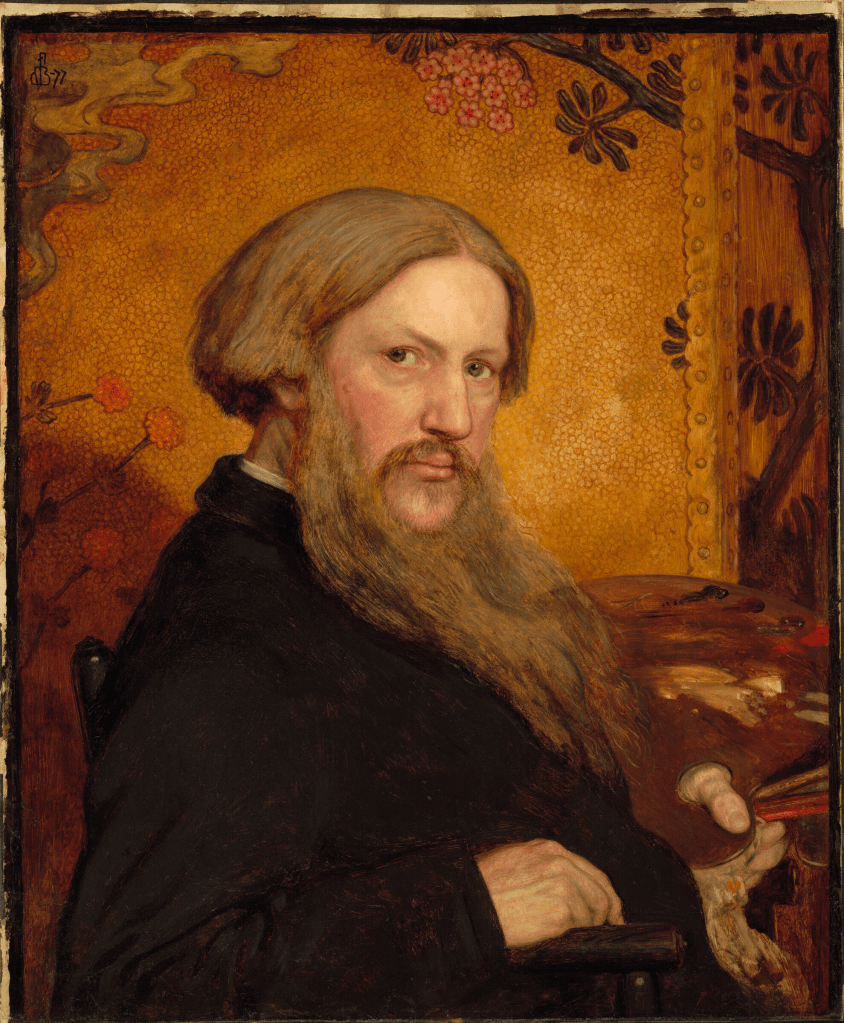
Brown in painterly pose

This self-portrait was made about the same time as Brown’s visit to Matlock. His lengthy beard and severe expression give him a patriarchal air, but friends such as Rossetti claimed that he was genial and sociable. He certainly had a difficult life: his parents were English but led a wandering life in the Low Countries for economy; his mother and sister both died before he was 20 and his father shortly after. He married a cousin, Elisabeth Bromley, who died of TB six years later, and then married his model, Emma, who posed as the emigrating wife in The Last of England. Her drinking increased as he became infatuated with two much younger and strikingly attractive women, Maria Spartali and Mathilde Blind, both part of London’s intellectual immigrant community, Marie from Greece and Mathilde from the German-speaking states. Yet neither of these relationships appear to have been consumated, while their consequence was to make all parties miserable – welcome to Bohemia!

A lovely day out in the Bath

Today Matlock Bath rarely seems short of visitors; even in winter there will be customers for ice cream, and car parks fill up by mid-day. But in the past, especially before the railway arrived in 1849, and when road access was challenging, the village had to work harder to attract travellers. Early fame depended on the waters, of course, but wallowing in a lukewarm bath had limited appeal, yet the spectacular landscape of High Tor to one side and Masson Hill opposite was the subject of many paintings, helping spread its reputation. Local entrepreneurs began adding to the natural beauty, starting with Lovers’ Walks, on the east side of the Derwent, and originally only accessed by ferry or from Willersley. The Walks are first mentioned in 1742, making them possibly the earliest public ‘park’ in the country. Paths were created by the river and up the hillside, with seats, shelters and ornaments provided to enhance the views.

View of Matlock Bath from the Heights of Abraham c. 1840s

Presumably eighteenth-century visitors were more energetic than modern holidaymakers, since before the cable cars were installed reaching the Heights involved a steep-ish walk. Opened in 1787, the rather quirky name derives from the supposed similarity to the Heights of Abraham in Quebec, where General Wolfe died in 1759. These gardens offered views over the valley, improved by building the viewing platform of the Victoria Tower in 1844. Clearly, hillside walks were a limited attraction, so the old lead workings in Masson were opened up to visitors, now named Masson Cavern and Rutland Cavern, both continuing to offer some spectacular sights.

The Switchback Railway, Derwent Gardens c. 1910

About 1887 a craze for ‘switchback’ railways, a basic kind of gravity operated roller coaster, swept the country. The Buxton family bought and ran Matlock’s version, which had been built on the site of Derwent Gardens, and it continued operating until about 1930. Judging from the photos it would have never passed Health and Safety inspections, but was apparently extremely popular!

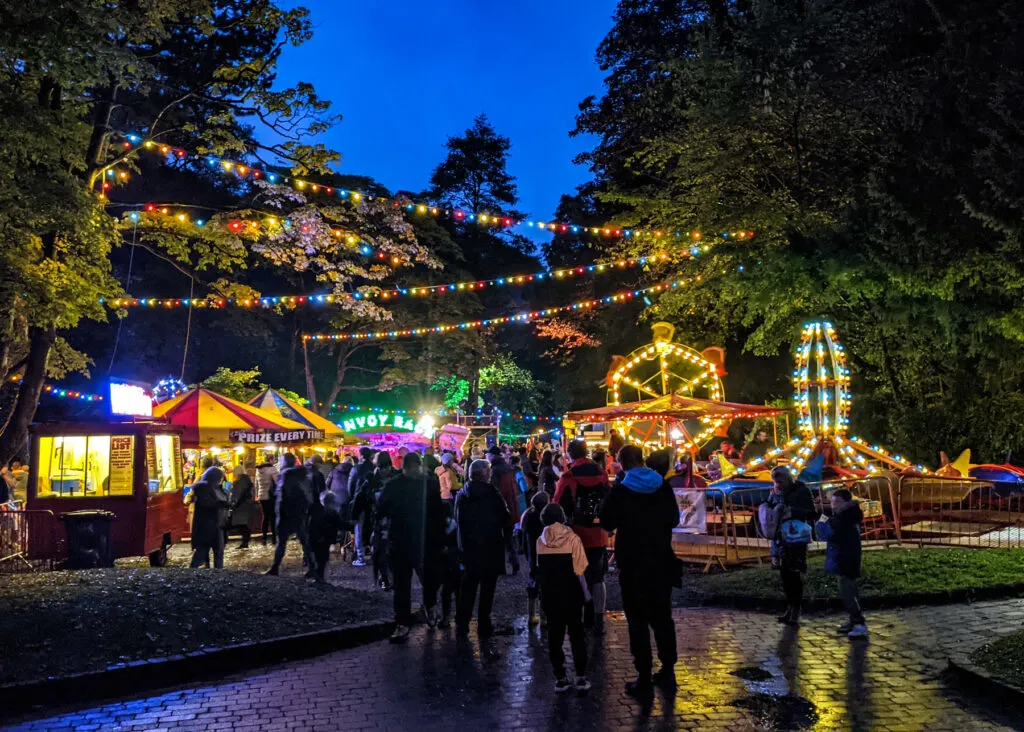
Matlock Bath Illuminations, or Venetian Nights, dates back to 1897, when it was an attempt to prolong the holiday season into the autumn by offering a spectacular display of illuminated boats, accompanied by fireworks. These have continued up to the present, with breaks for wars, floods and, of course, Covid-19. Especially in the 1920s and 30s there was strong competition for the prize for the best boat, and some of the remarkable winners can be seen on the Andrews pages at:

https://www.andrewsgen.com/matlock/pix/matlockbath_illuminations_boats.htm

The Horsey World

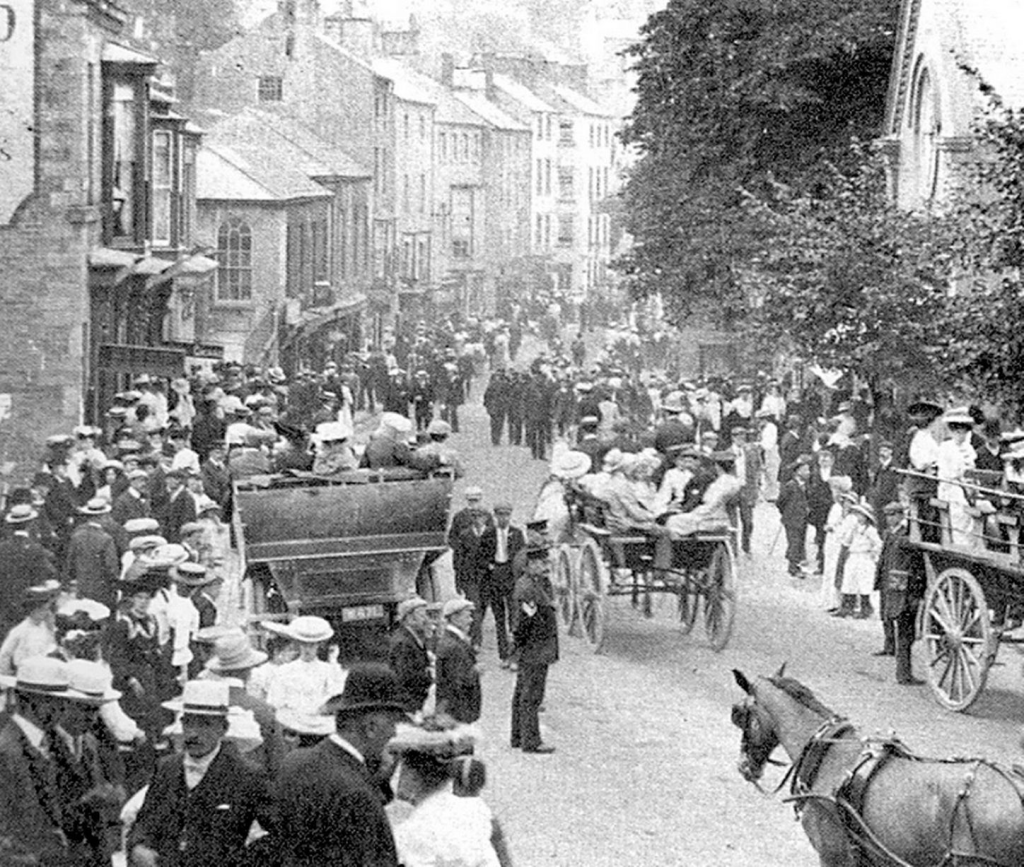
A jolly holiday crowd at Matlock Bath

Today it is easy to forget the importance of the horse before the twentieth century. Leaving cavalry and racing aside, they were critical in agriculture and travel, reaching a peak in the nineteenth century when there were an estimated three million horses in Britain. Selective breeding during the medieval period led to horses replacing oxen in plough teams, while others were bred for speed and endurance. Travellers, unless poor, generally went on horseback, certainly before reliable coach travel was available in the 1830s. For many professions, such as doctors and lawyers, travel by horse was simply the most convenient mode, combining flexibility with reasonable speed, for long and short journeys. For example, James Clegg of Chapel- en-le Frith, a dissenting minister, rode nearly 1,000 miles in the first half of 1730, according to his diary.

Clegg’s chapel at Chinley near Chapel-en-le Frith

The ability to ride was necessary for these kinds of jobs, and gentlemen in particular were expected to ride with a certain style, especially when out hunting, or otherwise displaying their social status. When and how boys (and it was generally males before the modern period) learned to ride is a good question, and although there have always been riding schools, we can presume that most were taught by their fathers, or servants such as grooms. The population was mainly rural until the mid-nineteenth century, when riding ability would have been as common as knowing how to cycle is today.

Matlock Bath as was

DH Lawrence provides an example of this in his novel The Rainbow. Set in the 1870s, he depicts the young farmer Tom Brangwen riding from Cossall to Matlock Bath:

“One Whitsuntide he went a jaunt, with two other young fellows, on horseback to Matlock, and thence to Bakewell. Matlock was at that time just becoming a famous beauty spot, visited from Manchester and from the Staffordshire towns. In the hotel where the young men took lunch, there were two girls , and the parties struck up a friendship”.

In the story Tom gets off with one of the girls, tells his companions not to wait for him, and leaves his horse with an ostler while he takes the young lady for a walk in the woods. This is a reminder of the variety of jobs that were involved with the horsey world, such as ostlers, grooms, saddle makers and many more. The 1871 census for the parish of Matlock lists 12 wheelwrights, 15 blacksmiths, 17 cab drivers, 6 coachmen, 8 grooms, and 4 saddlers, not to mention a horse breaker, a coach maker and an ostler.

Mr Wright paints Cromford

Wright: Arkwright’s Mill in the late eighteenth century

Paintings and prints can help us understand the development of the road system, and reveal historical features not shown on maps. As Matlock Bath became an established tourist attraction in the late 1700s, visitors were also keen to visit Arkwright’s mill just up the road at Cromford, and be impressed by the scale of the buildings. One of these ‘industrial tourists’ was Joseph Wright of Derby, who painted the mill both by day and at night, when the rows of candlelit windows must have been a remarkable sight in this very rural location. The painting above appears to have been made from a location close to the modern High Tor cafe by the Cromford crossroads, looking down the road towards Cromford Bridge. But this area has been radically changed by cutting through the Scarthin Rock, a process begun in 1817 but not finally completed in modern form until 1962. The painting clearly shows the mill leat on the far side of the road, which led to the aqueduct above the road (damaged quite recently and sadly never replaced). The Bonsall Brook is shown on the nearside of the road (not visible today), and the main building is taller than today’s mill. In the distance the tower of Crich Stand can be clearly seen, which at the time of the painting had been recently (1785) rebuilt in stone by Francis Hurt, a major local landowner.

Wright: Willersley Castle and Cromford Church

Another view of the area has the Matlock Bath road in the foreground, and is framed again by Scarthin Rock. It is difficult to find this viewpoint today due to the increase in tree cover: in Wright’s time the valley was quite bare. Both Cromford church and Willersley Castle must have been very recent when this was painted; in fact the church was not finished until 1797, the year of Wright’s death. The painting illustrates the first appearance of the church; the current porch was added in the mid-nineteenth century. Next to the bridge the small fishing house is clearly visible.

Wright: Cromford Mill by night

The third painting is an example of Wright’s interest in dramatically-lit night scenes. Although the view is from a similar spot to the first picture, the road now runs to the left of the mill, not the right. It must be assumed that this is artistic licence, since the road in the first picture is so clearly on the line of the present one. Clearly, the details of such pictures cannot be assumed to be reliable, but it’s worth noting that the two-storey building in the foreground, which is not shown in the first view, survives today in the same form.

The lost fords of the Derwent – 1

Railway bridge on Ladygate leading to Old Matlock

River crossings have always been critical points on the road network, and originally these would have been fords, passable for riders in normal conditions, and possibly having stepping stones for those on foot. From medieval times onwards fords on the Derwent were mainly replaced by stone bridges, though their location is still remembered by the place names Bamford, Grindleford, Cromford, Homesford and Milford (from north to south). The original name for Matlock appears to have been Mestesforde (i.e. in the Domesday Book), and many historians have assumed that this ford was near the site of the current bridge. But the nucleus of old Matlock is actually at Starkholmes, not near Crown Island, and so it has been argued that the ford was near the point where Ladygate Lane now crosses the river on a footbridge.

Well below St John’s Chapel

The westward route would have climbed up the hill, past the nineteenth century St John’s Chapel (built over a perpetual spring), and up to Bonsall, near where it linked up with Salters’ Way. The more modern route of Salters’ Lane, leading to Matlock Bridge, developed after this bridge was constructed, although the date of the original bridge is not clear. The access to the bridge on the east side was easy, but because this land (i.e. Hall Leys) flooded regularly (and still does) development may have continued around St Giles for some time.

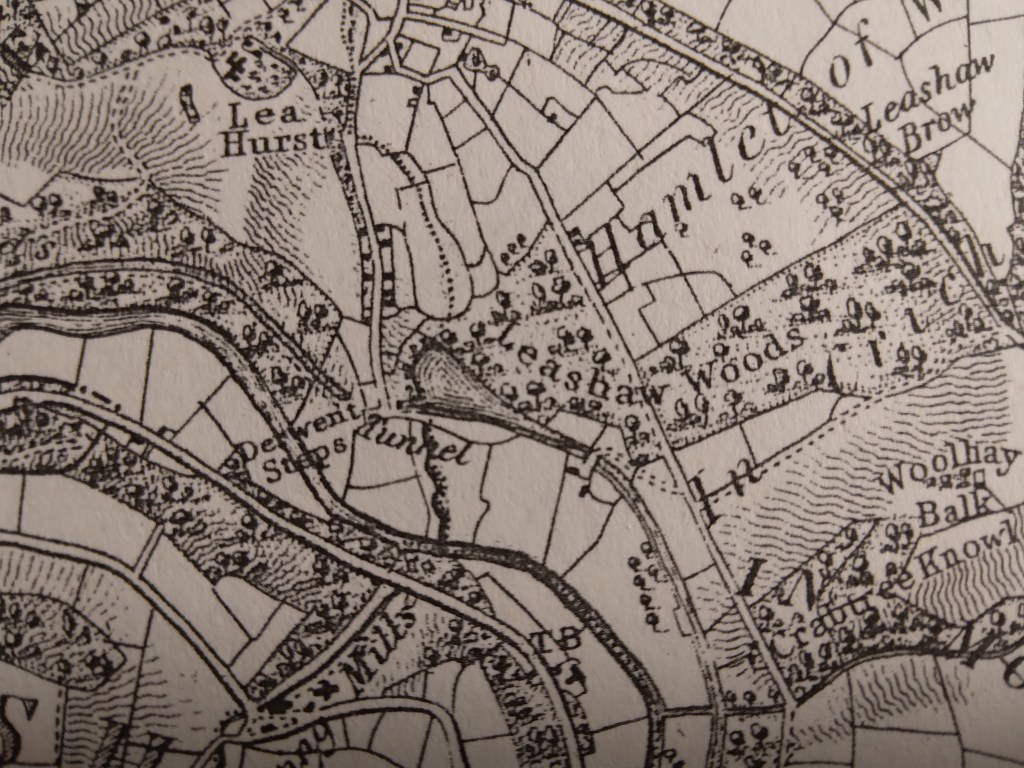
The site of Homesford from Sanderson’s 1835 map

A few miles downstream, the Homesford Cottage pub (still advertised as selling Kimberley Ales) has become a guest house, and the name Homesford is not found on the OS map. Yet Sanderson’s map from 1835 shows a road from Upper Holloway running down past Lea Hurst (Florence Nightingale’s home) and over Gregory Tunnel on the Cromford Canal. The name ‘Derwent Steps’ by the river suggests a well-established set of stepping stones, with presumably a ford beside for carts and livestock. Today the Derwent can still be crossed here on a footbridge, suggesting that this was an ancient route, but there is no sign of any steps in the currently fast-flowing, turbulent river!.

Walkers, hikers or ramblers?

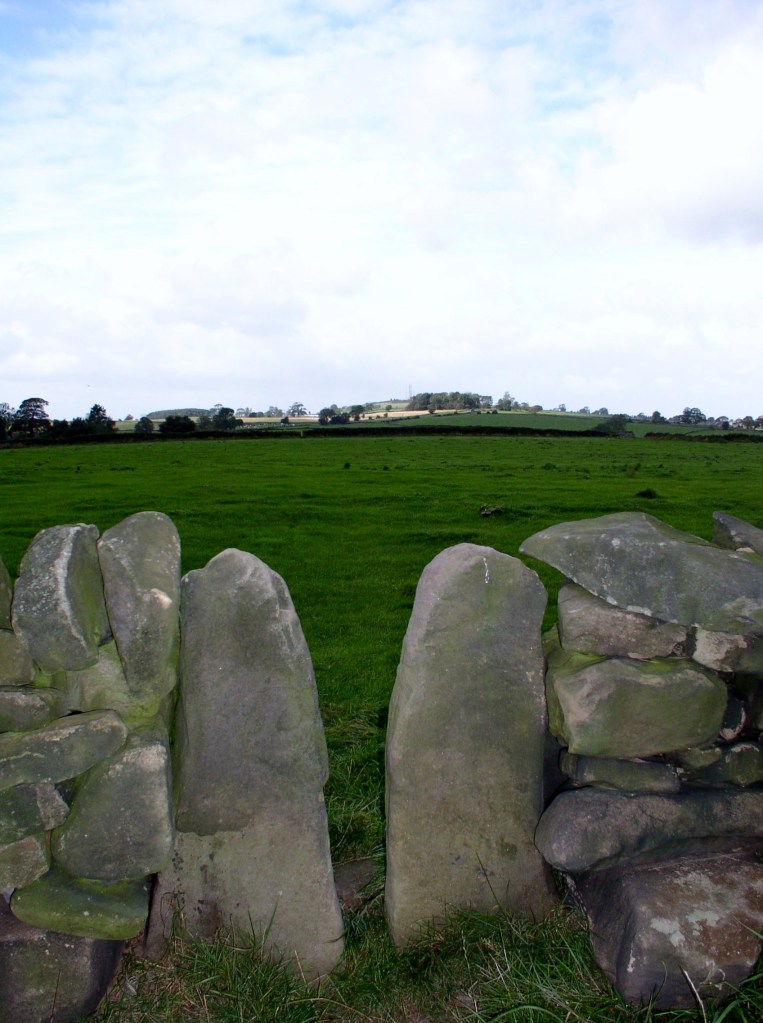
Squeeze style on path to Alport Height

Many of our field paths were created by people walking to work, possibly in mines or mills. With the enclosure of moors and commons in the late eighteenth or early nineteenth centuries and the building of drystone walls to delineate the new fields, these routes became fossilised, often marked by a series of squeeze stiles, as on the path above. Today the mills and mines have gone, yet the paths are kept open by walkers – a leisure activity that would probably have surprised the mill hands of Arkwright’s day.

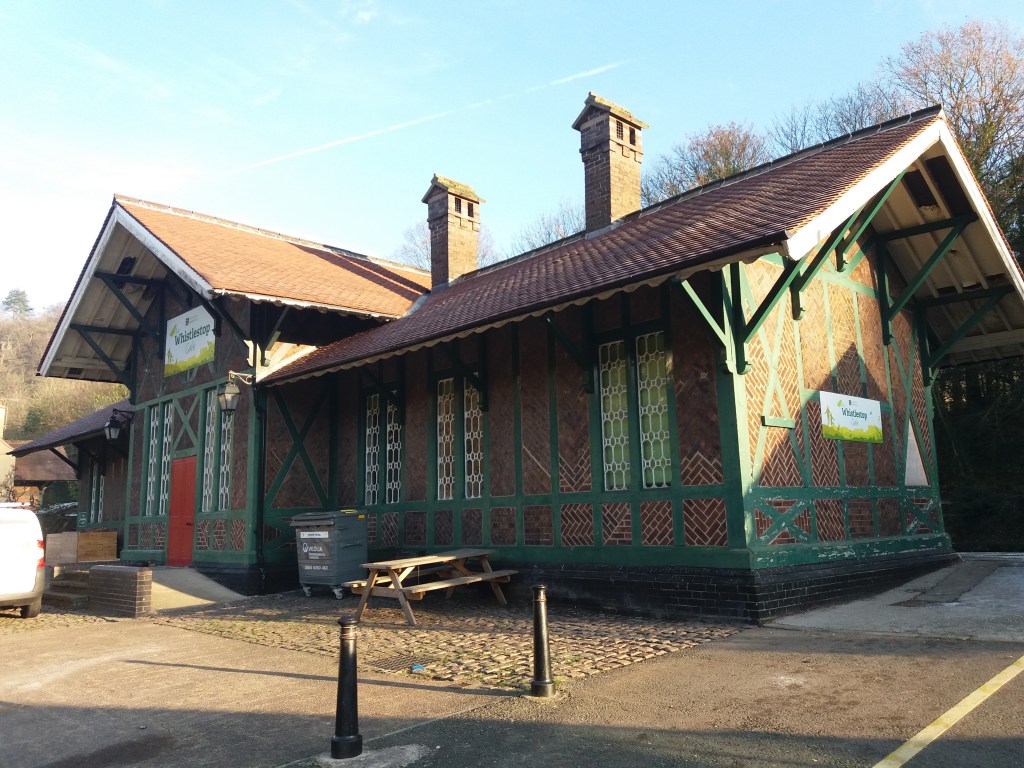
Matlock Bath’s Swiss-style station

Walking for pleasure became popular from the mid-nineteenth century, as some workers in the industrial cities of Sheffield and Manchester gained a half-day holiday on Saturday and were able to take advantage of the new railway lines to escape from the smoky cities into the hills of Derbyshire, Yorkshire and Lancashire. At first the focus was on the Dark Peak moors, especially Kinderscout, which became a regular scene of conflict between walkers and the gamekeepers employed by the Duke of Devonshire, who owned much of the moors.

PNFS signpost near Alderwasley

The Manchester Association for the Preservation of Ancient Public Footpaths was founded as early as 1826, and Manchester remained a centre for the defence of workers’ interests, notably establishing the first public library (1852) and the first cooperative society (Rochdale, 1844). In 1894 the Peak District and Northern Counties Footpath Preservation Association (thankfully abbreviated now to Peak & Northern) was formed, and is still doing excellent work defending walkers’ rights and interests, notably through over 500 steel signs like the one above.

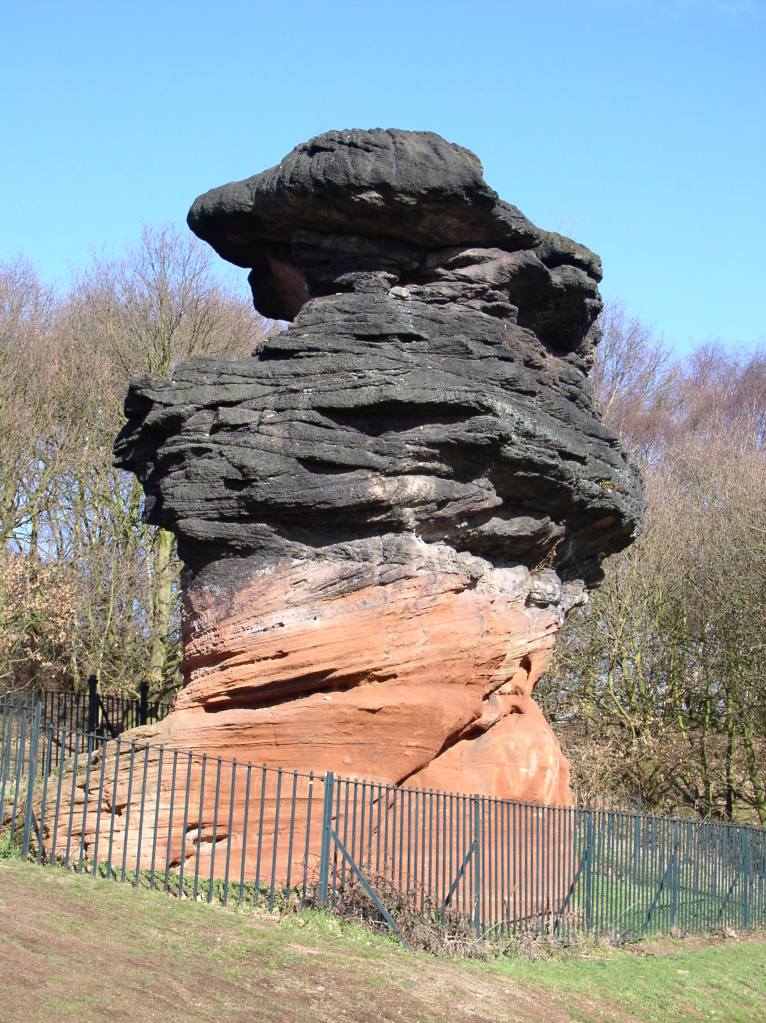
The Hemlock Stone today

The inter-war Kinderscout mass trespass has been widely publicised, but it was far from typical of the experience of many walkers in the Derbyshire hills. In general farmers and landowners have respected public rights of way and co-existed succesfully with ramblers. Perhaps a more typical walk is described by DH Lawrence in his Bildungsroman novel Sons and Lovers. Here, a party of friends and family, mostly connected with the Eastwood Congregationalists, set out to walk from Eastwood to the Hemlock Stone in Bramcote Hills one Bank Holiday. The walk actually took place at Easter 1905, and is an example of the way young people at that time, with little spare cash but plenty of energy, enjoyed their precious free time. The connection exemplified there between nonconformity, radical thought and hiking is interesting, and worth exploring further.