Watery ways

The Derwent Valleybackbone of the county

When the rains come the streams fill, and we become suddenly aware of the network of waterways that surround us. Normally just half visible, these then threaten to flood the roads and menace our houses. The most fundamental feature of the landscape, brooks and rivers have been flowing in their current courses for over ten thousand years since the last ice age, and have had a dominant influence on our history, as water sources, barriers and boundaries, and also as liquid energy.

The meanings of river names are remarkably impenetrable: unlike most village names many seem to be pre-Saxon, and some even hint at a pre-Celtic language. Kenneth Cameron[i] had a hard time explaining Amber, Dove, Wye, Noe, Lathkill, Derwent and Ecclesbourne (this one of the few ‘bournes’ in the county). Of course there are several River Derwents in England, and it appears to mean something like ‘oak river’. But when does a brook become upgraded to river? And when does the tiny sic (pronounced ‘sitch’) gain the status of a brook?

Due to their permanence, rivers have historically been used as convenient boundary markers, as with the Dove as the Staffordshire border or the Erewash marking part of the Nottinghamshire boundary. Within the county, streams may also mark parish or hundred (wapentake) limits. In lowland counties rivers were often navigable, yet in Derbyshire most were barriers rather than aids to travel. In wet winters larger rivers were often impassable, except where rare and expensive bridges had been built, such as at Cromford or Whatstandwell. Early routes avoided river crossings where possible and kept to ridgeways, above the thickest woods on the river banks.  Seasonal flooding was so bad in the lower Dove valley when Daniel Defoe visited in the 1720’s that he abandoned trying to reach Ashbourne from Derby.

The River Amber floods South Wingfield church – again

It is believed that in pagan times water spirits (or gods or whatever) were worshipped; water being seen as the source of life. There is substantial archaeological evidence of votive offerings (such as money or jewellery) being found at sites of wells or springs. So this may explain a Derbyshire mystery: why were some medieval churches built so close to frequently flooding rivers? All Saints at South Wingfield is regularly swamped by the Amber, and is well away from the main village, and the same goes for Duffield’s St. Alkmund’s, built right on the banks of the Derwent, as is, further upstream, St. Helen’s at Darley Churchtown. Were these built on ancient sacred sites, or were these locations convenient for baptisms – or both?
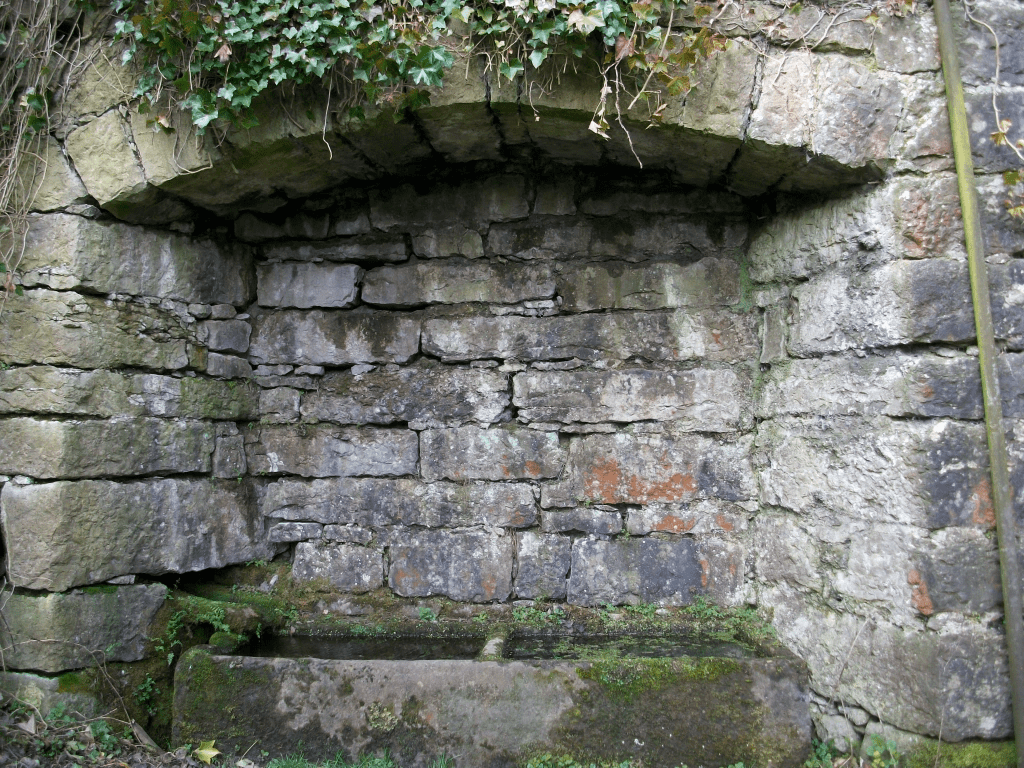
Well and spring below St John the Baptist’s church at Matlock Bath

Watermills were common before the Normans arrived, but it is noticeable that many in Derbyshire were located on minor rivers rather than on the Derwent. Presumably the large rise and fall of the Derwent made it more difficult to harness the river’s power. Some of the sites, for example on the Lea Brook at Smedley’s in Lea, seem today to have too little flow to power a mill wheel, but most had millponds to provide reserves of water during dry spells. When Arkwright built his first mill at Cromford he used the water from the Bonsall Brook rather than the nearby river. Later mills (e.g. at Milford and Darley Abbey) which did use the river required massive engineering works to create their weirs and leats.


[i] Cameron, K. (1959) The Place Names of Derbyshire Vol. 1

A lovely day out in the Bath

Today Matlock Bath rarely seems short of visitors; even in winter there will be customers for ice cream, and car parks fill up by mid-day. But in the past, especially before the railway arrived in 1849, and when road access was challenging, the village had to work harder to attract travellers. Early fame depended on the waters, of course, but wallowing in a lukewarm bath had limited appeal, yet the spectacular landscape of High Tor to one side and Masson Hill opposite was the subject of many paintings, helping spread its reputation. Local entrepreneurs began adding to the natural beauty, starting with Lovers’ Walks, on the east side of the Derwent, and originally only accessed by ferry or from Willersley. The Walks are first mentioned in 1742, making them possibly the earliest public ‘park’ in the country. Paths were created by the river and up the hillside, with seats, shelters and ornaments provided to enhance the views.

View of Matlock Bath from the Heights of Abraham c. 1840s

Presumably eighteenth-century visitors were more energetic than modern holidaymakers, since before the cable cars were installed reaching the Heights involved a steep-ish walk. Opened in 1787, the rather quirky name derives from the supposed similarity to the Heights of Abraham in Quebec, where General Wolfe died in 1759. These gardens offered views over the valley, improved by building the viewing platform of the Victoria Tower in 1844. Clearly, hillside walks were a limited attraction, so the old lead workings in Masson were opened up to visitors, now named Masson Cavern and Rutland Cavern, both continuing to offer some spectacular sights.

The Switchback Railway, Derwent Gardens c. 1910

About 1887 a craze for ‘switchback’ railways, a basic kind of gravity operated roller coaster, swept the country. The Buxton family bought and ran Matlock’s version, which had been built on the site of Derwent Gardens, and it continued operating until about 1930. Judging from the photos it would have never passed Health and Safety inspections, but was apparently extremely popular!

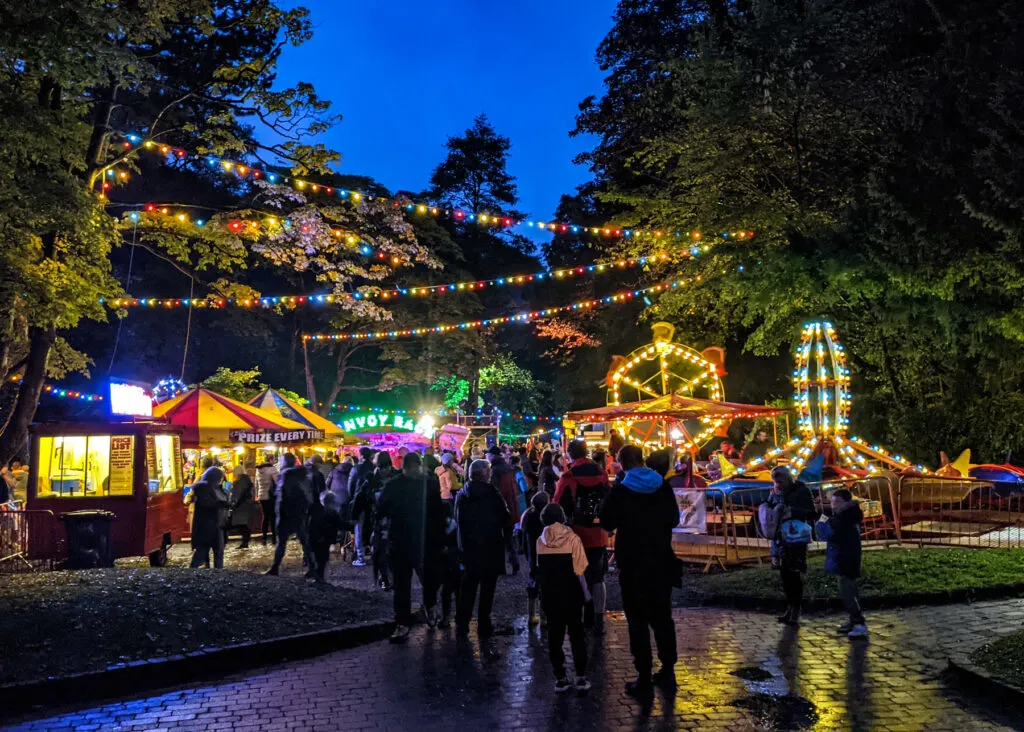
Matlock Bath Illuminations, or Venetian Nights, dates back to 1897, when it was an attempt to prolong the holiday season into the autumn by offering a spectacular display of illuminated boats, accompanied by fireworks. These have continued up to the present, with breaks for wars, floods and, of course, Covid-19. Especially in the 1920s and 30s there was strong competition for the prize for the best boat, and some of the remarkable winners can be seen on the Andrews pages at:

https://www.andrewsgen.com/matlock/pix/matlockbath_illuminations_boats.htm

Baslow and beyond

East end of Baslow old bridge

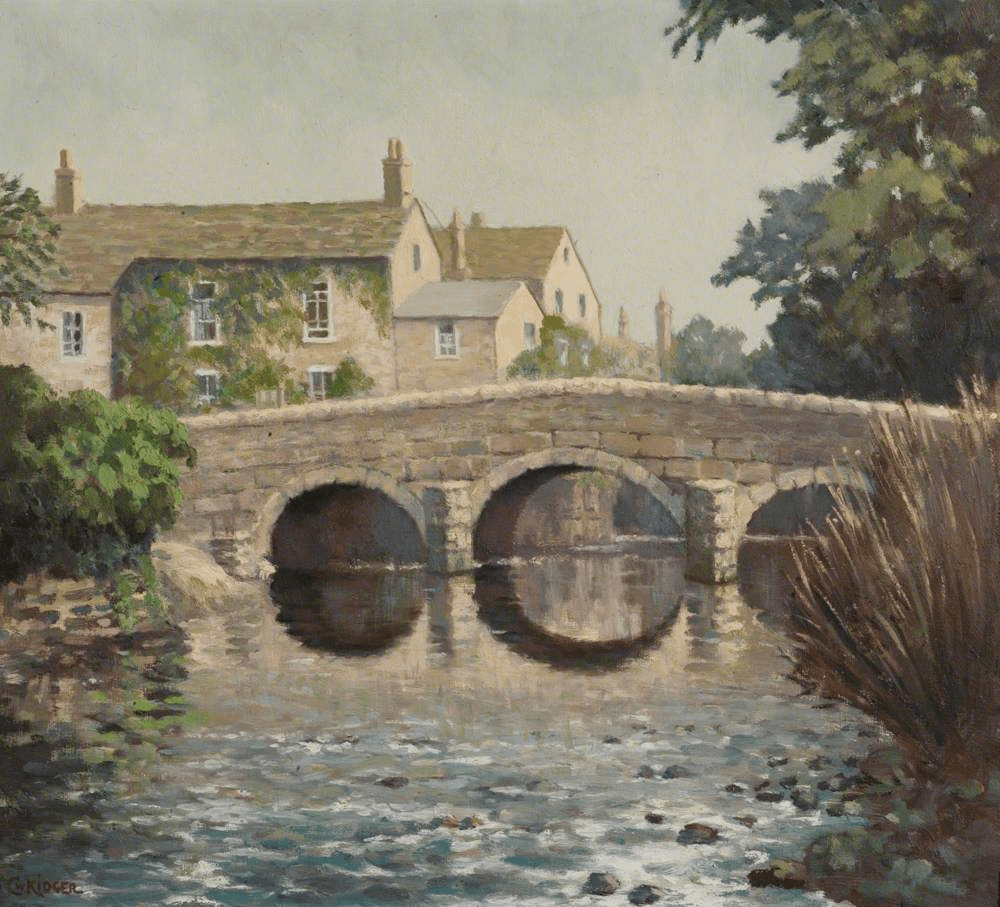
Driving on the busy A623 through Baslow today, it is easy to miss the medieval bridge next to St Anne’s church. Yet this was part of an important route in the eighteenth century: carrying the turnpike from Monsal Head to Chesterfield, while before then it carried packhorse traffic heading for East Moor and Sheffield. In 1500 an order was issued forbidding the carriage of millstones over the bridge; presumably their weight was damaging the earliest structure (which may have been wooden at that date). The small stone hut at the end of the bridge is sometimes called a watchman’s shelter, but elsewhere it is presumed to be for a toll collector. However the entrance is so low it is hard to imagine how this would work, unless the job was given to a child!

Lady Well, Bar Road

The old route can be followed from the bridge by crossing the main road and following School Lane uphill. This takes you through the heart of the old village but then continues more steeply uphill as Bar Road. Although this name may suggest a barrier or turnpike, according to Dodd and Dodd (1974) Bar was a name widely given to tracks that led down from the moors. Rather confusingly, Burdett’s map of 1762 tautologically names the river that flows through Baslow into the Derwent ‘River Barbrook’. Higher up Bar Road, beyond the houses, is the Lady Well, providing a welcome drink for travellers and their animals before climbing the last stretch up onto the moor. Once on the top, various landmarks such as the Eagle Stone and the Wellington Monument provide guidance.

Painting of the old bridge

How old is Matlock?

St Giles, Matlock

Today it is easy to drive on the main roads through Matlock Bath or Matlock Bank without seeing Old Matlock, centred on St Giles Church and the handful of stone houses around it. But seen from Hall Leys park, the church is in a remarkable position, on top of a steep cliff, bounded by the Derwent on one side and the Bentley Brook on the other. Most of the church was rebuilt in the mid-nineteenth century, although the font is Norman. Yet it seems likely that this site has had some sacred significance since pre-Christian times, given the watery surroundings.

Pic Tor Lane

The road from here through Starkholmes and down to Cromford bridge is an old route, and the only road out of Matlock that was never turnpiked, and so remained toll-free. But another ancient way appears to run down Pic Tor Lane, past the old vicarage and under the railway bridge to the river. At this point there is geological evidence of a possible ford, and the route would have gone up Masson Hill along what is now St John’s Road and joined up with Salter’s Lane, which came via Leek and Hartington.

Pedestrian bridge under railway

The current Matlock bridge dates from the fourteenth century, but the position of the church supports the theory that the earlier crossing could have been here, further downstream. The significance of this route is further reinforced by the construction of the railway bridge and the pedestrian river bridge in the mid-nineteenth century, suggesting that this route was then seen as worth maintaining.