Bilberry crumble?

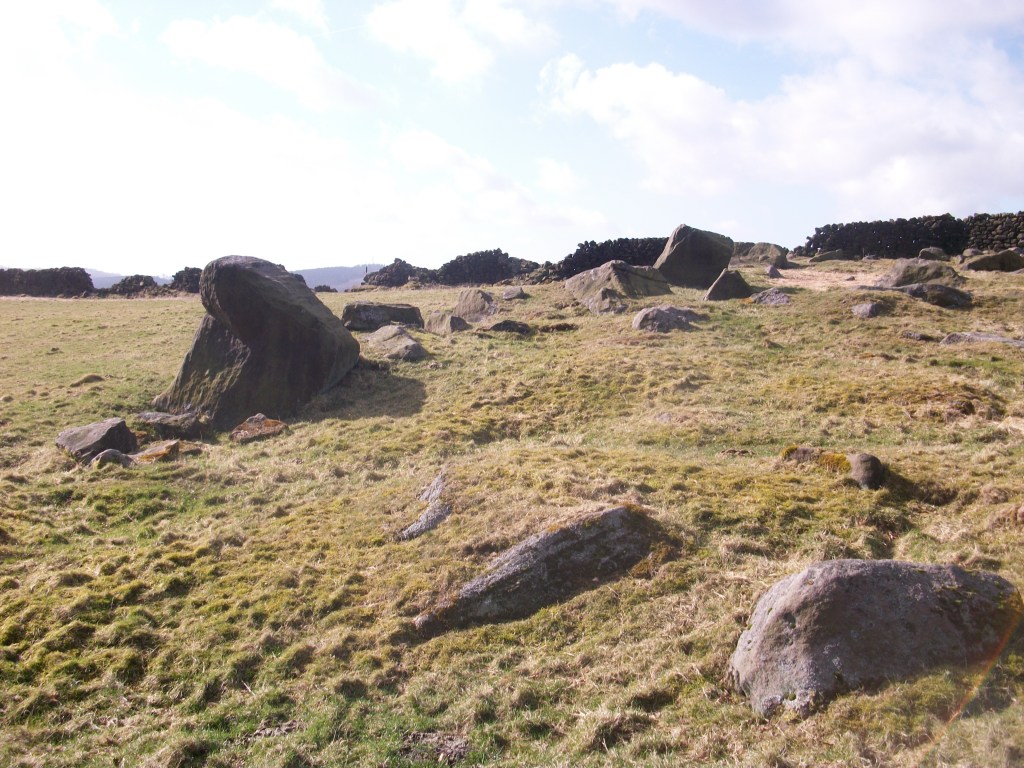
View of presumed stone circle on Bilberry Knoll

Writers of Matlock tourist guides in the nineteenth century described megalithic remains on Riber Hill, above Starkholmes, which are variously labelled dolmen, cromlech and rocking stone, and appear to have been four large stones, one balanced on another. But there was no trace of these a hundred years ago, and they appear to have been broken up, possibly on John Smedley’s orders, as idolatrous pagan survivals. It is easy to forget the role played by religious fanatics in destroying such remains.

However, there seems to have been a stone circle nearby, on the top of Bilberry Knoll, beside Hearthstone Lane, less than a mile south of Riber Castle. This site was explored by a John Simpson around 1905 and described in an article in the Derbyshire Archaeological Journal for 1915. He thought that such circles were evidence of prehistoric sun worship, and claimed that this circle aligned with the Nine Ladies circle on Stanton Moor at sunset on the Summer Solstice. Regrettably he did not draw a plan of the site, or include any useful photos, but estimated that the circle had a diameter of 144 feet.

The start of the path down through the beeches to Cromford

Today the site is remarkable for the jumble of stones in one area, although it is difficult to make out the shape of a circle. Some stones may have been broken up for walling. But whatever we may think of Simpson’s theories, two things are clear. Firstly, Bilberry Knoll is a remarkable viewpoint, ideally suited to some kind of monument, and secondly it is near the crossroads of two ancient tracks: Hearthstone Lane which runs from west to east, and another route which Simpson describes, coming from Lea Green, fording the Lea Brook and then climbing past Upper Lees farm to the ridge and down to Cromford bridge, Scarthin, Bonsall, Brightgate, joining the Portway to Robin Hood’s Stride and on to Youlgrave and possibly Arbor Low.

Field barns near Castletop, Hearthstone Lane above

Too much speculation, maybe, but Alison Uttley should have the last word. She was brought up in the late nineteenth century at Castletop farm, near the west end of Hearthstone Lane:

“… the old highway, dating from long before any of the roads in the valley. We knew, from family tradition, that the packhorses travelled along it, and that lead from the Roman mines in the hills was once carried on its winding slopes on ponies’ backs.”

Sources: Simpson, J. Megalithic Remains on Bilberry Knoll, Matlock. DAJ Vol 37, 1915

Uttley, A. Ambush of Young Days. Faber and Faber, 1937 p.107

Gell the Roman?

When I was a child we were occasionally driven into Derbyshire as a holiday treat, and coming down the Via Gellia was one highlight of such trips. It seemed a very romantic route, winding and well-wooded within the steep-sided valley, with mysterious caves inviting exploration. Today the road seems a little less fascinating, more overgrown with trees, and with massive quarry trucks weaving round every bend, yet it is of historical interest in that we know (unusually) when and why it was built, and by whom.

Philip Gell the hunter

The Via Gellia is not the only road in Derbyshire to be named after a person; for instance there is the Sir William Hill near Eyam, but it must be a unique case of a Latinized family name! The Gell family had lived at Hopton Hall for generations, near where they had profitable quarries and lead mines. Philip Eyre Gell (1723-95) inherited the estate at the age of 16, but postponed marriage till he was 50, in 1773, when he married the 16-year-old Dorothy Milnes. Their first son, another Philip, was born in 1775.

Burdett’s map of 1791 shows a track from Cromford to the mill where the Bonsall Brook drops down the Clatterway, but nothing beyond that point. The building of the Via Gellia is generally dated to 1791/2, and was designed to allow carts of lead ore or stone to travel down from the Hopton area to the canal and lead smelters at Cromford. Nobody knows who gave it its name, but one possibility is Philip Gell’s second son Wiliam, an archaeologist who had visited the ruins of Pompeii. Perhaps his interest in Roman civilization and knowledge of Roman road names such as the Via Appia led him to christen his father’s road in Roman style, hinting at an improbable family history dating back over a thousand years?

Tufa Cottage, situated about half-way down the route, must have been built by the mid-nineteenth century, originally for a gamekeeper on the Gell estate. Tufa is a kind of porous limestone found locally, with a distinctive coarse texture. Today it is notable for the cable car in the front garden!

Mr Wright paints Cromford

Wright: Arkwright’s Mill in the late eighteenth century

Paintings and prints can help us understand the development of the road system, and reveal historical features not shown on maps. As Matlock Bath became an established tourist attraction in the late 1700s, visitors were also keen to visit Arkwright’s mill just up the road at Cromford, and be impressed by the scale of the buildings. One of these ‘industrial tourists’ was Joseph Wright of Derby, who painted the mill both by day and at night, when the rows of candlelit windows must have been a remarkable sight in this very rural location. The painting above appears to have been made from a location close to the modern High Tor cafe by the Cromford crossroads, looking down the road towards Cromford Bridge. But this area has been radically changed by cutting through the Scarthin Rock, a process begun in 1817 but not finally completed in modern form until 1962. The painting clearly shows the mill leat on the far side of the road, which led to the aqueduct above the road (damaged quite recently and sadly never replaced). The Bonsall Brook is shown on the nearside of the road (not visible today), and the main building is taller than today’s mill. In the distance the tower of Crich Stand can be clearly seen, which at the time of the painting had been recently (1785) rebuilt in stone by Francis Hurt, a major local landowner.

Wright: Willersley Castle and Cromford Church

Another view of the area has the Matlock Bath road in the foreground, and is framed again by Scarthin Rock. It is difficult to find this viewpoint today due to the increase in tree cover: in Wright’s time the valley was quite bare. Both Cromford church and Willersley Castle must have been very recent when this was painted; in fact the church was not finished until 1797, the year of Wright’s death. The painting illustrates the first appearance of the church; the current porch was added in the mid-nineteenth century. Next to the bridge the small fishing house is clearly visible.

Wright: Cromford Mill by night

The third painting is an example of Wright’s interest in dramatically-lit night scenes. Although the view is from a similar spot to the first picture, the road now runs to the left of the mill, not the right. It must be assumed that this is artistic licence, since the road in the first picture is so clearly on the line of the present one. Clearly, the details of such pictures cannot be assumed to be reliable, but it’s worth noting that the two-storey building in the foreground, which is not shown in the first view, survives today in the same form.

Bridge building

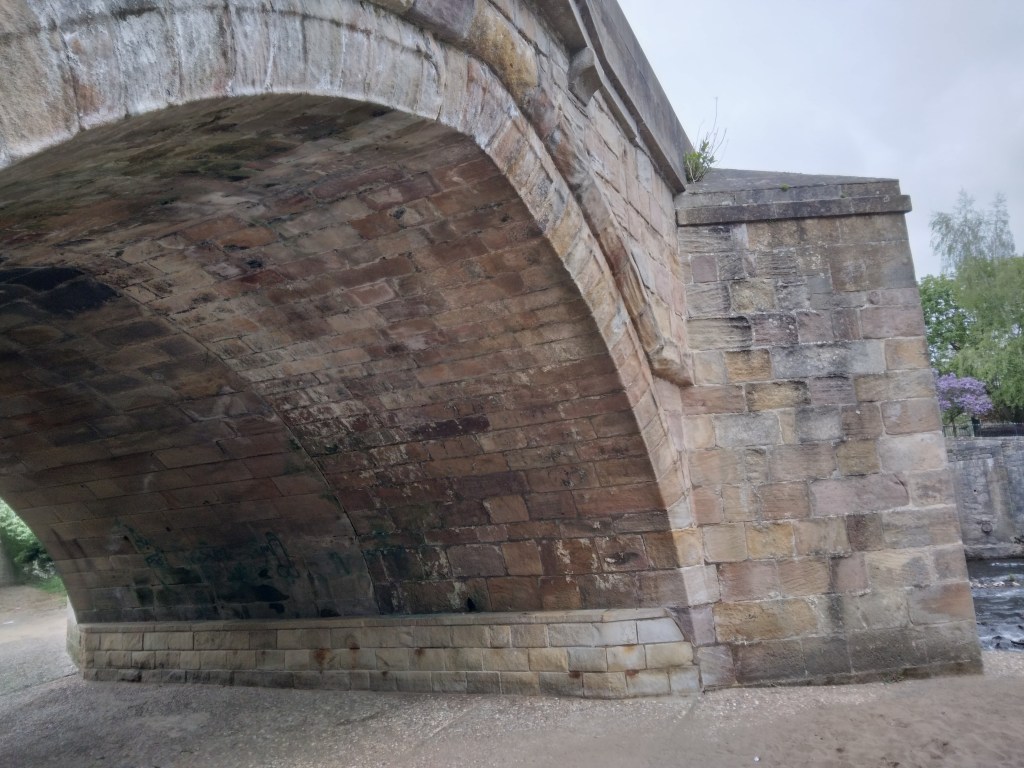
Below Matlock bridge

In the current dry weather it’s quite easy to climb down and inspect the underside of the arches of Matlock bridge, a structure thought to date from the fifteenth century. As can be seen in the photo, this reveals a clear joint between the original structure and the widening carried out in 1904, which allowed two-way traffic on the bridge (since reduced to one-way in the latest traffic scheme). This is a reminder that most pre-twentieth century bridges would have only been wide enough for one cart or coach at a time, as is still the case with One-Arch Bridge at Chatsworth.

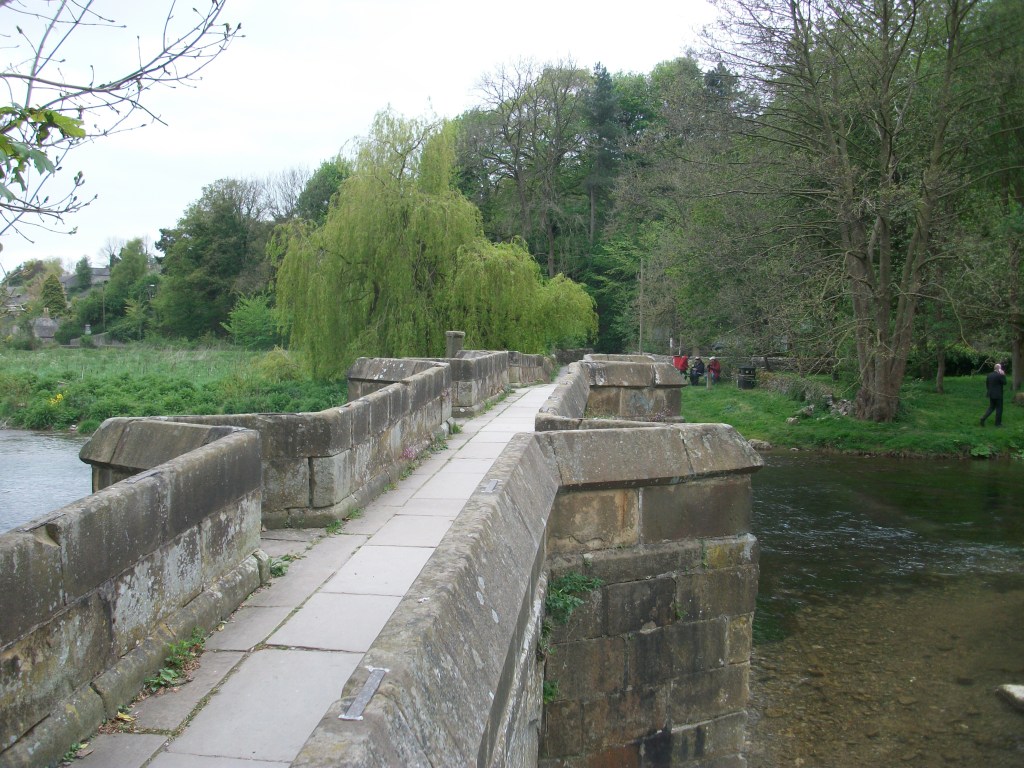
Holme Bridge north of Bakewell

Some were still narrower, such as Holme Bridge, on the River Wye upstream of Bakewell; just wide enough for a train of packhorses to cross. This is a reminder that bridge building was high skilled and thus expensive, yet bridges were absolutely critical to the transport network. The earliest bridges probably had a wooden superstructure resting on stone piers: easier to construct but liable to be washed away in any flood. All-stone bridges, with arches and breakwaters to deflect floating debris, were commonly constructed from the twelfth century but their cost was often met by a local monastery or abbey. In addition, tolls were frequently charged to pay for their upkeep.

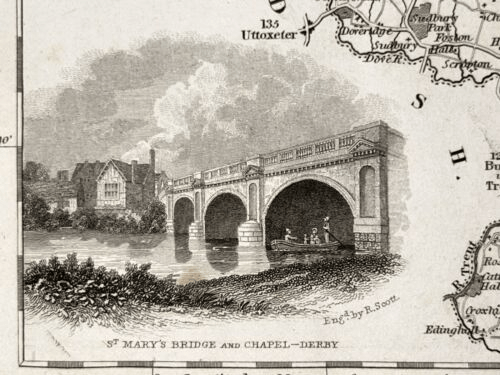
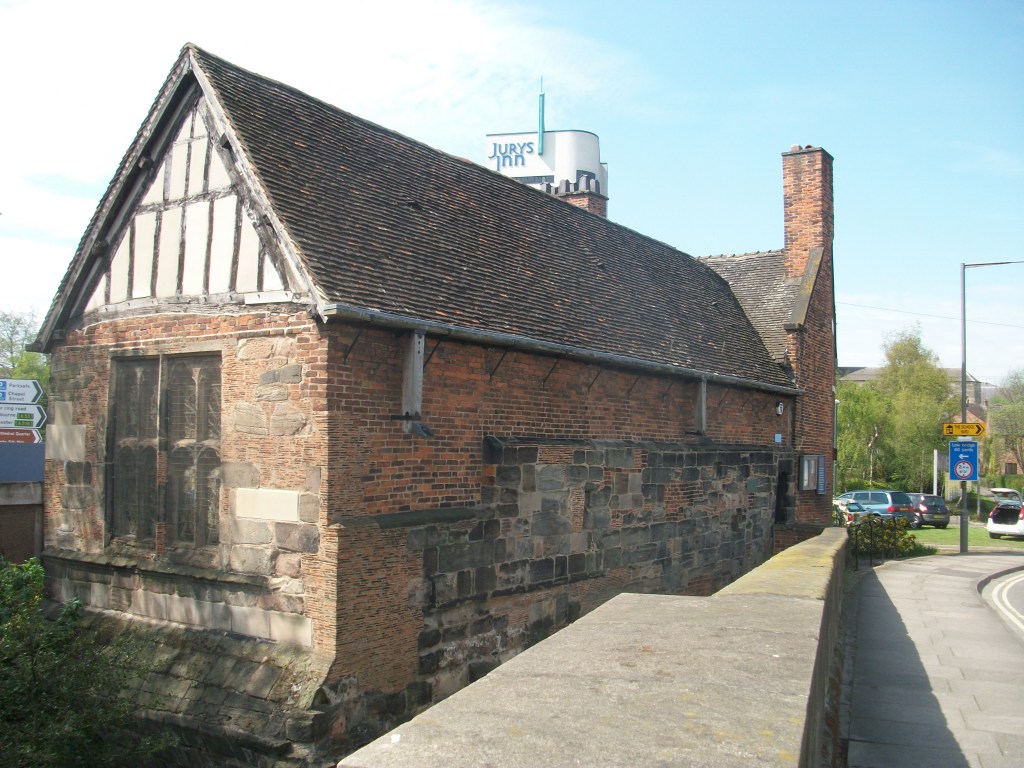
St Mary’s bridge chapel, Derby

Important river crossing often had chapels attached, as with St Mary’s bridge in Derby (the only bridge in medieval times) or Cromford bridge (now ruined). The chapels would have provided a shrine for travellers to pray for a safe onward journey, and doubtless to leave an offering for bridge maintenance.

Bridge over River Bradford at Youlgrave

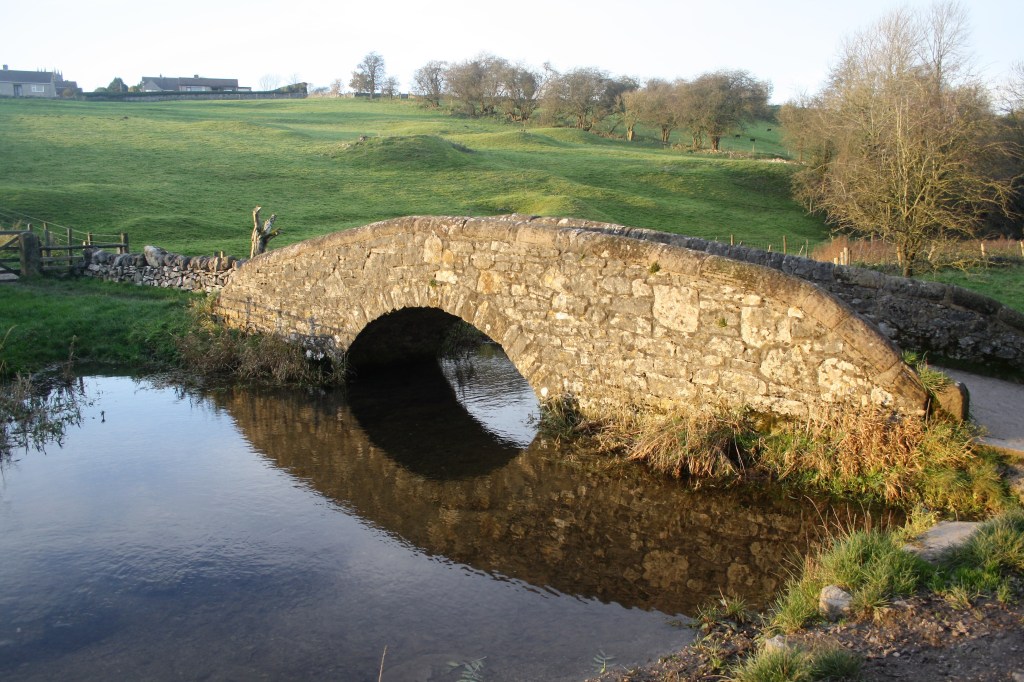
With most ancient bridges, establishing a date is almost as difficult as dating a road. The example above, with its simple round arch, and too narrow for a cart, could be anything from a hundred and fifty to a thousand years old, and would probably have been repaired many times after especially violent floods.

Defoe’s Derbyshire tour

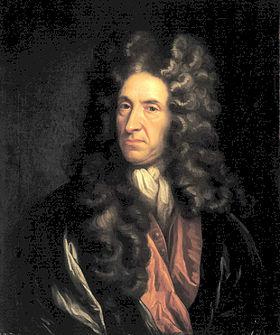
Biography of Daniel Defoe author of "Robinson Crusoe"
An early tourist

Few people living in Derbyshire in the eighteenth century have left an account of their travels; clearly they didn’t feel any need to describe their everyday experiences. Therefore it is left to the handful of early tourists to provide an impression of journeying in the county three hundred years ago. Daniel Defoe was an early novelist and journalist who visited many English counties in the 1720s in order to produce his A Tour of England and Wales.

Beginning at Derby, he had clearly chosen a wet season for his visit, since he had to abandon plans to visit Ashbourne on account of ‘the river drowning the low-grounds by a sudden shower, and hastening to the Trent with a most outrageous stream’, a reminder that, not so long ago, travel was very much at the whim of the weather. There are other references to the Derwent as ‘a frightful creature when the hills load her current with water’.

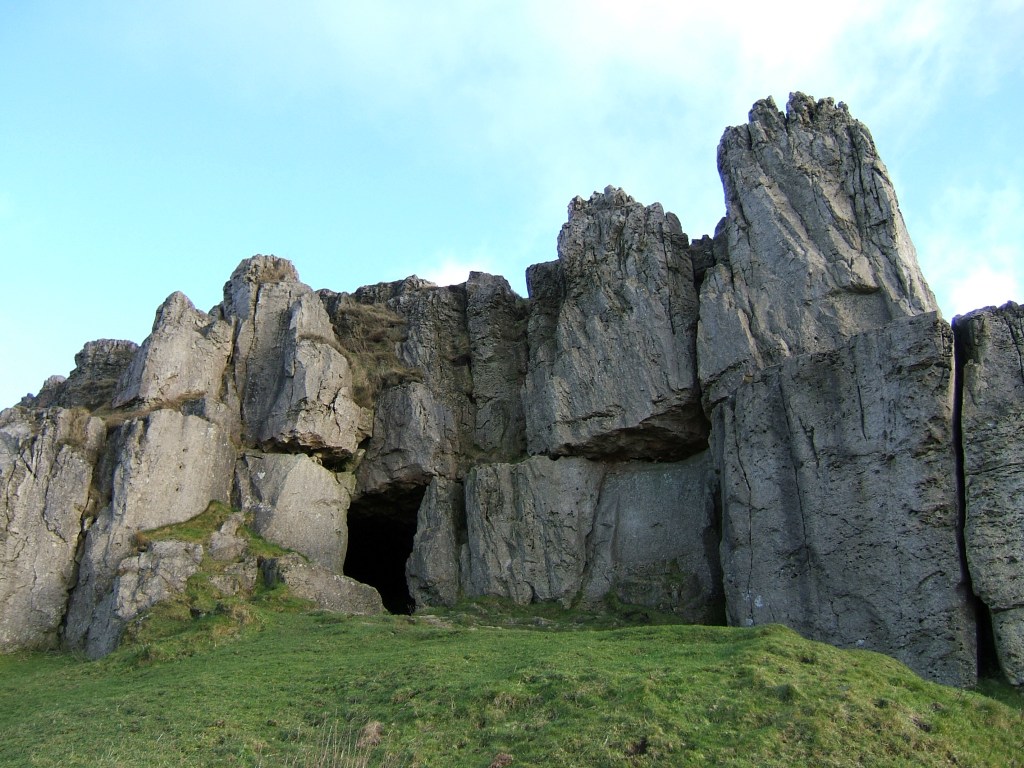
Cave at Harborough Rocks

Defoe’s next stop was Wirksworth, which he found interesting due to the lead trade, despite the inhabitants being ‘a rude boorish kind of people’. The most remarkable part of this visit was an excursion to Harborough Rocks, which was called the Giant’s Tomb at that time. Here he found a lead miner’s family living in a cave, which had been lived in by his family for several generations. Defoe was both horrified, and impressed that people could cope with such crude conditions: ‘they seemed to live very pleasantly, the children look’d plump and fat’. Defoe’s party had a whip-round and gave the miner’s wife several shillings. (Today the cave can be visited quite easily by climbing up from the High Peak Trail).

Other items on his itinerary were more predictable: the Wonders of the Peak, and a focus on spas, which were just beginning to be significant destinations at this time. He is suitably impressed by Chatsworth, but comments about the moor above the house: ‘a waste and howling wilderness, over which, when strangers travel, they are obliged to take guides, or it would be next to impossible not to lose their way’. As for getting to Matlock (which he labels as a village), Defoe maintains that the warm springs would be worth visiting if access was not by ‘ a base, stony, mountainous road’ – presumably the route over Scarthin, which was eventually superseded by blasting the present road through the rocks at Cromford.

Nineteenth-century painting of High Tor, Matlock

Lea Road: A sorry, soggy story

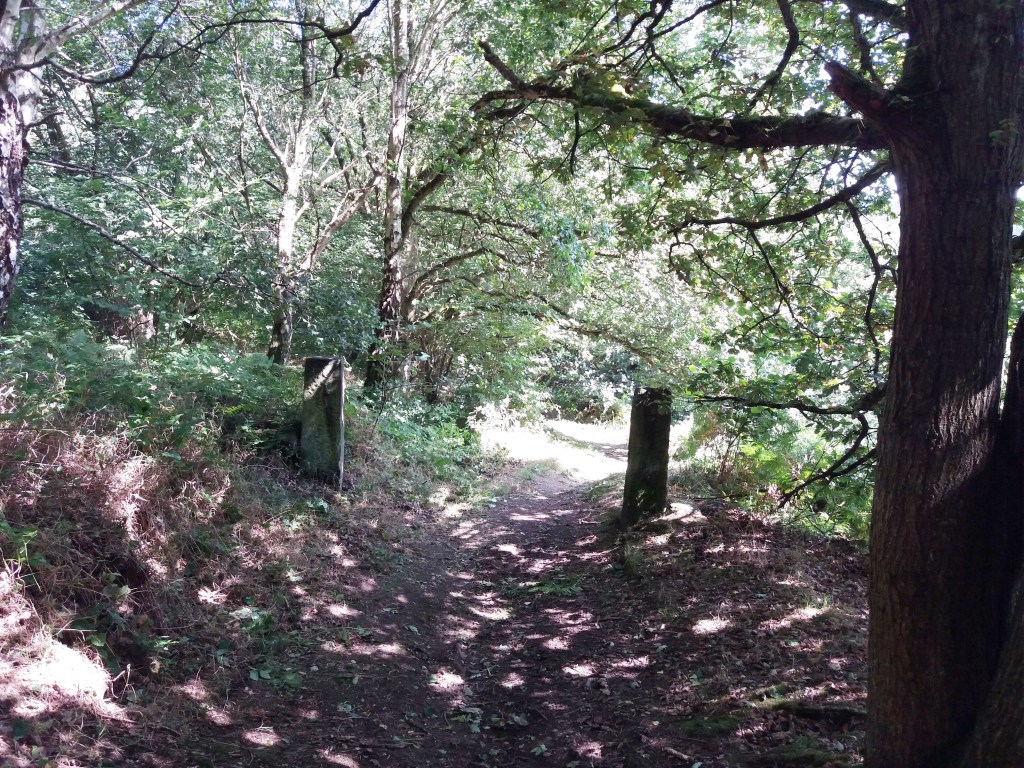
Gateposts in Bow Wood show that this was more than a path

The tendency of Derbyshire roads, over time, has been a shift from high-level routes to more convenient ways in the valleys, with gentler gradients. A good example is the road from Cromford Bridge to Lea Bridge, which in medieval times ran past the site of Cromford Station and then turned uphill at Wood End, away from the Derwent, and ran past Castletop farm and through Bow Wood and down to the Lea Brook. This route can still be followed on foot, taking the path just past the railway bridge, up through the wood, and then joining the old track beyond the house.

However, when the Cromford Bridge and Langley Mill Turnpike Trust was established, an easier route was selected, following the river up to what is now High Peak Junction, and then turning north east to Lea Bridge, at that time quite an industrial complex. This new road went on to Holloway, Crich, Bull Bridge and Codnor Gate (where until recently the turnpike was commemorated by the Gate pub).

The road had a tendency to flood in very wet weather, especially near the Cromford railway bridge, but remained a useful route for over two hundred years. But following heavy rain in November 2019, the river had undercut the bank and part of the road collapsed in January 2020, causing the council to close the road the next day.

The road today

In the nearly two years since the road closure the residents of Lea Bridge and Holloway have had no direct access to Cromford or Matlock, and so have had to make lengthy detours on narrow lanes, such as the route over Riber hill. What they find most annoying is the lack of any sense of urgency in re-opening this critical route. Derbyshire County Council and their contractors, Eurovia, have produced a variety of excuses for the prolonged closure, claiming that there have been further landslips. Yet on a a warm dry autumnal day like today no-one is working on the site, while the road, for some reason, is even closed to walkers and cyclists.

They shall not pass

Given that the old turnpike road was engineered by men with wheelbarrows and picks, it seems incredible that today, with modern equipment, we are incapable of repairing a few hundred yards of road in less than two years.

The story of the lane

Hearthstone Lane near Castle Top farm

It is rare to find a historic written description of a Derbyshire road: most literate people in the past took the state of the roads for granted. Therefore it’s especially interesting to have an account of Hearthstone Lane, which runs north from Castle Top farm to Riber, and is today a bridle path. This was written by Alison Uttley, who was brought up at the farm in the late nineteenth century, in her memoir ‘Ambush of Young Days’. She says:

This latter was the old highway, dating from long before any of the roads in the valley. We knew, from family tradition, that the packhorses travelled along it, and that lead from the Roman mines in the hills was once carried down its winding slopes on ponies’ backs. It wandered up to the crest of the hills, cutting through some of our fields, and then it followed the high ridge, between two stone walls, with the land dropping on either side to two valleys. This hill road was grass-covered, and only horses and cows went along it in those days, with sometimes a countryman who was visiting us, the pig-killer, the mole-catcher, the hedger or the thatcher’.

Higher up Hearthstone Lane

Less than a mile from Castle Top farm is the site of an old cottage, easy to miss if you haven’t read Uttley: ‘The Boggart House was sinister, ghostly, and I crept up on tiptoes, although the grass in the lane hid all sound.There were stories about this cottage, which was said to be haunted. I had no fear of the ghost, but of one of the inhabitants. A man and his wife lived there, a good couple, living the most lonely life imaginable … But with them dwelt their son, who had had an accident in the quarries, long ago. He had two noses, it was said, and this is what alarmed me’. Today there are still gooseberry bushes growing in what was their garden, but it seems extraordinary that a family could have lived there, so remote even from a well.

The site of the Boggart House

The Lane is partly a ridgeway, as Uttley appreciated, and the highest point, before it drops down towards Riber, is called Bilberry Knoll. In the field here are a collection of large stones, and it is thought that these are the remains of a megalithic structure which once crowned this hilltop. Given the names of many roads in the vicinity (Holestone, Cuckoostone, etc) it seems likely that this was the Hearthstone (or Heartstone?) after which the Lane was named. Many of these prehistoric sites were destroyed by puritanical landowners who saw them as idolatrous, pagan remains, and this may have been the case here.

Bilberry Knoll

Cromford Bridge

Upstream view of bridge

It is easy to forget how crucial bridges were to the medieval traveller, who could otherwise be delayed at a ford for days, waiting for the river to be passable. Many bridges, including Cromford, were probably originally timber structures with stone piers.

The name ‘Cromford’ means a ford on a (river) bend, and it seems likely that the ford was roughly in the same place as the bridge, just below the point where the Derwent curves out of Matlock Bath. This must have been a vital crossing point, linking the route descending Cromford Hill from Wirksworth and beyond with the road to Starkholmes and old Matlock, plus the older route up along Hearthstone Lane, and the road to Lea Bridge going through Bow Wood.

Dating bridges is always difficult since most have been widened and frequently repaired. In this case it can be seen that the arches are pointed on the upstream side, but more rounded on the downstream, suggesting a substantial rebuild from an original packhorse width. It is generally thought to be fifteenth century, but may be older.

What makes this bridge so special are the ruins of a bridge chapel on the west bank – not to be confused with the later fishing house. Bridge chapels were built to allow travellers the chance to pray for a safe journey and perhaps leave an offering for the upkeep of the bridge. Only a handful survive in Britain, and this example may have been built at the same time as the bridge. It became ruined after the Reformation, but was excavated and repaired by the Derbyshire Archaeological Society in 1951.

Next door to the chapel ruins is the more recent fishing lodge, which has very recently been given a new stone roof. Over the door is the inscription ‘Piscatoribus sacrum’ meaning sacred to fishermen. It may well have been built by the Arkwrights, possibly for their water bailiff. Their grand house, Willersley Castle, dominates the view on the opposite side.

The fishing lodge

Another, easily overlooked feature of this busy bridge is a stone inscription ‘THE LEAP OF MR B H MARE JUNE 1697’ on the southern parapet, marking the spot where a Benjamin Hayward leapt on horseback from the bridge into the river. Presumably the river was in full flow at the time as apparently both horse and rider survived.

Mare’s leap

The bridge is near the terminus wharf of the Cromford canal, opened in 1794. But it was also the rather unlikely starting point of the Cromford Bridge and Langley Mill turnpike road, which ran from there along the east bank of the river towards Lea Bridge, and then on to Holloway, Crich and Bullbridge. This road seems to have opened in the early nineteenth century, and would have provided a faster link with Nottingham and district, replacing the old hilly route past Castletop and through Bow Wood. This is the road which was badly affected by flooding in late 2019 and has been closed ever since.