The (very) old roads

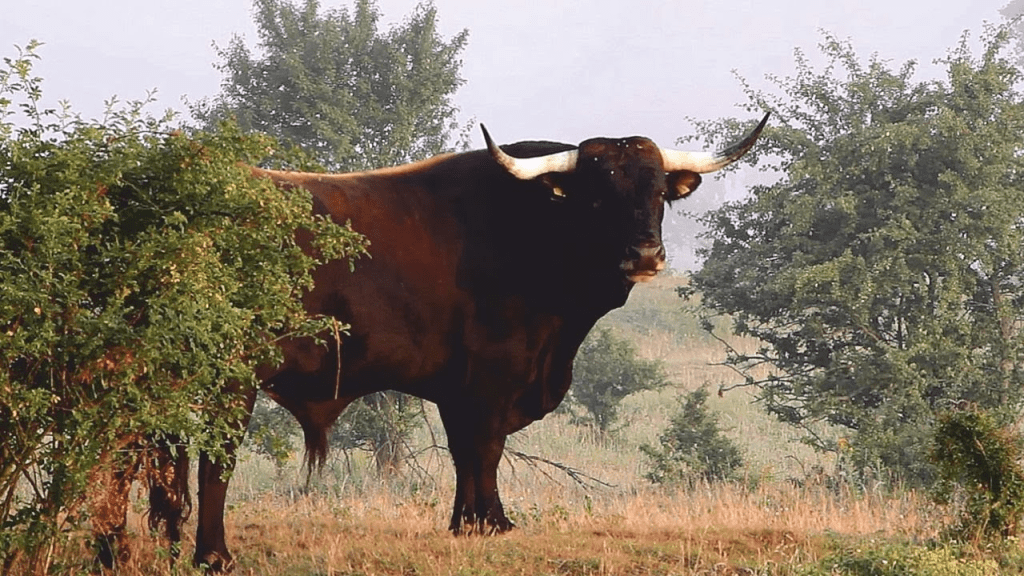
The big beast – an Auroch

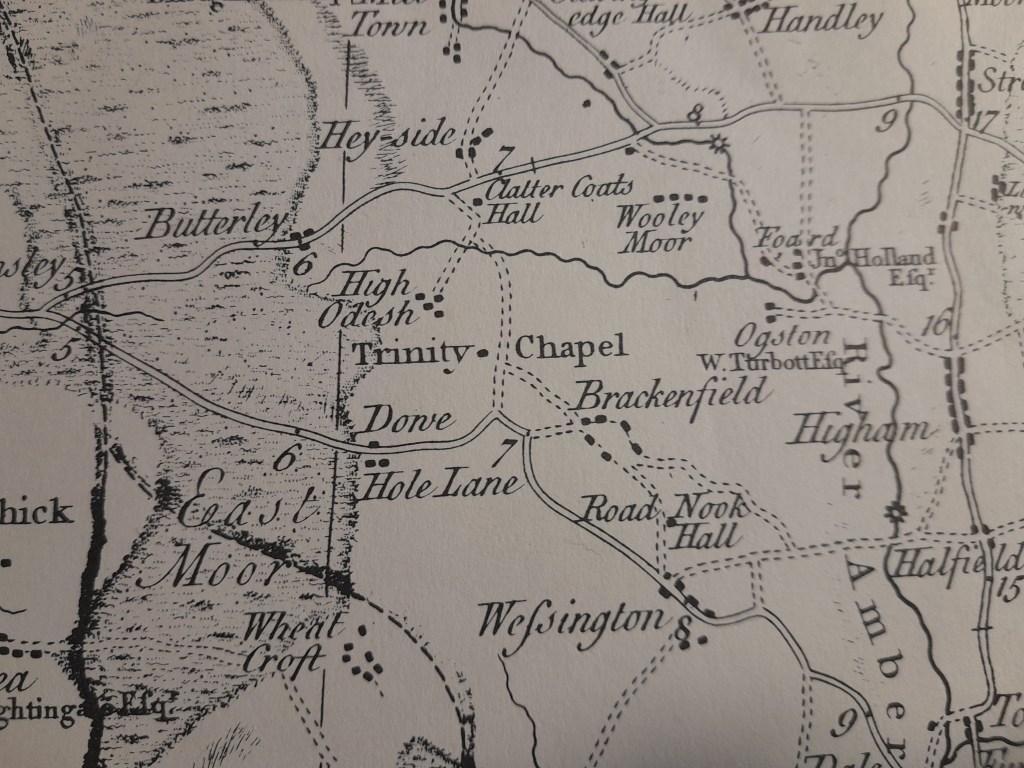
Just how old are the ‘old roads’? How were the first roads developed?

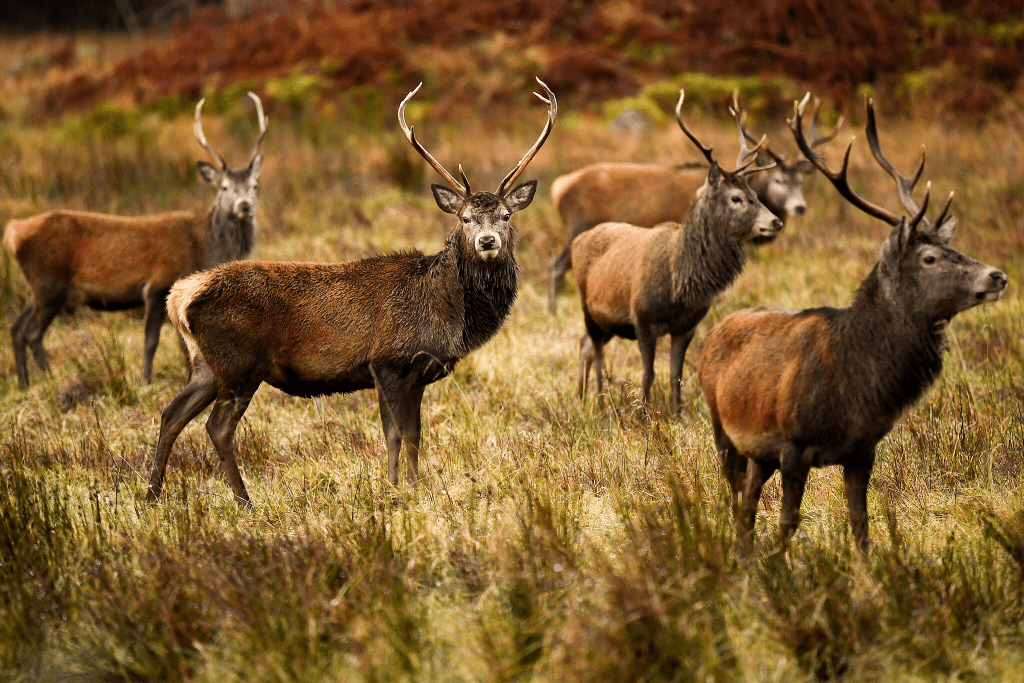
These questions are difficult to answer, but worth a try! The last ice age ended about 10,000 years ago, and the landscape of Britain must have gradually become more wooded as temperatures rose. Mammals would have arrived via the land bridge to the continent, including large beasts such as aurochs (early cattle), horses, deer and boar. These creatures are mainly herd animals, and would have travelled with the seasons, moving north in spring looking for fresh pasture and water, then south in autumn.

On alert

A herd of any large mammals would follow the easiest routes, avoiding the choking, dense growth in river valleys, and in doing so created channels of movement along the high ground. Their progress would hinder plant growth and so keep these routes open. They could drink from streams, but kept river crossings to a minimum, due to the risk of autumn floods. So when the first paleolithic (Old Stone Age) nomadic people arrived they must have followed these herds, both for the chance of making a kill and also because a proto-road offered the easiest route.

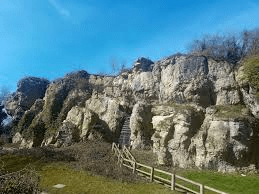
Some of the crags

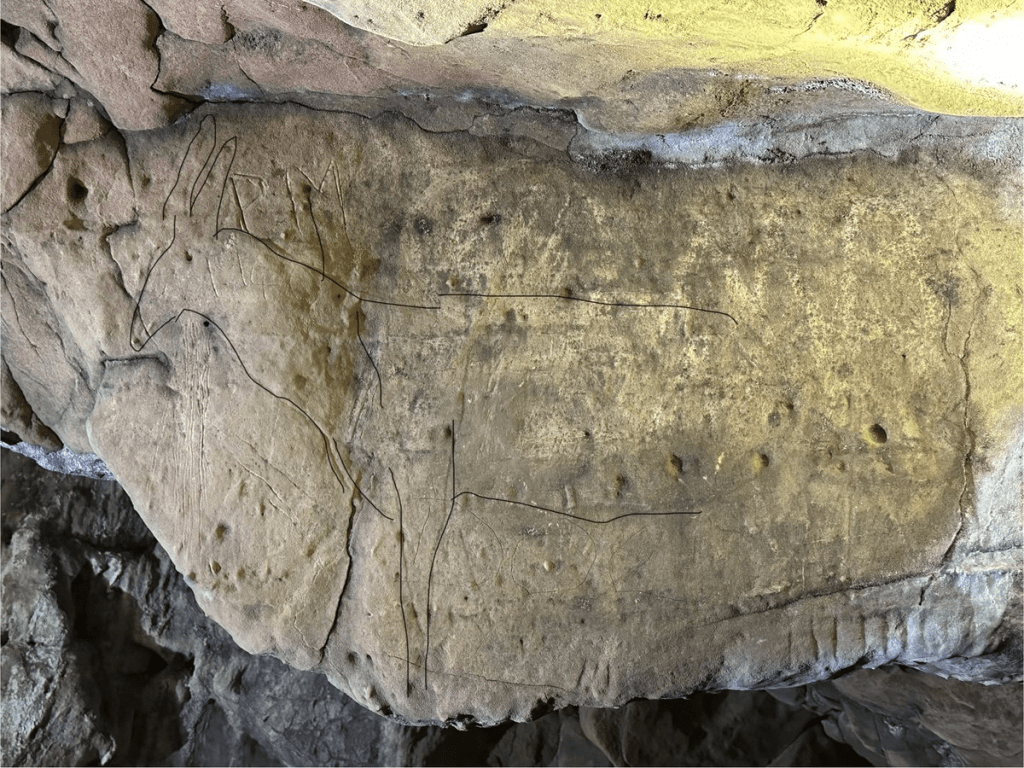
The very rare cave art found at Cresswell Crags, on the north east Derbyshire border, portrays deer, elk, wolves, hyenas and bears, clearly suggesting that Stone Age man had a close relationship with these creatures. Today many of their prehistoric ridgeway routes are still in use, notably many sections of the Derbyshire Portway, the lane from Belper Lane End to Bolehill, the A61 from Higham to Clay Cross, and dozens more.

Spot the stag

Silly signs

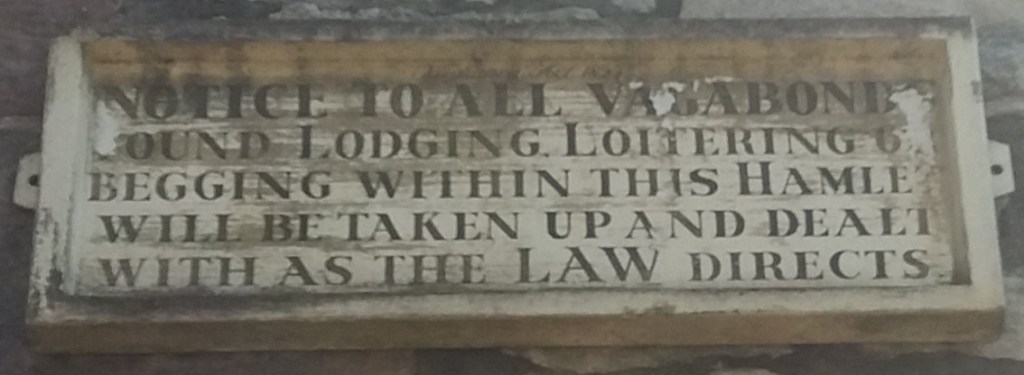
Sign from Alport village

Travellers by road and rail have been confronted by baffling or unhelpful signs for many years. The example above, warning vagabonds who loiter in Alport that they may be ‘taken up’, supposes that such vagabonds can read, which seems unlikely in the (?) early nineteenth century. The modern equivalent must be the numerous ROAD CLOSED signs currently found all over the county, which either don’t specify which road is closed, or else mean the road is only half closed.

Station sign

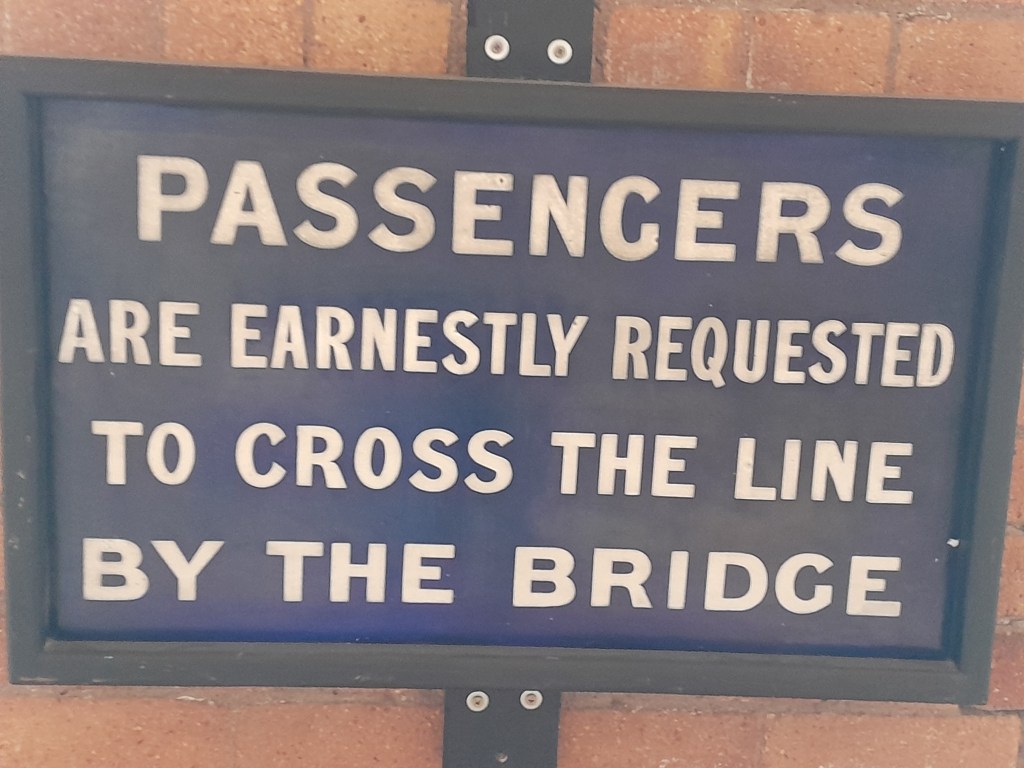
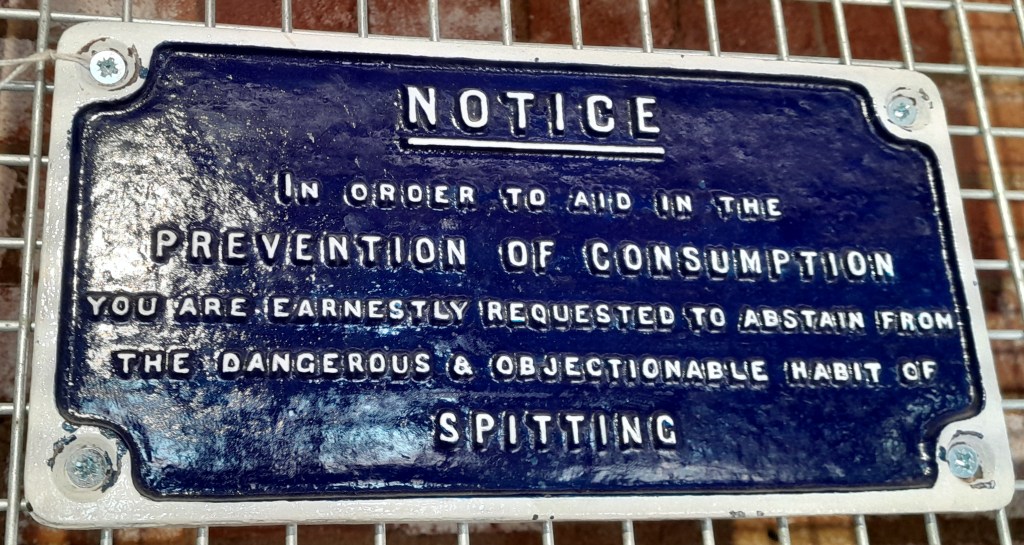
The tone of the wording on signs can vary from the curt (above) to the ultra-polite (below). To ‘request’ a pattern of behaviour is genteel, but to ‘earnestly request’ makes it impossible not to comply . Both these examples can be seen at Derby’s Museum of Making, which has a wonderful collection of these signs from the Midland Railway.

…but easier to walk over the tracks

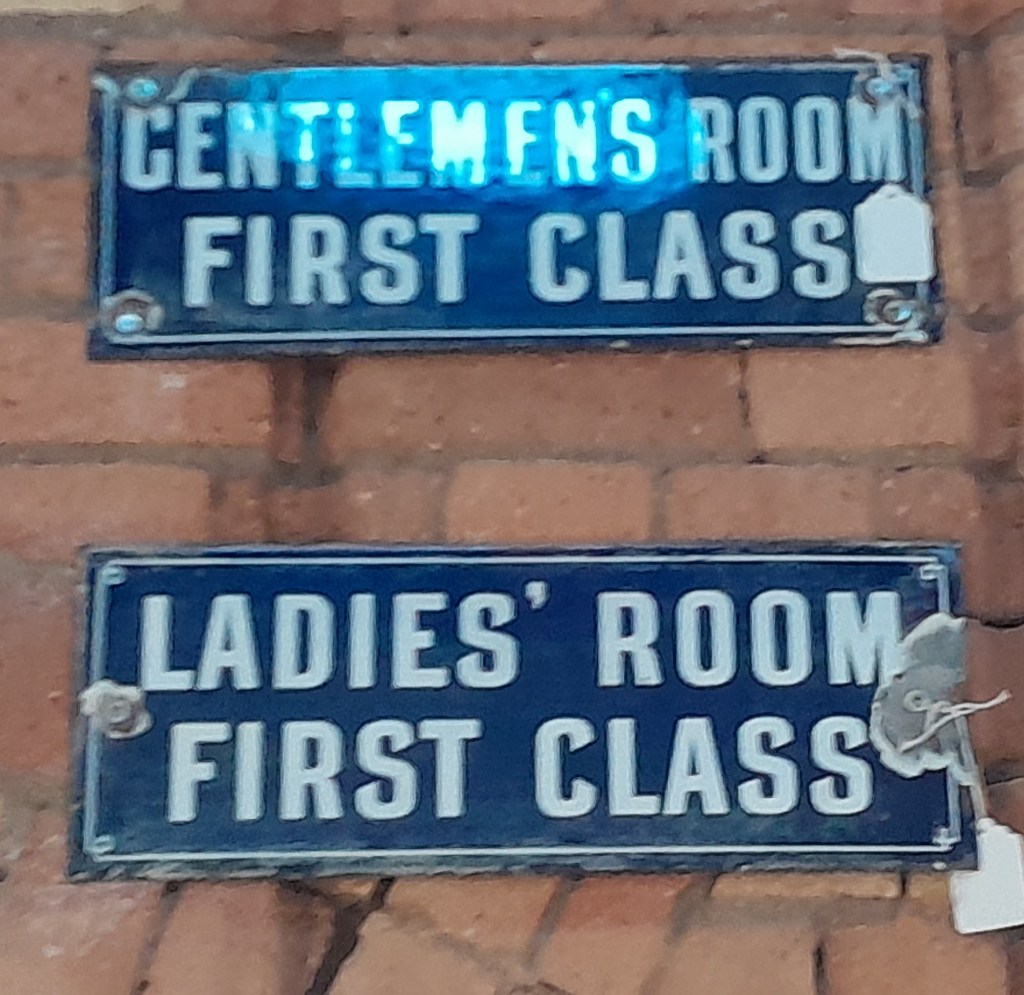
Other station signs are a reminder of the heyday of railway travel, when waiting rooms were not only provided for the different classes of ticket holders, but also separately for men and women. So presumably a large station like Derby would have had four different waiting rooms!

Did they provide a blazing coal fire too?

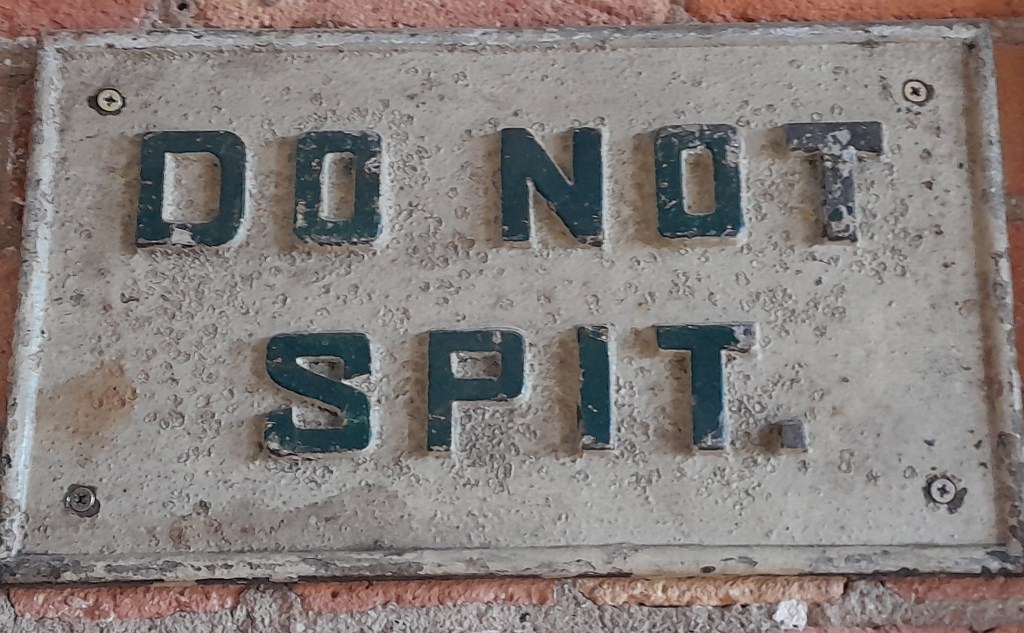
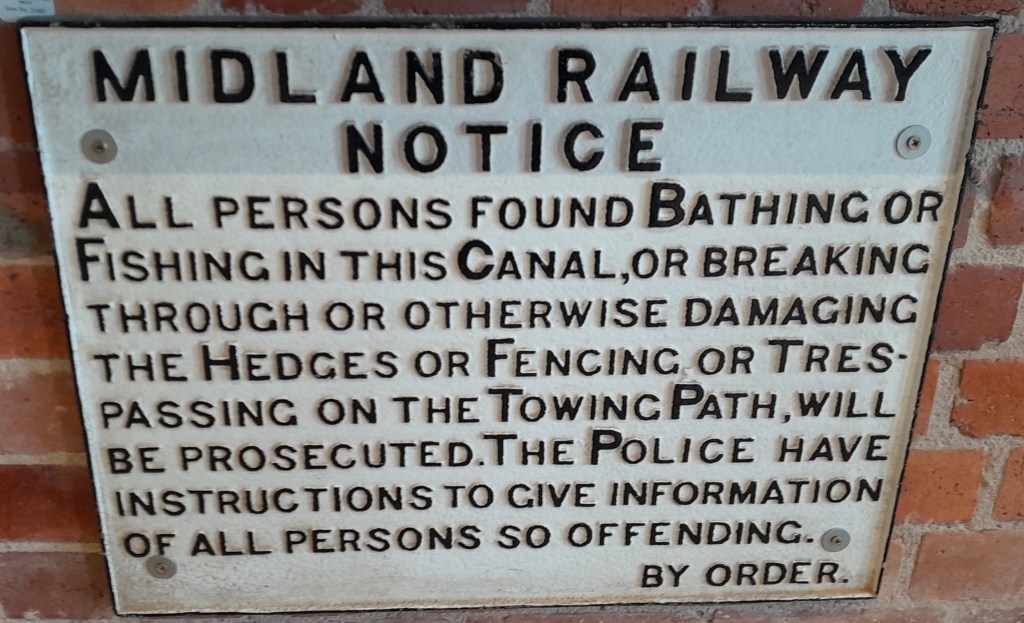
The railway authorities seem to have had a weakness for verbose and very formal inscriptions. Trespassers on the canal towpath or anyone having a dip in the canal was unlikely to bother to read all of this threat (below), while anyone about to spit might not understand language like ‘abstain’ or ‘objectionable’ – though the threat of TB was very real before the arrival of antibiotics.

More earnest requests

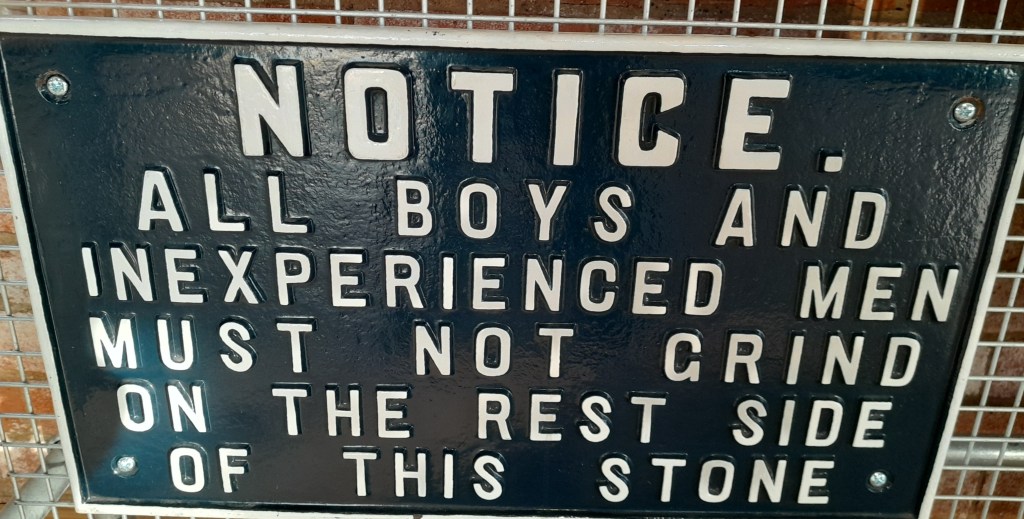
My favourite sign, which is quite unintelligible, must have been displayed in a works context, so presumably would be understood by those who worked there (below). There must have been hundreds of signs like these around the railway network, all nicely produced in iron or steel. It would be interesting to know if the railway company made them in-house, or if they used a specialist supplier.

Any offers?

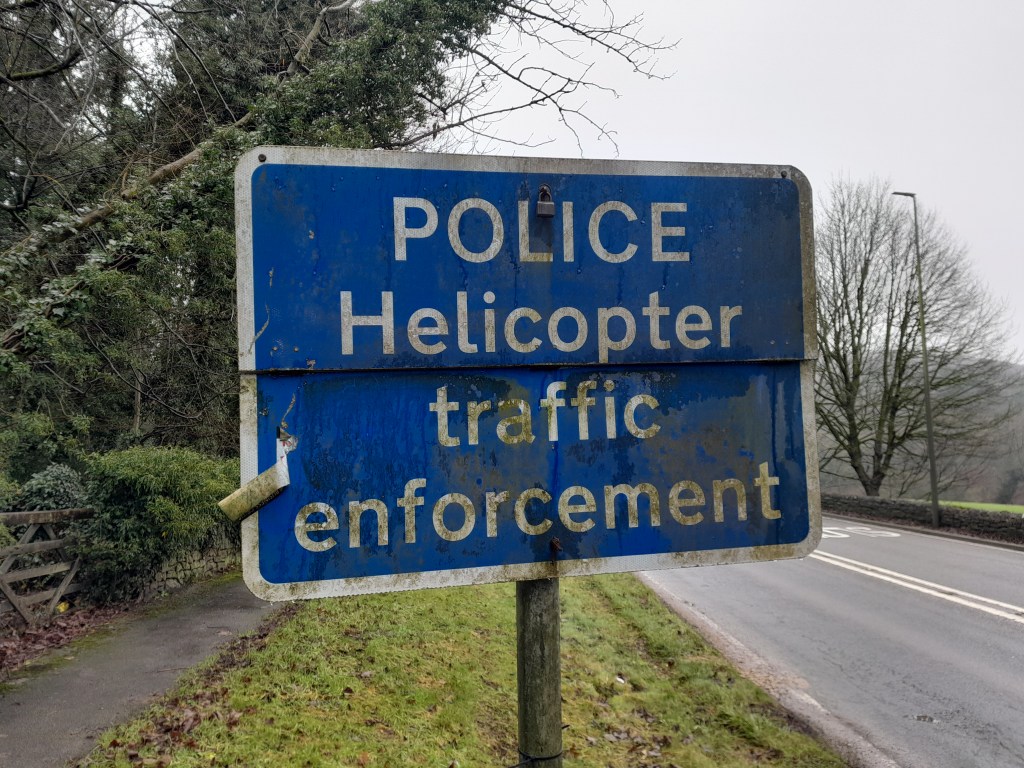
However, the prize for the daftest sign of all must go to a modern effort, found on the A6 at Ambergate. What, you wonder, would be enforced by a helicopter? The speed limit? You imagine a ‘copter chasing a BMW down the road, and swooping onto the roof of the offending vehicle. This has all the making of a new reality TV programme …

Who’s kidding whom?

Hermits of the Bridge

St Mary’s bridge and chapel, Derby

Today the image of a hermit is usually a scruffy-looking character living in a remote hovel. But although the route of the Derbyshire Portway is marked by several such hermitages in caves, the term was also used for men who were effectively toll collectors on key bridges. Such bridges were a common good, but expensive to build and maintain, especially on the major rivers of Derwent and Trent, and the church played a major role in their maintenance. A good example is St Mary’s bridge in Derby, whose hermit in 1488 was John Senton, a married man who (unusually) shared his duties with his wife. He had the job of guarding the many votive offerings given by locals, as well as collecting tolls from travellers. The right to collect tolls at bridges was known as ‘pontage’, and might be granted by the king or a bishop, usually for three years.

Inside the chapel

Today the chapel has quite an austere interior, but in the medieval period it would have been decorated with offerings, such as (spelling modernised):

One coat of crimson velvet, decorated with gold, covered in silver coins

A crown of silver and gold

A great brooch of silver and gilt with a stone in it

A crucifix of silver and gold

One pair of coral beads

One pair of black jet beads

(Taken from the inventory of 1488)

Notably, most of the benefactors were women, and they were possibly members of a female guild dedicated to maintaining the bridge.

Time to pay up

Other Derbyshire bridges charging tolls included Cromford, Chesterfield and, notably, Swarkeston, which had to face repeated battering from the River Trent in flood. The list of tolls here gives a graphic picture of the variety of goods on the roads in the high Middle Ages, and the presence of two items imported from Spain indicates the extent of trading networks at this time:

Cask of wine 2d

Skins of lambs, goats, hares or foxes 1/4d

Pack saddle load of cloth 3d

Bale Cordova (i.e. Cordoban leather) 3d

Brushwood 1/4d

Flitches of bacon 1/4d

Source: C. Kerry, Hermits, Fords and Bridge-chapels, The Derbyshire Archaeological Journal, 1892, Vol.14 pp. 54-71

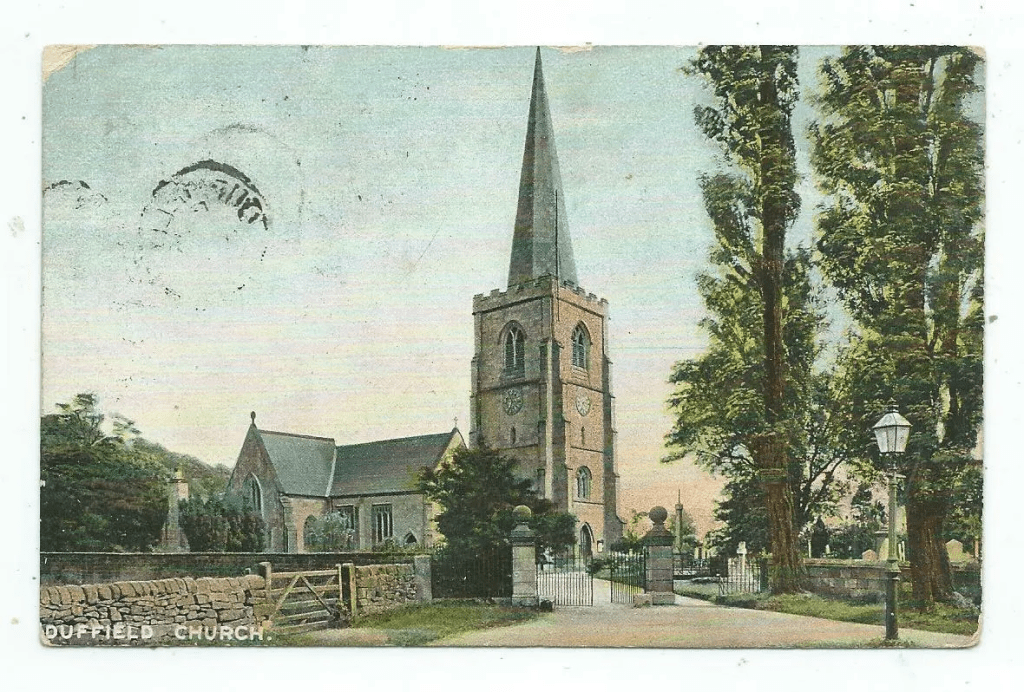
The next station stop is Duffield … and then Duffield

Sir Arthur with Effie, his early model

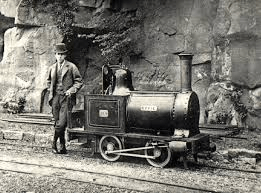
Today’s tech tycoons play with their spacecraft, but 150 years ago a wealthy Victorian built his own railway in his garden at Duffield Bank, complete with several tunnels and six stations. Sir Arthur Heywood had inherited money and the baronetcy from his father, and as a gifted amateur engineer wanted to test his belief in narrow gauge (15 inch) railways. Of course the standard gauge of four feet eight and a half inches had long been adopted in Britain, but Heywood thought that there was a role for much narrower gauge railways on private estates.

At the open day in 1894

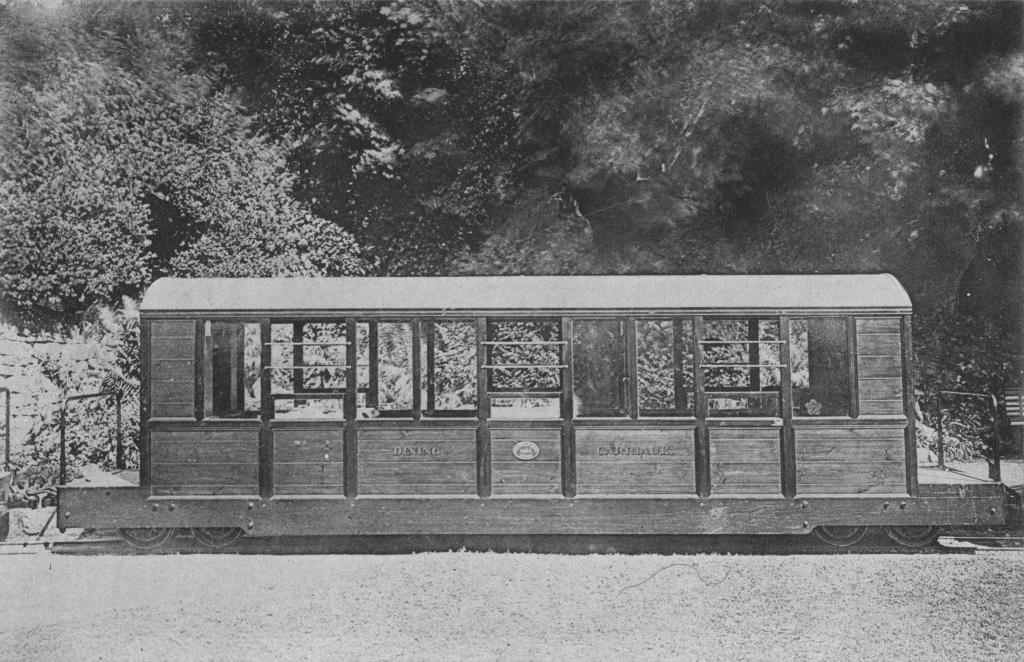
Despite being a mile long, Heywood’s railway had no regular passengers and was really built as a testbed for his engineering experiments – a rich man’s passion. However, as can be seen, open days were held for people from the Duffield area. Remarkably, the rolling stock – all built in Heywood’s own workshop – included a dining car with a stove and a sleeper car, probably only used by his children! Several steam engines were built on site: the earliest was little Effie, pictured above at top, but later models were 0-6-0 tank engines Ella and Muriel.

Fine dining at Duffield

Rather sadly, despite all his efforts, there was little interest in building new lines on this gauge, the only taker was on the Eaton Hall estate in Cheshire, owned by the Duke of Westminster. Sir Arthur died in 1916 and his railway was broken up, with some equipment sold to other narrow gauge companies such as the Ravenglass and Eskdale line. Clearly Heywood underestimated the advantages of road travel, as did various attempts to operate light railways for passengers in the district. The Ashover and Clay Cross Railway was a two foot gauge line that ran a passenger service from 1924 to 1934, while the Leek and Manifold Railway was a two foot six inch line that operated from 1904 to 1934. Obviously, by the mid 30s competition from buses and private cars was killing off these marginal railways.

Source: Duffield Bank and Eaton Railways, Clayton Howard

Christmas at Mountain Cottage

Mountain Cottage, Middleton by Wirksworth, today

In summer 1918, near the end of the First World War, DH Lawrence and his wife Frieda were forced to move from the south of England to Derbyshire, in the Midlands he thought he had escaped from years before. Out of work and hard up, having been harassed by officialdom for his wife’s supposed pro-German sympathies, Mountain Cottage offered them a refuge, with the rent paid by his relatively affluent sister, Ada, in Ripley. Refuge maybe, but in those days not a luxurious one. Steep field paths ran downhill to the Via Gellia, Cromford and Matlock Bath, or the road through Middleton would take him to Wirksworth station a couple of miles away. Water had to be fetched from a well in the lower garden, and of course there was no electricity, though this would be normal in rural Derbyshire at that date.

Happier daysLawrence (right) and Frieda in 1914

On Friday, December 27th, 1918, Lawrence wrote to Katherine Mansfield:

“We got your parcel on Christmas morning. We had started off, and were on the brow of the hill, when the postman loomed round the corner, over the snow … I wish you could have been there on the hill summit – the valley all white and hairy with trees below us, and grey with rocks – and just round us on our side the grey stone fences drawn in a network over the snow, all very clear in the sun. We ate the sweets and slithered downhill, very steep and tottering … at Ambergate my sister had sent a motor-car for us – so we were at Ripley in time for turkey and Christmas pudding”.

Remarkable to discover that the postman delivered on Christmas Day, and even more surprising that they must have walked at least seven miles to Ambergate – unless the trains were also running!

Smouldering passions

Later that winter, on February 9th, he again wrote to Katherine:

“But it is immensely cold – everything frozen solid – milk, mustard, everything …Wonderful it is to see the footmarks in the snow – beautiful ropes of rabbit prints, trailing away over the brows; heavy hare marks, a fox, so sharp and dainty … Pamela is lamenting because the eggs in the pantry have all frozen and burst. I have spent half an hour hacking ice out of the water tub – now I am going out”. (Pamela was his name for another sister).

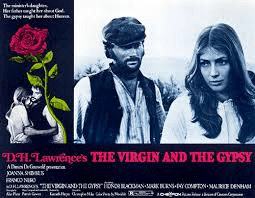
By spring the Lawrences had moved south, and were soon en route for Italy, which must have been a welcome relief after living above a frozen Via Gellia. But he never forgot this corner of Derbyshire, since he set his novella, The Virgin and the Gypsy in a village clearly based on Cromford, called Papplewick in the story:

“Further on, beyond where the road crosses the stream, were the big old stone cotton mills, once driven by water. The road curved uphill, into the bleak stone streets of the village”.

NB: Mountain Cottage can be seen from the road, on the right descending from Middleton to the Via Gellia. If walking take care as the road is quite narrow, busy, and there is no pavement.

Celestial journeys

An early edition

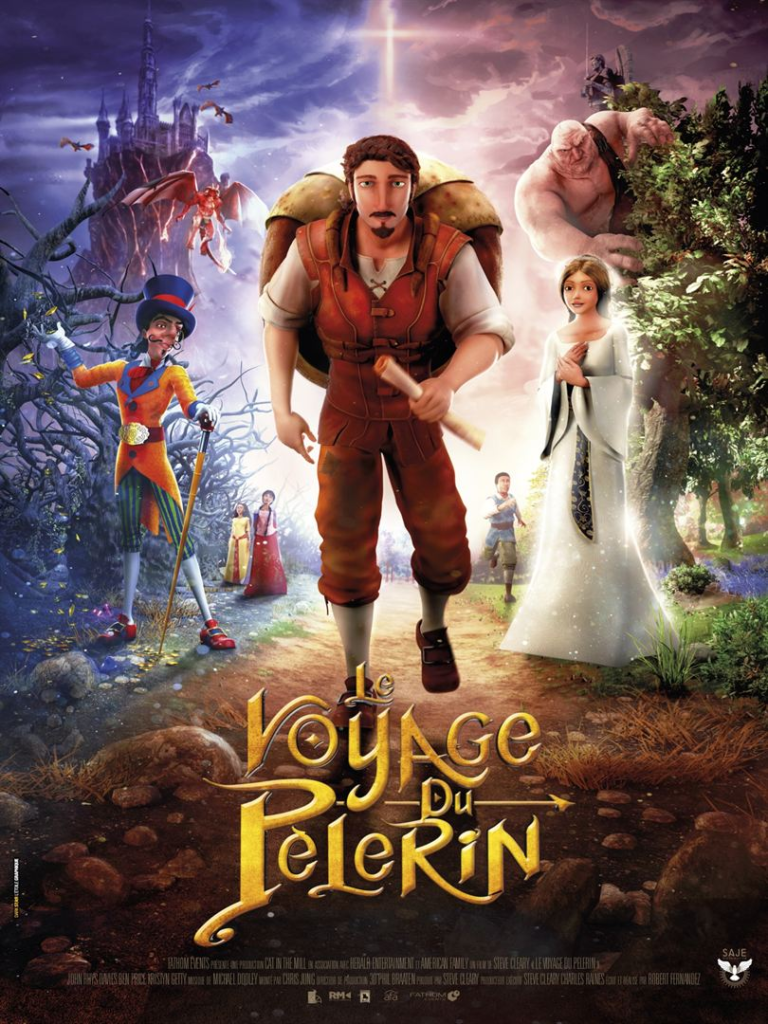
The Pilgrim’s Progress, from this World to that Which is to Come must be one of the most influential books ever published in English. Today it has become common to speak of ‘my cancer journey’ or ‘our journey through bankruptcy’, using the metaphor of life, or part of life, as a journey. It is also normal to talk about making a ‘pilgrimage’: to Lennon’s birthplace, for instance. But this is not a new concept, as shown by the extraordinary popularity of John Bunyan’s work from the late seventeenth century into modern times – the concept of life as a spiritual journey or pilgrimage has not gone away. First published in 1678, Pilgrim’s Progress has been translated into 200 languages, and never been out of print. An allegorical story of a man’s (Pilgrim’s) search for spiritual salvation, a quest which takes the form of a journey through a series of dramatic dangers, the work was in many ways a proto-novel, presenting an exciting story in vivid language.

En Francais

John Bunyan was born in 1628, in Bedfordshire, and enlisted in the Parliamentary army aged 16, during the English Civil War. It was a time of fervent religious and political debate, and Bunyan was probably influenced by the more radical, puritan elements in the army. He left the army after three years and became a tinker, a trade he had learned from his father. This peripatetic occupation must have made him more conscious of the dangers of travel. He also began preaching for a nonconformist group in Bedford. But the return of the monarchy in 1660 made it an offence to preach outside the Anglican church, and Bunyan was arrested, tried and imprisoned. As he refused to obey the law he went on to spend 12 years in Bedford Gaol, during which time he wrote the first part of Pilgrim’s Progress. The book was an immediate success, so that on his release he was able to devote his time to further religious writings. This meant that until his death in 1688 he, his wife and children had some financial security, after the sufferings of the years in prison.
A handy road map to the Celestial City

Perhaps the secret of the book’s enduring appeal is its simplicity. Who could forget characters such as Mr Worldly Wiseman or Lord Hate-good, or places like the Slough of Despond, The Valley of the Shadow of Death or Vanity Fair (a name invented by Bunyan but borrowed by Thackeray)? Pilgrim’s Progress was repeatedly cited by radicals in the nineteenth century as a major influence on their political development. For instance:

‘For the founding fathers of the Labour Party, it was a revolutionary manifesto to “‘create a new heaven and a new earth” … Robert Blatchford, who had practically memorized Pilgrim’s Progress by age ten, always found its political message supremely relevant: Mr Pliable we all know, he still votes for the old Parties. Mr Worldly Wiseman writes books and articles against Socialism …’.

(Source: The Intellectual life of the British Working Classes, Jonathan Rose)

That elusive cromlech at Riber

The Welsh model

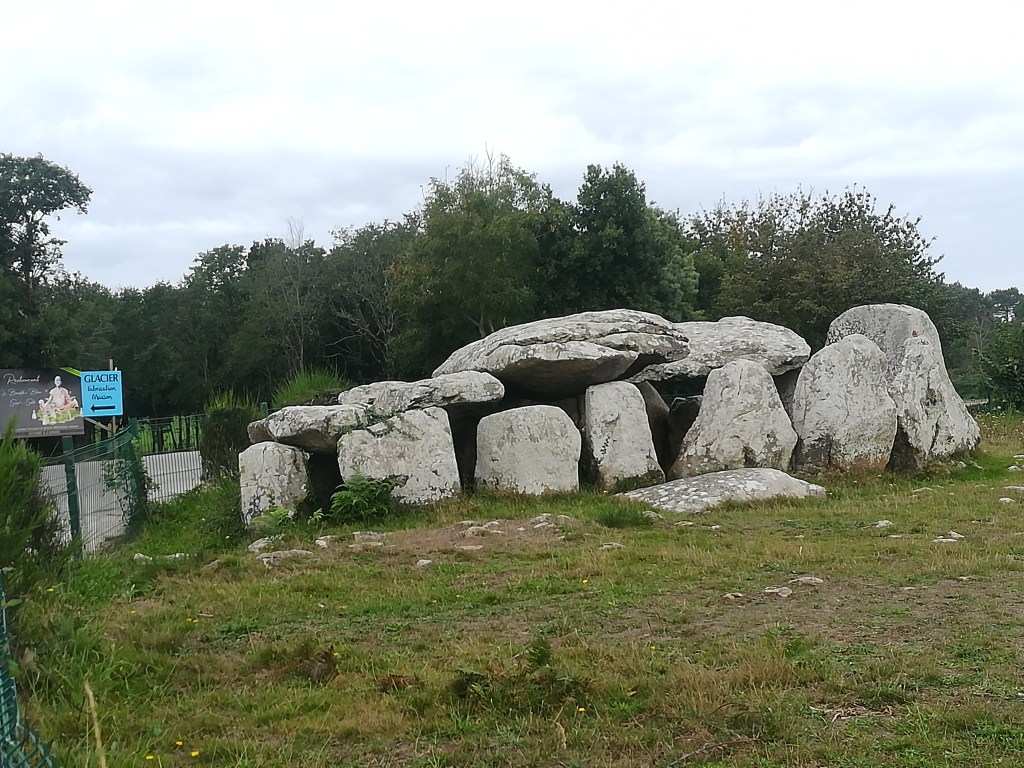
Cromlechs are ancient megalithic structures, thought to pre-date stone circles, so possibly over 6,000 years old. Welsh examples consist of a flat cap stone supported by several upright stones, as in the photo above. They may have been burial sites, but they certainly were not ‘Druidical altars’, as was imagined by early antiquarians. As far as I know there are now none in Derbyshire, but there is some evidence that at least one existed until the early nineteenth century.

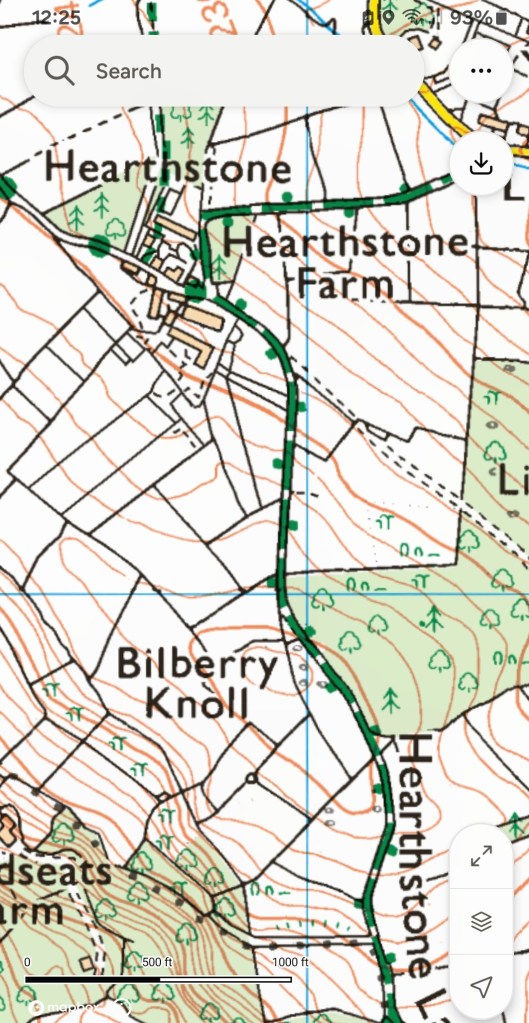
Hearthstone Lane, south of Riber

Hearthstone Lane is an ancient route that runs south from Riber to Cromford and beyond. Writing in the Derbyshire Archaeological Journal for 1887, Benjamin Bryan looked at the evidence for a cromlech in this area. There were a surprising number of guide books to the county in the late eighteenth and early nineteenth centuries, and Bray’s Tour of Derbyshire of 1783 mentions a structure on Riber hill consisting of one capstone resting on uprights. A similar monument is mentioned in Pilkington’s View of Derbyshire of 1789, and then Beauties of England and Wales (1803) names this as the Hirst Stones, and describes a hole sunk into the top slab. Frustratingly, none of these writers provides an illustration or an exact position.

Hearthstone Lane above Castletop Farm

The Matlock Companion of 1835 describes the cromlech as recently broken up, and claims that it had been destroyed by the farmer looking for material for stone walls. In 1866 the editor of the DAJ questioned two old ‘cottagers’ of Riber about the stones, and was told that they both used to play on the monument as children. So there seems little doubt that there had been a cromlech on Riber hill until the early nineteenth century, and it seems likely that the name Hearthstone Lane is a corruption of Hirststone. Several roads in the area are named after prominent stones e.g. Holestone Lane and Cuckoostone Lane. The obvious site of the cromlech is at the top of Bilberry Knoll, the highest point on the lane, providing impressive views in every direction.

The French version, Brittany

This story is a reminder of the chance nature of survival of ancient structures, and how recently and easily they could have been lost. Yet Hearthstone Lane remains as a rewarding historical walk, easily accessible from Cromford station: one of the finest green lanes in the district.

Beating the bounds

Boundary stone near Fritchley

This stone, partly broken, can be found lurking in the hedge of the minor road that links Fritchley with Wingfield. Although partly broken, one side still reads ‘Winfiel(d)’ and the other ‘Crich’. Easily mistaken for a milestone, this is actually a boundary stone marking the limits of these two parishes, marked BS on Ordnance Survey maps. The boundary here can still be followed on public footpaths, southwards to a footbridge over the River Amber and Sawmills, northwards (briefly) to Park Head. The OS maps mark the boundaries with black dots, though they can be difficult to see.

A custom revived

The parish system of local government is thought to have been established in Saxon times, although individual parishes were originally much larger. In the past, parishes were the only kind of local authority that affected most people’s lives, being responsible, for example, for road maintenance. Therefore the limits of the parish were important, and in a largely pre-literate society this knowledge had to be handed down orally, hence the annual perambulation known as ‘Beating the Bounds’. This involved the priest, various landowners and some unfortunate young lads, whose fate was to be beaten at critical points so they would remember them. Who knows whether this beating was symbolic or real?

Another stone in North Derbyshire

Rivers and streams were often used as boundaries, since they were unlikely to move very much, but as they were not always available other marks, such as large trees, might be used, and clearly boundary stones were sometimes also needed. Where the line of a road (or footpath) is a boundary it suggests that the road is very ancient and important, such as sections of the old Roman road (The Street) running north from Pikehall, which was in use for at least 1,500 years. Today the custom of bounds beating is obviously redundant, but in places it has been revived as an enjoyable excuse for a group walk, as in the Macclesfield example above. More locally, a WEA group from Crich re-enacted the ceremony in 1984, and produced a very helpful written account of their route around the 14 miles of the parish boundary. See: https://www.crichparish.co.uk/PDF/beatingbounds.pdf

Going round in circles?

Doll Tor, near Birchover

There are over a thousand stone circles in Britain and France, and Derbyshire has its share, ranging in size from Arbor Low (up to 50 metres in diameter) to much smaller versions, such as Doll Tor (above). This latter is part of a cluster of circles, with the Nine Ladies on Stanton Moor close by, and Nine Stones Close on Harthill Moor not far off. There may have been more circles in the past, since we have evidence that some have been pillaged for their stone (Nine Stones actually only has four stones), and others destroyed as pagan symbols by God-fearing landowners. Most of the surviving circles are on moorland or high pastures, which raises the question whether the reason for their survival was their location on land of little value. Others might argue that the circles were built on high places for astronomical purposes, to observe sunrises for instance. In fact, although the circles have been studied, measured, excavated and theorised about for over two hundred years, we still seem no closer to knowing their purpose

Nine Stones (in theory) Close on Harthill Moor

There does seem to be agreement that most circles belong to the Bronze Age, roughly 3,000 years ago, though obviously dating such basic structures is not easy. But over this time span many may have been altered, so there’s no guarantee we’re looking at the original layout. Some of the stones at Doll Tor, for example, have been re-set, and Bateman records seven stones on Harthill Moor in the nineteenth century (others claim that these stones have been raised to standing position, it being the only circle in the county with standing stones).

Nine Ladies Circle on Stanton Moor

Some circles seem deeply unimpressive: The well-known Nine Ladies, for instance, hardly compares with the majesty of Stonehenge. Yet, large or small, there is still no clarity on why these monuments were built. Vague talk of ceremonial sites or astronomical observation is pure speculation and seems as dubious as Victorian ideas of ‘druidical temples’. Perhaps there is a simpler explanation. Before the Romans arrived the British lived in round, wooden houses – effectively the only shape of building they made. A stone circle can be seen as a symbol – a permanent representation – of their house, which proclaimed ownership of the land to all travellers and passers-by. The circle would be a permanent claim to their property, in days before the Land Registry. Both Arbor Low and Nine Stones are on prehistoric routes (the Street and the Portway), but other circles would have been visible from the tracks across the uplands.

Druids doing their thing

The books of the road

The last, unfinished novel by Robert Louis Stevenson, St Ives, is the exciting story of an escaped French prisoner of war in the Napoleonic period. After breaking out of prison in Edinburgh he heads south to England, first in company with a couple of drovers and then, over the border, on the Great North Road. On the way he gives us a rare picture of travel in the early nineteenth century:

The main roads of England are incomparable for excellence, of a beautiful smoothness, very ingeniously laid down, and so well kept that in most weathers you could take your dinner … off them. On them, to the note of the bugle, the mail did its sixty miles a day; innumerable chaises whisked after the bobbing postboys …

The drovers who help the hero flee Scotland are portrayed as taciturn, rough and hardy characters, but totally honest and self-reliant. They follow their droving trails through the hills, well away from the main roads, which is the ideal route for an escaped prisoner. Once in England St Ives stays at roadside inns, where visitors were expected to join the general conversation around the dining table, on subjects like:

… the country, the state of the roads, the business interest of those who sat down with me, and the course of public events …

R L Stevenson

and:

I came to the model of a good old-fashioned English inn, and was attended on by the picture of a pretty chambermaid. We had a good many pretty passages as she waited table or warmed my bed for me with a devil of a brass warming pan … and as she was no less pert than she was pretty, she may be said to have given rather better than she took.

In this, and most of his other stories such as Treasure Island or Kidnapped, Stevenson is using a classic model – the traveler’s tale, which was already three hundred years old. Beginning in Spain with novels such as Cervantes’ Don Quixote, a little later Bunyan’s Pilgrim’s Progress, then in the eighteenth century many novels in Britain and France like Candide or Tom Jones, this was an incredibly popular genre. Sometimes called ‘picaresque’, from the Spanish word ‘picaro’, a disreputable, wandering character, these novels all consist of a series of adventures linked together by a journey, adventures in which the hero meets a variety of people.

Still in print after 350 years

Given the scarcity of other material, these stories are one of the best sources for historians of travel. Not only do they give an insight into the mechanics of travel in the past, as for example in The Pickwick Papers, where we can ride past a turnpike gate, but they also illustrate contemporary attitudes towards, for instance, inn keepers or chambermaids, as in the example above, in which Stevenson may be lightly satirising such conventions. Today it has become fashionable to talk about ‘my journey’ as a pretentious synonym for ‘my life’, but clearly this conflation is far from being a novelty!