Signposting the Peaks and Paths

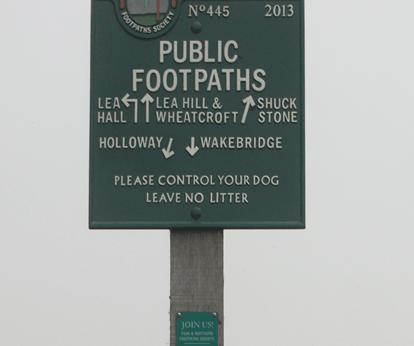
Sign at the junction of five paths near Alderwasley

Many progressive social movements, such as the Cooperative Society, started in the Manchester area, and in 1894 this was the birthplace of one of Britain’s oldest footpath protection clubs, the Peak and Northern Footpath Society. Today it operates in Lancashire, parts of Yorkshire, Derbyshire, Cheshire and Staffordshire, with its headquarters in Stockport. Partly thanks to the pandemic, which drove so many people to explore their local areas, the society has become even stronger and more active, with over 1,300 members. To some extent this may also be the result of so many local authorities being unable or unwilling to maintain the footpath network.
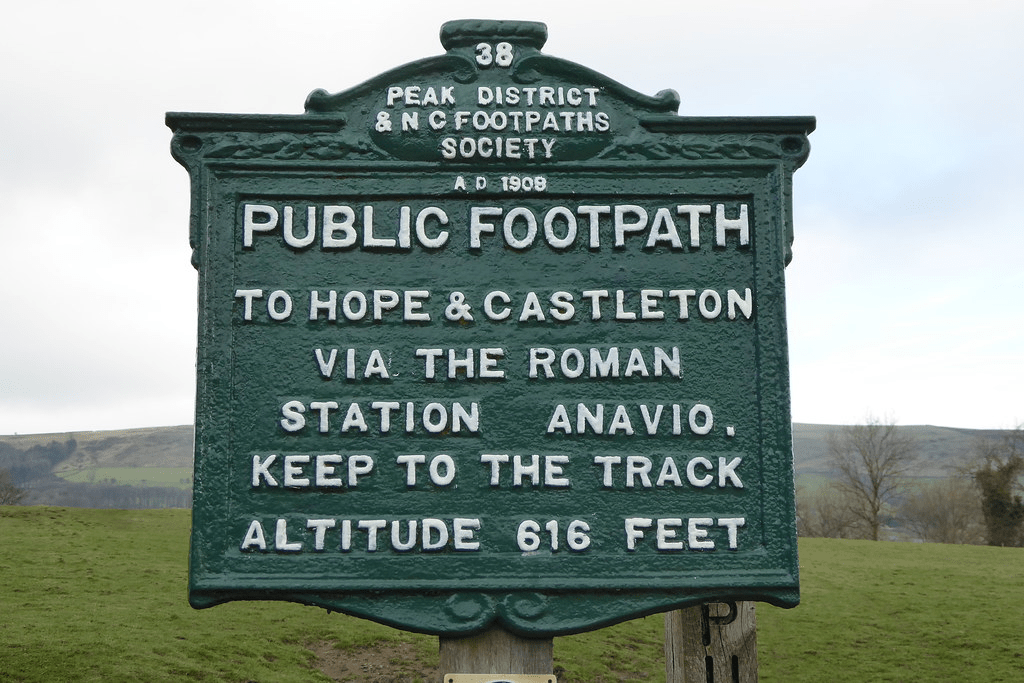
An early model

Originally founded to obtain access to the high moors of Kinderscout, the society developed a concern for all rights of way for walkers in its area. It soon started to mark these with its distinctive signposts, a vital reassurance at a time when many walkers could not afford maps (while map apps hadn’t even been dreamed of!) Today there are over 550 distinctive aluminium signposts scattered around the five counties, maintained by a team of dedicated volunteers. In fact the PNFS is entirely run by volunteers, a remarkable example of cooperative achievement. These volunteers include 172 footpath inspectors in 730 parishes who regularly walk the paths and report any faults to a path database.
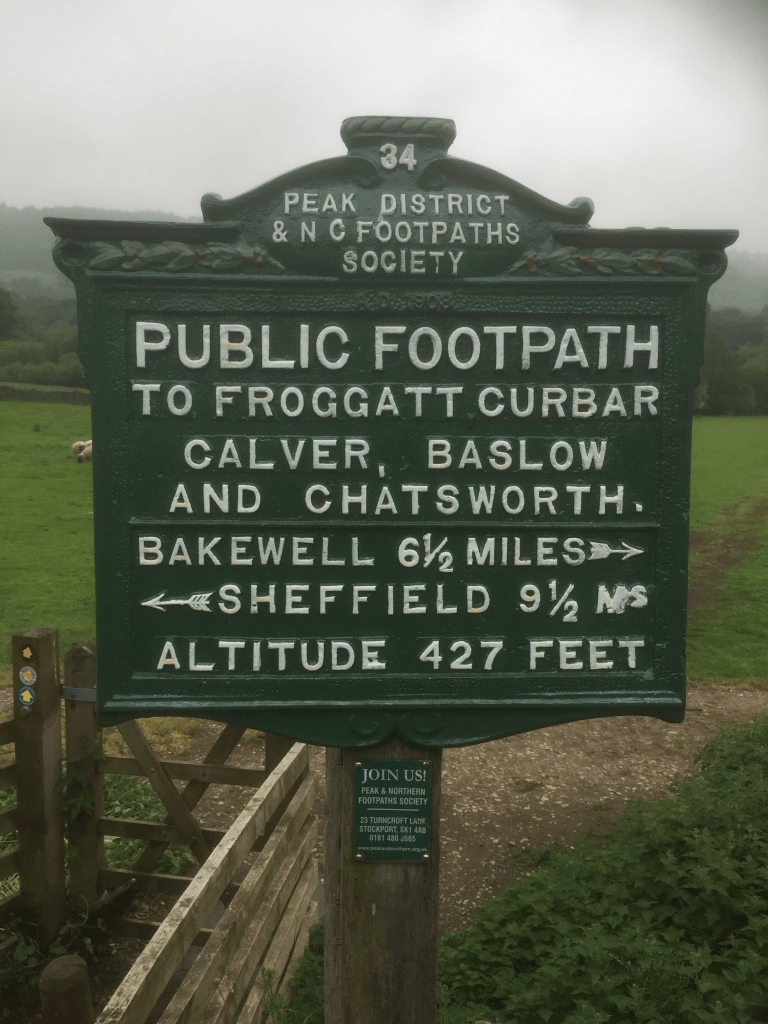
Another popular route

Although a great deal of fuss is made of the so-called ‘Mass Trespass’ of 1932 the PNFS has been effectively defending the rights of walkers for well over 100 years, challenging planning applications and forcing landowners to open up paths that they were trying to block. In addition, the Society has also helped pay for many footbridges at crucial points of the path network, and organises a regular programme of long-ish (and longer) walks on both sides of the Pennines. A quarterly magazine, inevitably called ‘Signpost’ keeps members informed of developments. Why not join – it’s only £15 per year? See: http://www.peakandnorthern.org.uk/

The secrets of Shuckstone

The cross base, with dandelions, looking east

Starting from Whatstandwell Bridge, if you follow the track from the hamlet of Robin Hood up through the quarry and wood to Wakebridge, and then on past Wakebridge Farm up to the top of the hill, the route finally levels off and you come to Shuckstone Fields, behind Holly Grange Farm and above Lea. This large field contains the intersection of five footpaths, and Shuckstone Cross must have marked this point. Today only the base remains, and the markings on this are illegible, but according to local historian George Wrigglesworth the four sides were marked C (for Crich) A (possibly Ashover) M (Mansfield or Matlock) and W (Wirksworth). In the late eighteenth century a pot containing Roman coins was dug up here, presumably buried by someone wanting a clear marker for their savings. Not far away is a ‘Holy Well’ of three compartments, which could have offered refreshment for travellers.

The Holy Well

The term ‘cross’ can be misleading: the crosses found in country churchyards, as at Eyam, had a cross shape and were often preaching crosses, while a cross as at Shuckstone was simply a stone shaft held in a square base which acted as a waymark or signpost. This marker would have been clearly visible at this high point (nearly 900 feet), which was moorland until a couple of hundred years ago: the 1791 map shows that the area was the southern tip of East Moor, an expanse of rough pasture which stretched from here north towards Chatsworth and then Sheffield.

The Cross may have also been a boundary marker, since the same map (Burdett’s) also shows that the track up from the Derwent runs along the old wapentake boundary, with the wapentakes of Wirksworth to the west and Morleyston to the east. According to Kenneth Cameron, (The Place-names of Derbyshire Part 2) the name ‘Shuckstone’ is fairly recent, and older records, going back to the Domesday Book, refer to this spot as ‘Shuckthorn’ or similar, meaning the Devil’s thorn tree. This is certainly a location well worth visiting, but probably not on a dark night.

A choice of paths

A walk on the Portway

The Portway as Islington Lane

This walk, which can stand alone or be incorporated into a longer route, gives a taste of one of Derbyshire’s oldest roads, and incorporates many features of historic (or even prehistoric) travel. Starting behind the Miners’ Standard pub above Winster (car parking generally possible opposite) , the track runs north between stone walls. Today the track is labelled as part of the Limestone Way, although Islington Lane, an older name, is a reminder of the miners’ settlement here in the boom days of lead mining. This old road was replaced by the Ashbourne turnpike, now the B5056, which zig zags down the slope to allow carriages an easier incline.

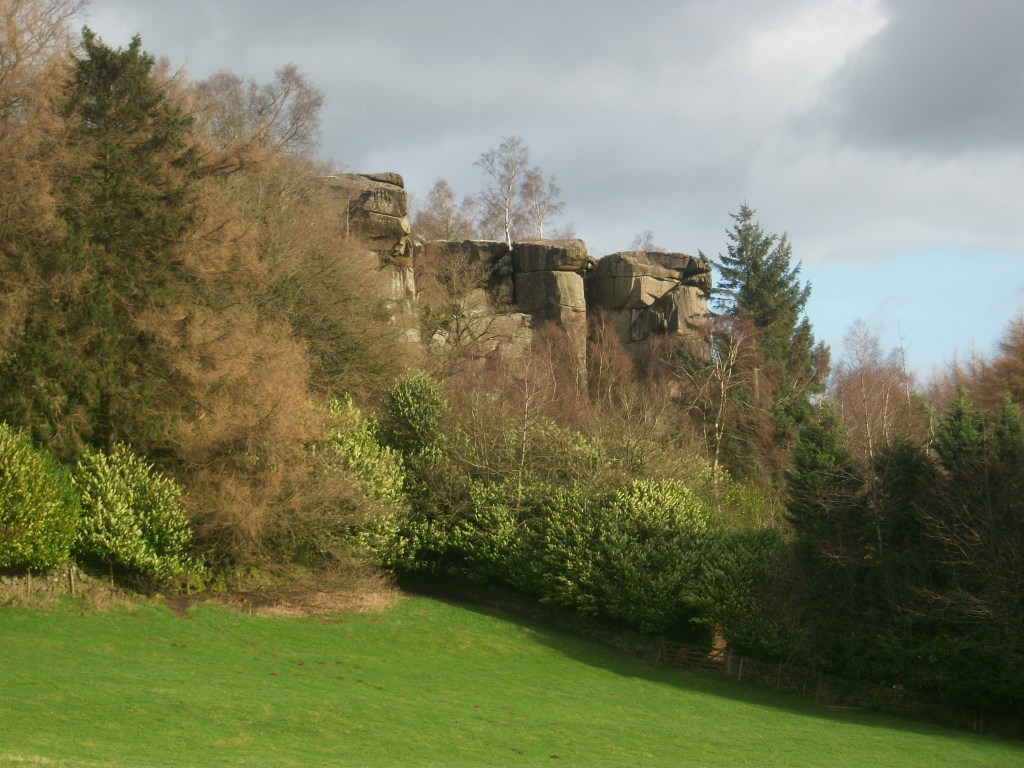
Looking towards Cratcliffe Rocks from the end of Dudwood Lane

After about a mile you cross the Elton road and continue on Dudwood Lane, downhill on what is now a tarmac surface. On the right is the site of the Portaway lead mine, once a substantial producer, which provides clear evidence for the route of the old road. At the bottom of the hill you bypass the cattle grid and start climbing towards Cratcliffe Rocks, with the twin peaks of Robin Hood’s Stride on the left. These rock outcrops must have provided clear landmarks for medieval travellers, and the path runs between them. Evidence has been found at the top of the Rocks of prehistoric habitation, probably to provide shelter for travellers: the summit certainly provides excellent views of the route. Another feature is the medieval hermit’s cave, found in the woods below, which is discussed in a previous blog (Hermits and their Hermitages, 6th August).

Cratcliffe Rocks

Now the track runs beside Robin Hood’s Stride, one of the many Derbyshire features named after this hero. Its striking profile with the rocky pinnacles also gave it the name ‘Mock Beggar’s Hall’. However, the most interesting features of this area are found on the other side of the path, on Harthill Moor, where the stone circle suggests a Neolithic dating. Known as Nine Stone Close, there are actually only four uprights, and there is a suggestion that they may have been re-erected quite recently. Less obvious is an example of cup-and-ring marking on a boulder, a Bronze Age feature not fully understood by archaeologists, but possibly associated with long-distance trackways.

Nine Stone Close

From here the walk can extended on the Limestone Way to Youlgreave, or even to Bakewell via Alport, but the simplest option is to head back towards the Miners’ Standard, where a good lunch and a decent pint can usually be found!

The style of stiles

Since the nineteenth century stiles have been a familiar feature of the rural landscape, providing a bucolic focus for pictures of simple country folk or lovers’ trysts. Before the enclosure of moors and commons stiles weren’t needed, but with the arrival of hedges and dry stone walls access was needed for pedestrians. ‘Stile’ comes from the old German word ‘stigel’ which means to climb or go over.

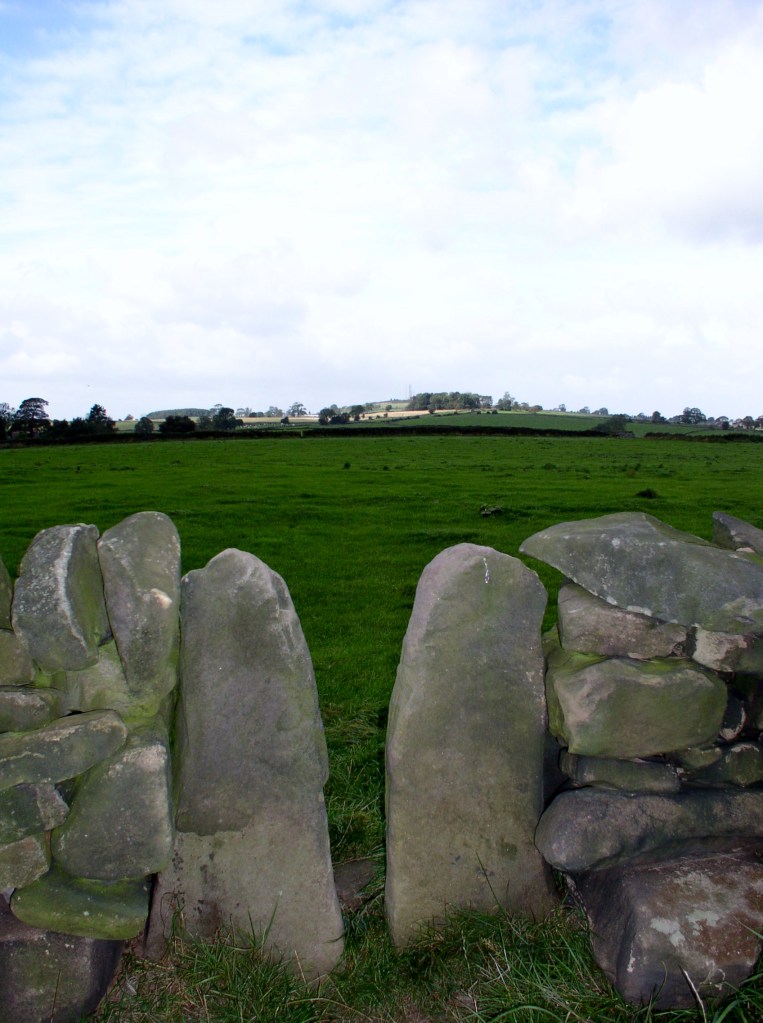
Squeeze stile near Alport Height

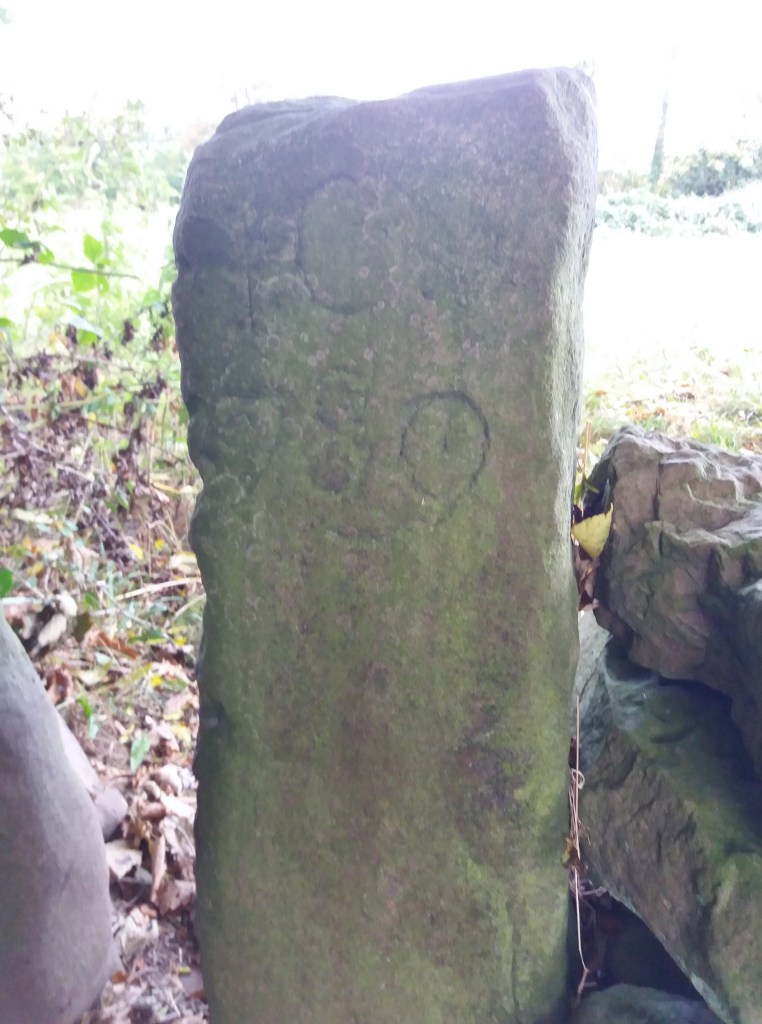
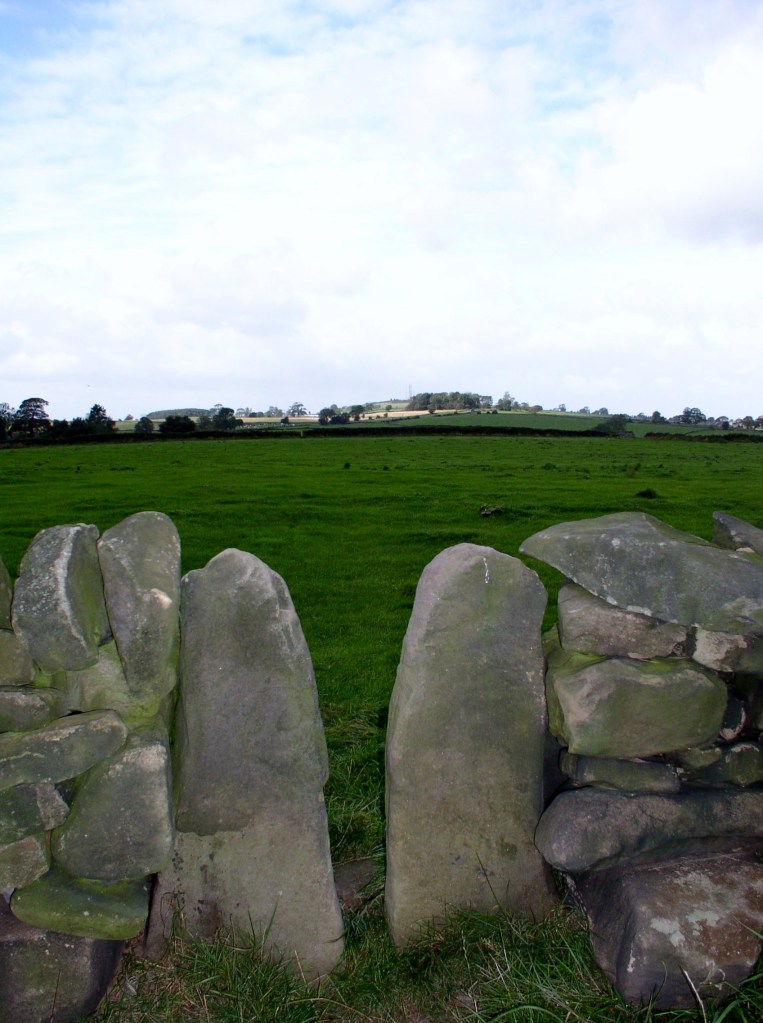
Squeeze stiles are a distinctive feature of the Derbyshire landscape. They are simple to pass through, but clearly are only effective if too narrow for sheep to slip between, and so can prove quite tricky for the overweight! They have the advantage of clearly marking the route of a path, so that when entering a field you can normally see the next stile ahead, and aim for that. Very occasionally the stile stones are dated, as in the example below at Lea, which suggests that this area was enclosed about 1780.

Other types of stile are with wooden steps, or stone steps let into a wall. Both can be more difficult for walkers if not well-maintained, and an upright wooden post should be provided for hand support. Dogs can also find stiles tricky, so the ideal model has a dog gate which can be raised when needed. But today there is a move to replace stiles with gates, more convenient for elderly walkers but also requiring more maintenance – and easily left open.

Stile and gate near Holbrook

Beyond their practical function, stiles can be seen as fossilised markers of footpaths, possibly 250 years old in many cases, but indicating routes that were in existence before the enclosures and which had to be preserved subsequently. In places the paths they serve could be medieval, and may once have been a long-distance road, now merely a Sunday ramble.

Walkers, hikers or ramblers?

Squeeze style on path to Alport Height

Many of our field paths were created by people walking to work, possibly in mines or mills. With the enclosure of moors and commons in the late eighteenth or early nineteenth centuries and the building of drystone walls to delineate the new fields, these routes became fossilised, often marked by a series of squeeze stiles, as on the path above. Today the mills and mines have gone, yet the paths are kept open by walkers – a leisure activity that would probably have surprised the mill hands of Arkwright’s day.

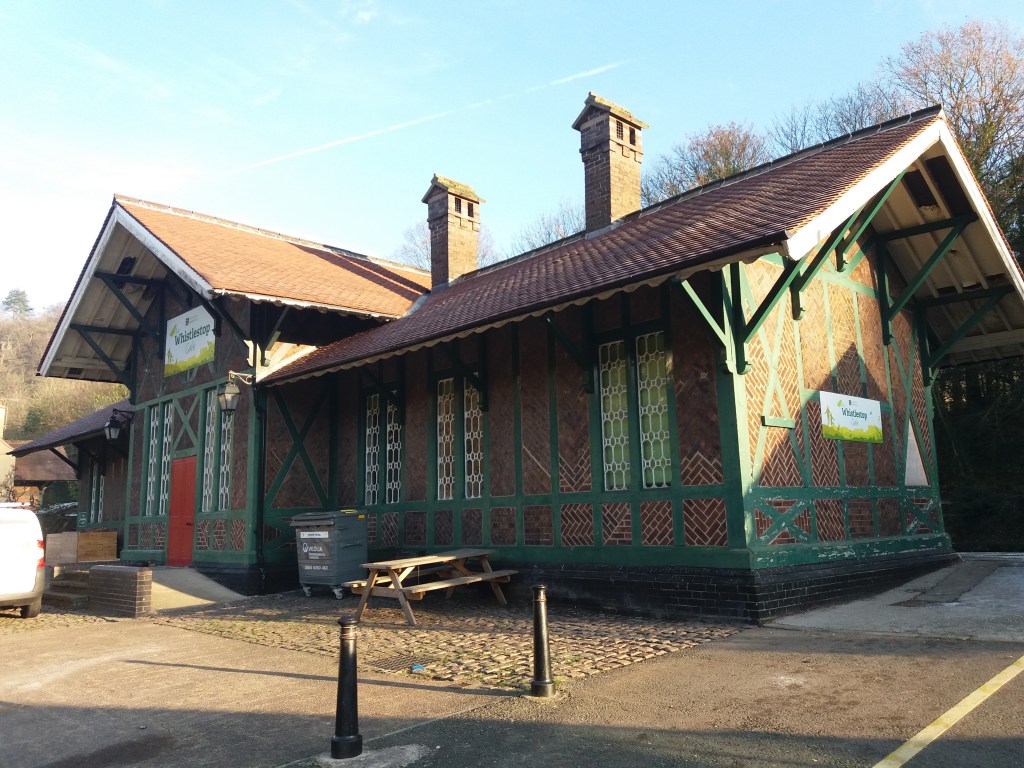
Matlock Bath’s Swiss-style station

Walking for pleasure became popular from the mid-nineteenth century, as some workers in the industrial cities of Sheffield and Manchester gained a half-day holiday on Saturday and were able to take advantage of the new railway lines to escape from the smoky cities into the hills of Derbyshire, Yorkshire and Lancashire. At first the focus was on the Dark Peak moors, especially Kinderscout, which became a regular scene of conflict between walkers and the gamekeepers employed by the Duke of Devonshire, who owned much of the moors.

PNFS signpost near Alderwasley

The Manchester Association for the Preservation of Ancient Public Footpaths was founded as early as 1826, and Manchester remained a centre for the defence of workers’ interests, notably establishing the first public library (1852) and the first cooperative society (Rochdale, 1844). In 1894 the Peak District and Northern Counties Footpath Preservation Association (thankfully abbreviated now to Peak & Northern) was formed, and is still doing excellent work defending walkers’ rights and interests, notably through over 500 steel signs like the one above.

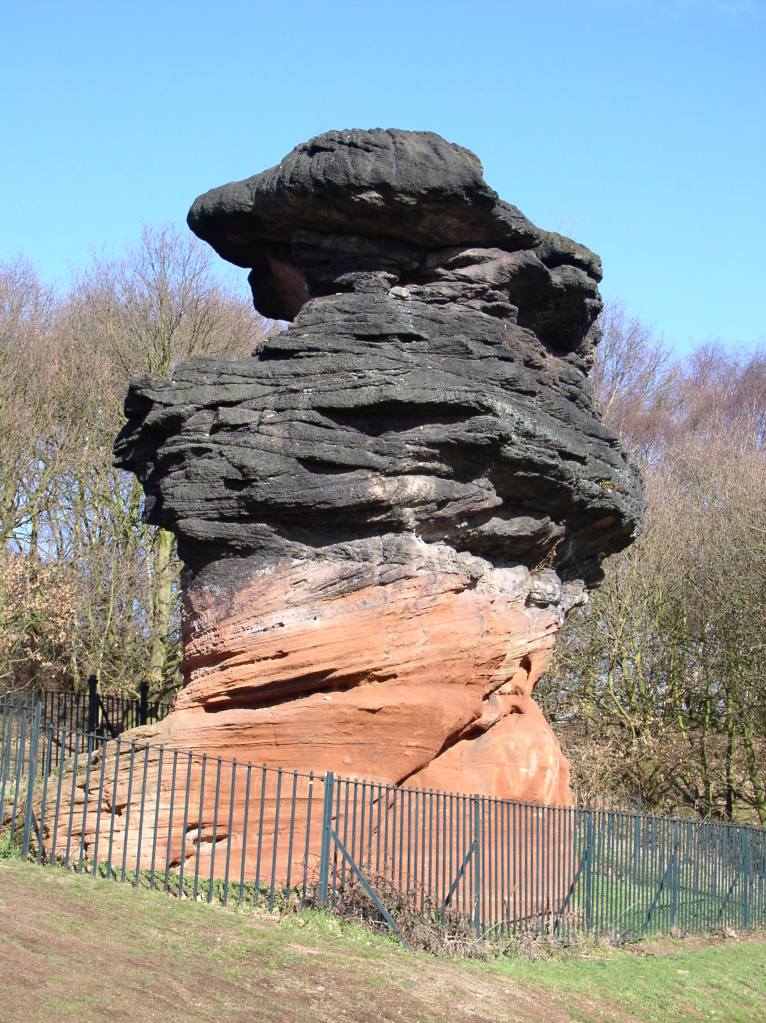
The Hemlock Stone today

The inter-war Kinderscout mass trespass has been widely publicised, but it was far from typical of the experience of many walkers in the Derbyshire hills. In general farmers and landowners have respected public rights of way and co-existed succesfully with ramblers. Perhaps a more typical walk is described by DH Lawrence in his Bildungsroman novel Sons and Lovers. Here, a party of friends and family, mostly connected with the Eastwood Congregationalists, set out to walk from Eastwood to the Hemlock Stone in Bramcote Hills one Bank Holiday. The walk actually took place at Easter 1905, and is an example of the way young people at that time, with little spare cash but plenty of energy, enjoyed their precious free time. The connection exemplified there between nonconformity, radical thought and hiking is interesting, and worth exploring further.

A walk around Horsley Castle

This 4-5 mile walk includes a medieval castle and a section of the Portway, plus another ancient holloway. Parking is available at various points, but perhaps the simplest is at Coxbench, on the road parallel to the A38 embankment that leads to the kennels, marked MP on the map above. Follow the path up by the kennels, and then take the right-hand path up into the wood. The area to the west has been extensively quarried and the path is effectively following the edge of these quarries. The path then changes direction, turning east, and the ruins of Horsley Castle can be seen on the right.

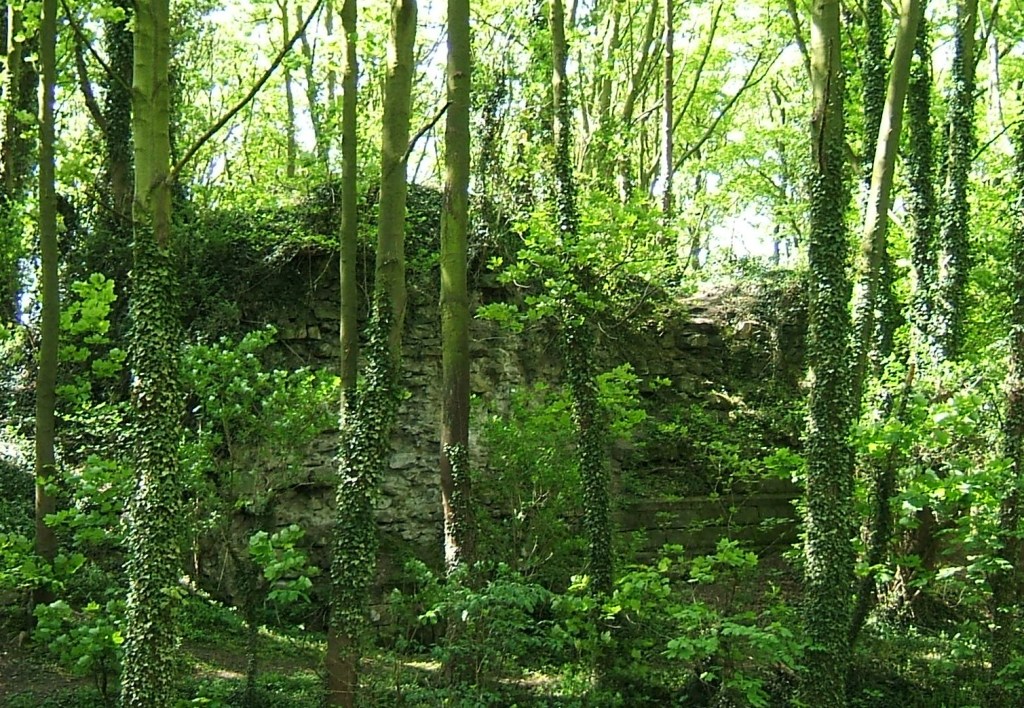
Like several other Derbyshire castles (Duffield, Pilsbury) little remains of this one, beyond a clump of rough masonry on a mound. It is easier to see the layout in winter, before the trees are in leaf. Little is known of the history of the castle, which is dated to the twelfth century. Clearly most of the stone was robbed when it went into decline. It is nearly a mile from Horsley village, and is presumably sited here to take advantage of the high ground and possibly the proximity of the Portway, which is the route of the footpath, offering good views to the north and west. On the Historic England website it is said that the castle ‘overlooks the strategic Derwent Valley’: clearly impossible given the high ground between here and Duffield!

The castle ruins

From here continue eastwards to Sandy Lane, and then follow this uphill to the settlement of Brackley Gate. The route turns sharp right here, downhill towards Horsley Carr, but note that if you continue on the top road to Quarry Road you will cross the line of Ryknild Street, one of the most important Roman roads in Derbyshire, although now invisible here. The track descends through dense woodland, and when this opens up on the right, take the path that leads you to a tunnel under the A38 road. You now cross, in quick succession, the road to Little Eaton, the Bottle Brook, and the course of the old railway, before turning left on the Alfreton Road for a few hundred yards. Just past the Bell and Harp pub take the road to the right which runs up past houses before climbing more sharply through the wood. This track, in part a holloway, may have been a church path to Duffield church (but also to Duffield bridge).

After half a mile turn right onto the field path running north, and then bear right beyond Daypark, where several tracks lead down to the Holbrook road, here named as Port Way – the only surviving ‘official’ naming of this old route. From here it is less than a mile downhill to Coxbench, where you turn right and then left under the A38 again, back to the starting point.

Church path to Horsley from the Holbrook Portway