On getting lost

No danger of getting lost here

It’s difficult to get lost today. Google maps will display every street in the city, and spell out your quickest route, while in the country apps such as OS Maps will tell you exactly where on the path you are standing. The appeal of this technology is obvious – not just saving time, but also removing the fear that you’re heading the wrong way, into the unknown. In Derbyshire and the Peak District, with thousands of miles of footpaths, this reluctance to risk being lost results in crowds of visitors heading for the same honeypots such as Dovedale, Mam Tor, or the Cromford Canal, with predictable results.

The delights of a day in the country

It has been argued that the experience of getting lost can be valuable for our development, and we can cope better with that fear if we develop a strong sense of direction. Moreover, research has shown that the more children are allowed to roam freely, the better sense of direction they acquire. Although there must be marked individual variation, it seems that children today are restricted to a much small radius of ‘free movement’ – perhaps a few hundred yards – instead of the miles that children wandered away from home in previous generations. Of course, it can be argued that there is good reason for the restriction, but if children are barely allowed out of sight of their home they have little possibility of feeling lost – and then finding their way back.

Call Social Services?

How do we get a sense of direction? Moving through a landscape we notice and memorise a series of landmarks, while the position of the sun should provide an additional bearing (provided it’s at least partly visible). To return, the landmarks are revisited. The second time you make the journey, the landmarks are stored in your memory, even after a gap of months or years, as most walkers have found. Our nomadic ancestors, travelling through an unmapped countryside thousands of years ago, must have achieved an advanced ability to find their way, using perceptions unknown to us.
All you ever wanted to know about paths

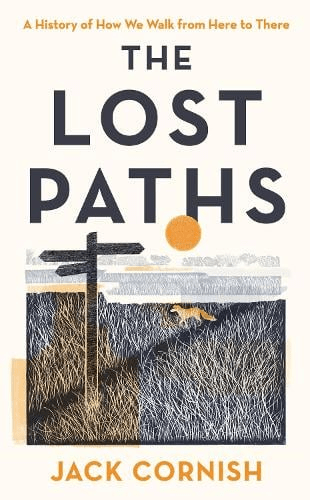
Jack Cornish is Head of Paths at the Ramblers, which must be an excellent qualification to write on the subject. His recent book, The Lost Paths, sets out to be ‘A History of How We Walk from Here to There’. Ambitious in scope, the 19 chapters include such familiar subjects as pilgrim routes and turnpikes, but also cover topics like the growth of railways and the effects of the new post-war towns on traditional paths. Some of his material, such as the enclosures of the eighteenth and nineteenth centuries, may be familiar to any reader with an interest in history, but other topics, for instance the loss of rights of way due to military requirements during the Second World War, are unusual.

The author has assembled a fascinating range of detail, such as the vogue for ‘pedestrianism’ in the nineteenth century, when large bets were put on improbable feats of walking, such as London to York and back in six days. But his concerns are not only historical, since he discusses the need to make access to the countryside more diverse and welcoming for minority groups. If anything, the reader may feel that he has tried to include too much: it is interesting to know how many bricks were used to build London’s first railway (six million) but not really relevant to the stated theme – there’s a certain loss of focus.

Yet his palette is impressively broad in terms of geography, and Derbyshire readers may enjoy his description of a walk from Cromford to Rowsley via Bonsall Moor, which he undertakes as a recreation of the ‘mystery hikes’ which were apparently popular between the wars – hikers would board a train for an unknown destination:

‘The drama of the landscape hits me quickly. Minutes after stepping off my train, my path takes me along the bottom of a massive cliff face. Trees grow up high, directly out of breaks in the rocks, their leaves rusting and falling to the ground’.

Cornish’s own involvement in the walking he writes about is clear, and he effectively balances these personal reports with the more historical details. He is also good at recounting disputes with landowners over rights of way, and sets the inevitable Kinder trespass story in the wider context of the long-standing struggles for access all over this country.

I would certainly recommend The Lost Paths to all fellow walkers, though with a couple of caveats. The title doesn’t really do justice to the scope of the book, which is much broader than it suggests, and the illustrations – small black and white engravings – add little beyond decoration.

Rambling around Ryknild

Ryknild Street was the only long-distance Roman road that crossed Derbyshire, coming from Lichfield to the camp at Little Chester and then on to Chesterfield. Part of its route is still used today, notably the A61 from Higham through Stretton and Clay Cross to Chesterfield. There is little trace of the first part, through Breadsall and up to Brackley Gate, but then the route is picked up by Golden Valley and runs very straight to Smithy Houses and Street Lane. This last name, of course, and the village of Stretton, are reminders that Roman roads were always ‘streets’. Ryknild Street is the name given on the OS map, but there are many variations of the spelling, and this name was almost certainly not used by the Romans. The map above, of the area around Pentrich, is one place where public footpaths give access to the line of the road.

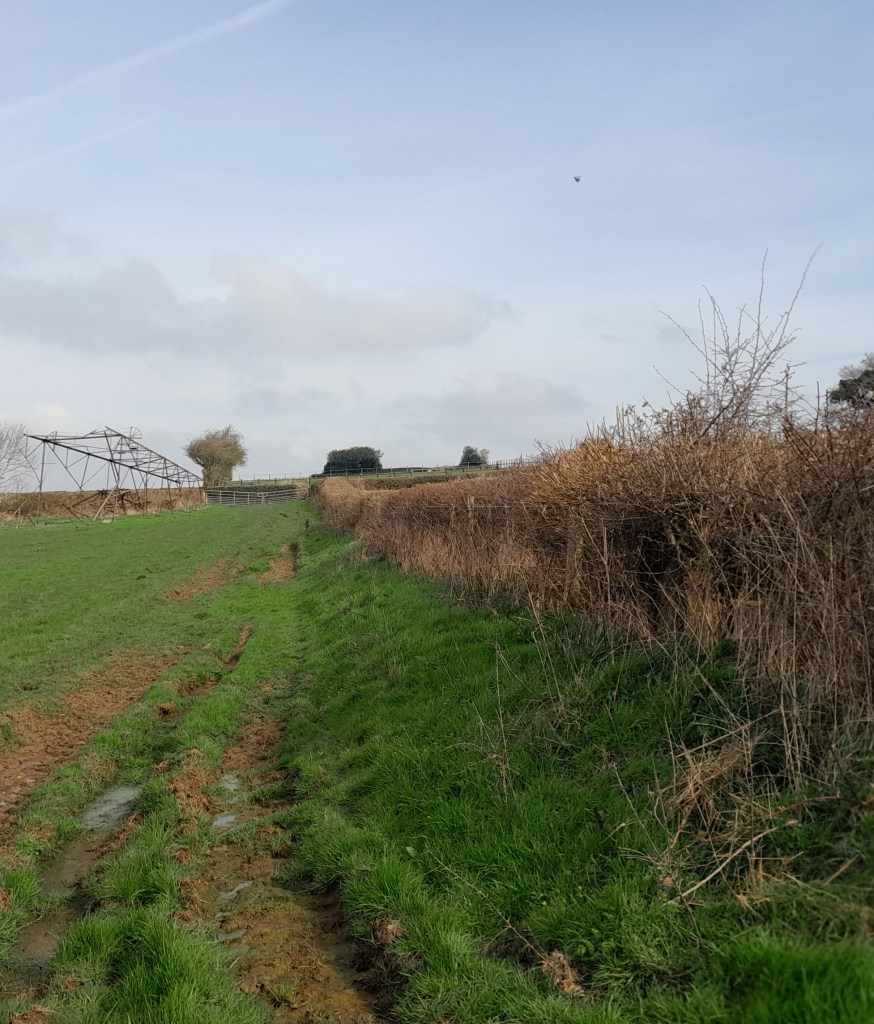
There’s a road here somewhere

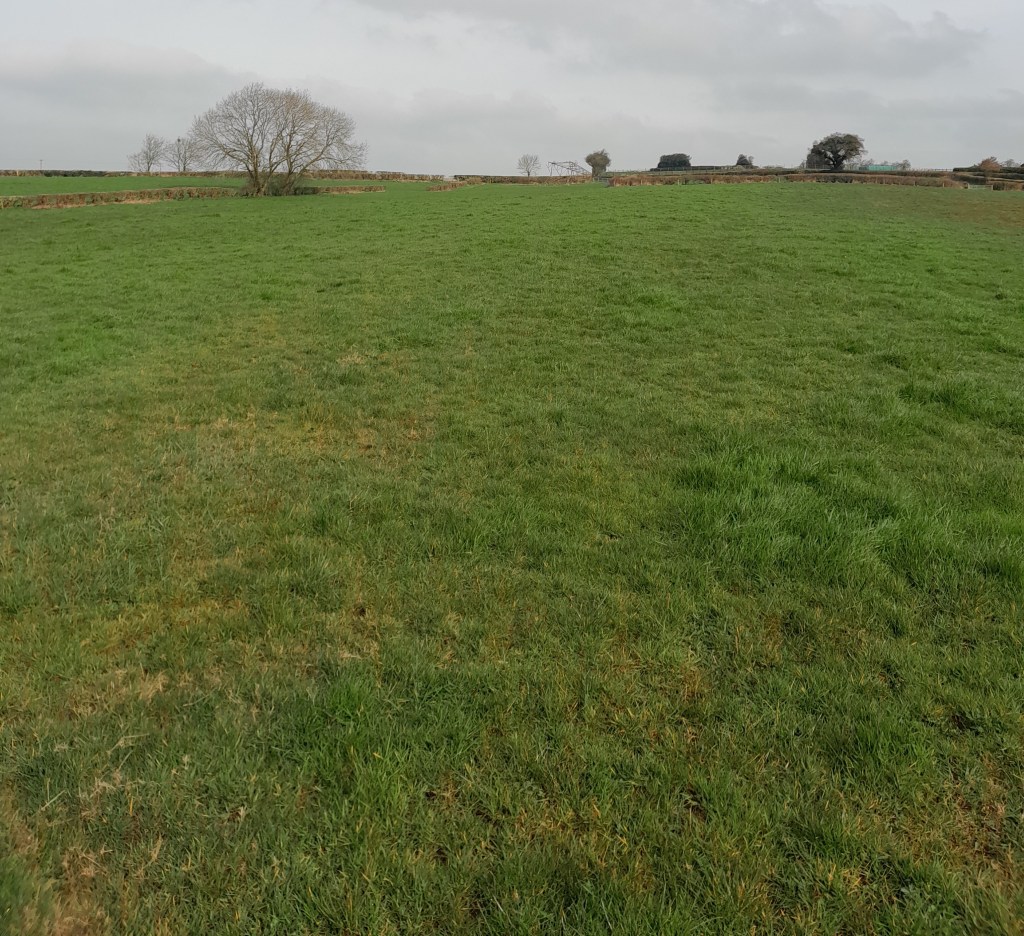
The footpath due west from Pentrich Church crosses the line of the old road at the top of a rise, and the raised platform for the road (known as an ‘agar’) can be just made out in the grass. Following this line north you come to another section of path which runs alongside a hedge – this is one of the few places Ryknild Street can actually be followed (see lower photo). On the other side of Riley Lane there is no trace of the road as it runs through ploughed fields east of Coneygrey Farm. However, just west of the road’s course, on Castle Hill, is what the OS map calls a ‘Roman Fortlet’.

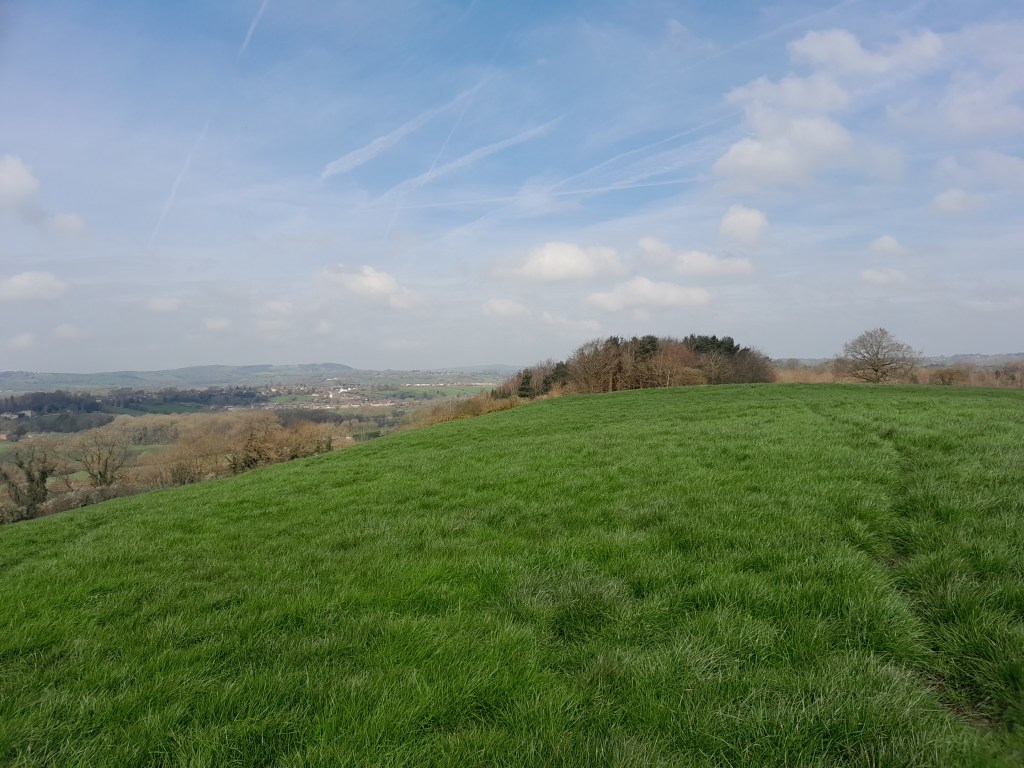
The view is worth the climb

Roughly half-way between Little Chester and Chesterfield, this fort might have offered some shelter to road users but was unlikely to be manned regularly. It can be reached by climbing the quite steep bank from the Oakerthorpe road, but the view from the top is brilliant, and shows that the road builders were keeping to high ground, well away from the Amber floodplain to the west. Possibly they were just upgrading an older route which followed the ridge?

All roads lead to ….

One obvious question is why such well-built roads as the Romans constructed were allowed to go out of use? Of course, in places they were maintained and improved, such as the modern A38 from Lichfield to Derby but other areas such as this may have preferred older routes, or have been unable to organise maintenance, for instance when trees were blown down or drains and culverts became blocked.

For a detailed report on the fortlet see:

Down Ashover way

Tomb of Thomas and Edith Babington in Ashover church

These unusually colorful figures on the Babington tomb at Ashover are a reminder of a long-distance packhorse route that can be traced as far as Wirksworth to the west. Ashover parish used to be much larger, and included Holloway, Lea and Dethick, the home of the Babingtons. St John’s church at Dethick was built as a private chapel for the manor, but Ashover had to be used for burials. Most of the route can be comfortably walked today; leaving Ashover by the track beside the Old Poet’s Corner pub which drops to a bridge over the Amber, and then provides a steep climb up a remarkably complete stone causeway (below).

Onwards and upwards

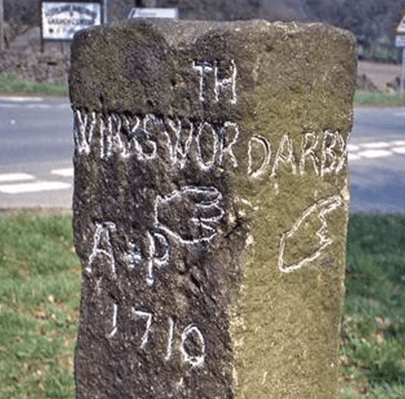
‘Causeys’ like this are found all over Derbyshire and are about two feet wide, thus providing a solid surface for horses’ feet at minimal expense. The track continues to climb towards Ravensnest and then meets Holestone Gate Road at the top. From there it’s road walking to the B6014 and along Lickpenny Lane to the Matlock-Alfreton road. At this point a guidestoop can be seen on the verge, dated 1710, marked A+P for Ashover Parish. Wirksworth is one of the directions shown, via Dethick Lane (NB the stoop has been moved from its original position, but not significantly). Dethick Lane is partly a holloway, Cross Lane marks the site of an old cross (only the base remains), and beyond the church the path leads down to a crossing of the Lea Brook on stepping stones, then uphill to cross Hearthstone Lane and down to Cromford Station and bridge.

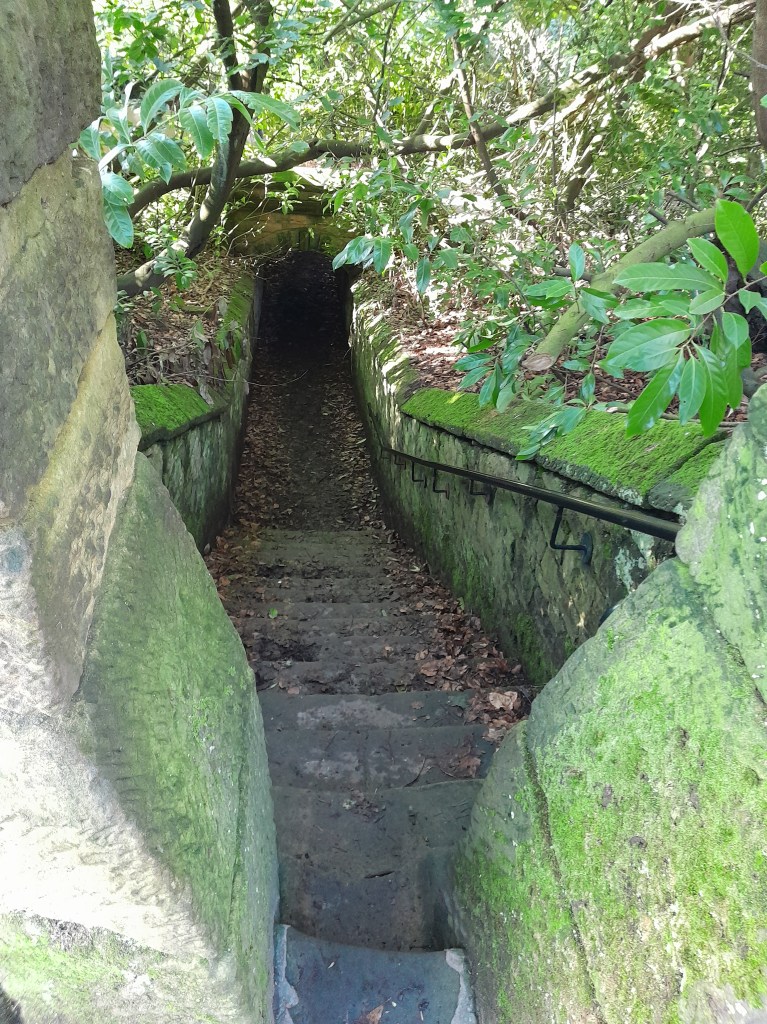
Looking down the steps at Eastwood Grange

Where did the route go to the east from Ashover? One likely possibility is the footpath which starts beside the Black Swan and runs up through the grounds of Eastwood Grange, today a school but which must have been built in Victorian times as a substantial private villa. The route (even if no longer used by packhorses) was clearly significant enough to be given a well-engineered stone-lined route through the gardens of the Grange, as can be seen above. Beyond this the path continues steeply up to the summit of Farhill, a popular viewpoint at 299 metres, from where Hardwick Hall, Chesterfield and Sheffield can be seen.

Highways and Byways in Derbyshire – a good read

My somewhat battered copy

Macmillan published the first book in their Highways and Byways series in 1898 and, remarkably, the last in 1948; a total of nearly 40 titles covering most of Britain. All are detailed guides with plentiful illustrations by respected illustrators. Well-bound in hard covers with gilt lettering, the series must have been popular as copies can still be bought quite cheaply from second-hand sources. The volume on Derbyshire was quite early, in 1905, written by JB Firth and illustrated by Nelly Erichsen, who was from a Danish family.

An inviting title page

The author, unusually, writes from the viewpoint of a walker, so that the reader can follow his progress in detail, which is especially interesting if the reader knows an area well. Clearly there are many changes to the scenery 120 years later; for instance at Ambergate then-triangular station: ‘the station becomes simply a hideous deformity, and the adjoining kilns of Bullbridge throw up fleecy masses of white clouded smoke’. In Edwardian fashion there are many digressions in the form of stories of famous folk who have lived locally, and Firth is not afraid of copious quotations of poetry, but these rather add to the book’s charm.

Another value of the book is the recording of otherwise lost data. For example, the footpath that runs uphill from Pentrich mill to Pentrich church (see map above) is today simply a field path. but in the 1900s was clearly more: ‘This broad track used to bear the name of Deadman’s Lane, not from any relics which have been found there but because by this way dead men were borne to their last resting place in Pentrich churchyard‘. Firth also says that higher up, near the church, the line of the Roman road, Ryknild Street, was still marked with hedges.

551 signs … and counting!

An early sign being restored

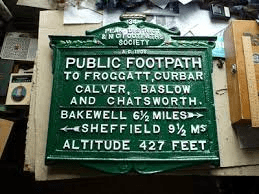
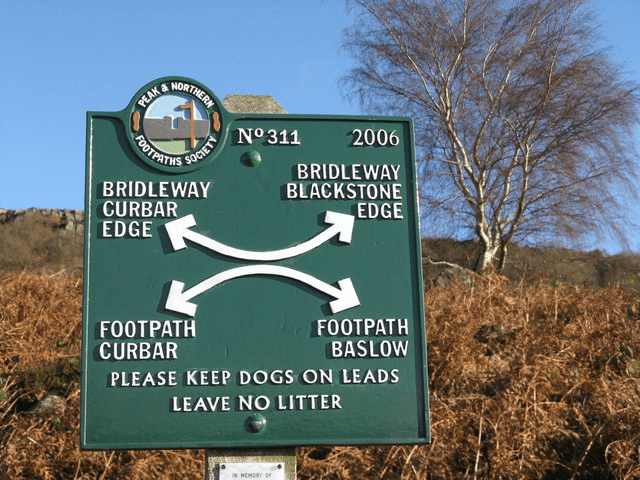
Have you ever found your footpath ploughed up, or a stile that would challenge a mountain goat? Help is available, thanks to one of Britain’s oldest societies for the protection of walkers’ rights. The Peak and Northern Footpaths Society was formed in 1894, but has its roots in an even older Manchester footpaths society dating back to 1826. Today, post-pandemic, the Society is stronger than ever, with about 1,300 members spread over Lancashire, Yorkshire, Derbyshire, Cheshire and nearby areas. Although it does organise regular walks on both sides of the Pennines it is far more than a walking club, liaising with local authorities on a range of issues, and most noticeably erecting signs throughout its region.

A more modern version

There’s something very reassuring for a walker who finds one of their signs at an uncertain crossroads, and currently there are 551, maintained by a dedicated team who also repaint them when necessary. In addition the Society has 172 footpath inspectors who are responsible for monitoring the paths in one or more parish. All these, as well as the staff at the Stocktport base, are volunteers, so that thousands of miles of paths, spread over five or more counties, are effectively kept open by the combined efforts of hundreds of unpaid people who share an enthusiasm for the right to walk freely.

Bridge at Kirklees partially funded by the PNFS

Quite recently the Society has also started helping to pay for footbridges at critical points on the footpath network. This is a recognition that local authorities, who are actually largely responsible for footpath maintenance, either can’t or won’t do their job. Although there are responsive councils, due to years of ‘efficiency savings’ rights-of-way staff have been repeatedly cut back, so that in this region we are lucky to have such a dedicated voluntary body doing part of the job for them!

There are many benefits to joining the Society, which only costs £15 a year for an individual, but perhaps the main one is the knowledge that you are contributing to the maintenance of one of our greatest unsung assets, our footpath network. See:

http://www.peakandnorthern.org.uk/membership/index.htm

Afoot with Karl Moritz

Karl the wanderer

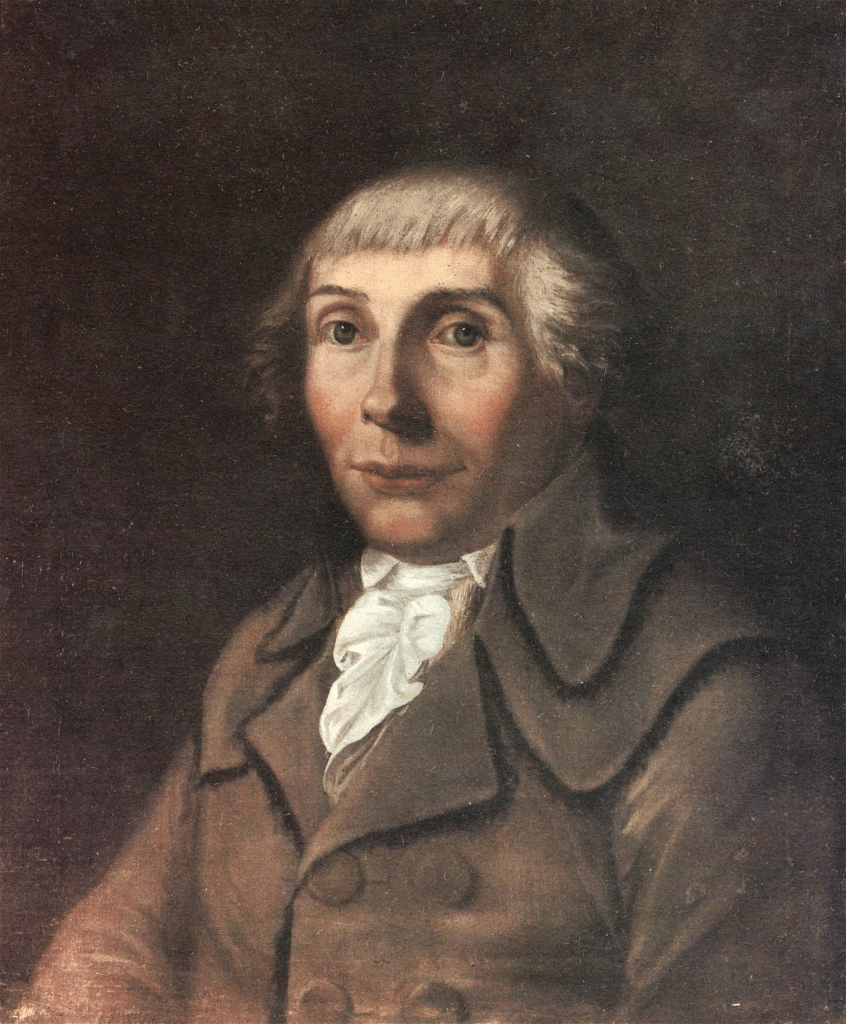
Karl Moritz was a prolific German writer who, in 1782, spent two months touring England, reaching as far north as Derbyshire. Clearly an adventurous character, what is especially striking is that he traveled on foot, when all but the poorest went on horseback. This gives his writings an unusual perspective, and his experiences, at a time when foreigners were rare in these parts, provide an interesting insight into the realities of travel in the late eighteenth century. Leaving Derby (‘a small, but not very considerable town’) he finds the village children very civil, bowing to him as he walked. In Duffield (‘a long and extensive village’) he is pleasantly surprised when, at the inn, he is shown into the parlour for a meal. This is in contrast to previous inns, where foot travellers were relegated to the kitchen.

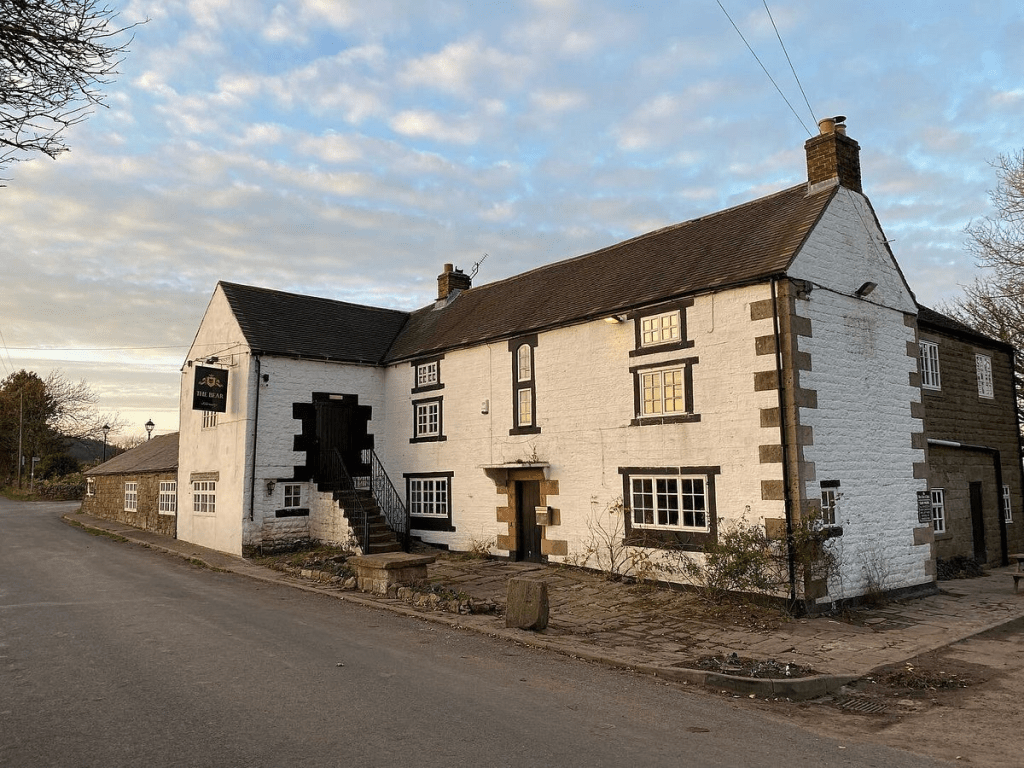
The Bear, Alderwasley, today

It is interesting to try to reconstruct his journey from Duffield to Matlock. The turnpike was a ridgeway through Belper Lane End and on to Bolehill and Cromford, and he speaks of staying the night at an inn ‘about five miles from Matlock’. This could have been the Bear at Alderwasley, which is shown on a map of 1761 as ‘Brown Bare’. Here he finds the kitchen full of boozy farmers, and as he accidentally fails to drink the landlord’s health he is sneered at for his ignorance. Naturally he was pleased to leave ‘this unfriendly roof’ the next morning and head for Matlock Bath, which produced the standard romantic reaction:

The situation of Matlock itself surpassed every idea I had formed of it. On the right were some elegant houses for the bathing company … to the left, deep in the bottom, there was a fine bold river, which was almost hid from the eye by a majestic arch formed by high trees, which hung over it.

Nineteenth-century painting of High Tor, Matlock

After seeing this ‘Paradise’ Matlock town was disappointing (‘scarcely deserves the name of a village, as it consists of but a few and miserable houses’). From there he walked to Bakewell, enjoying the scenery:

The whole country, in this part, is hilly and romantic. Often, my way led me, by small passes, over astonishing eminences, where, in the deep below me, I saw a few huts or cottages lying.

After passing through Ashford, en route to Wardlow, he fell into company with two other walkers, one being a talkative saddler. Karl was surprised to find that he could quote from classical authors such as Homer, reciting passages from memory. The saddler also warned him to avoid Wardlow and head for Tideswell instead, which would offer better lodging.

Moritz’s visit must have been partly inspired by Matlock’s early reputation for romantic scenery, and of course he would be followed by many more tourists in the next two centuries, eager to experience the wonders of the Peak.

Too many ways?

Section of the Portway below Robin Hood’s Stride, aka the Limestone Way

It took 30 years for the first national long-distance trail, the Pennine Way, to be opened. In 1935 an article by Tom Stephenson suggested the creation of the route, inspired by American models such as the Appalachian Trail, but it was not opened until 1965, after years of haggling with landowners such as the water companies. Today its 260-odd miles from Edale to just over the Scottish border are still a formidable challenge, but it has been joined by the development of many more such paths.

The Ecclesbourne Valley Express

The various long-distance paths in Derbyshire have been developed for different reasons. For instance, the relatively new Ecclesbourne Valley Way (11 miles) provides users of the Ecclesbourne Valley Railway with the chance to walk all or part of the route from Duffield to Wirksworth. The Limestone Way (46 miles from Castleton to Rocester) was set up by the local council to promote tourism in the area. The 55-mile Derwent Valley Heritage Way, from Ladybower to the Trent, was created for similar reasons, and to tie in with the World Heritage Site status of the valley. A glance at the Ordnance Survey map will reveal more (green diamonds on the 1:25,000 map), such as the Midshires Way, Peak Pilgrimage or the Cuckoo Way.

On the Portway at Alport Height

Most of the recently created routes link up existing rights of way and waymark the entire track. As such they provide walkers with an alternative to circular walks, although clearly sections can be followed separately. However, only the Derbyshire Portway (55 miles from Sneinton, Nottingham to the Snake Pass) can claim to follow the approximate route of an ancient trackway. The problem with some of these recent routes is a lack of maintenance. It is surprising how quickly signposts disappear, waymarks are hidden by foliage, and even field boundaries are removed. Attempting to walk the Midshires Way recently we found that in the centre of one large field near Palerow Lane the route makes a 90 degree turn, which we missed as there was no marking at all, yet I imagine that few walkers want to be glued to a walking app. Providing proper waymarking, stiles and undergrowth clearance on these routes would be a trivial expense, and would certainly encourage more people to take to the hills.

Dalesway

Onwards and upwards – bridge in Upper Wharfedale

I’ve just walked the Dalesway, an 80-mile route from Ilkley in Yorkshire to Bowness-on-Windermere in Cumbria. It took Rene and me seven days to walk the Way, averaging about 11 miles per day. Such a lengthy journey takes some organisation, because of the need to arrange overnight accommodation at the right intervals – not easy in the Pennines. But the experience – relatively unusual – gave me an insight into the lives of travellers in the pre-industrial world, who might be on the move for weeks, or even longer: people like drovers who would travel at the speed of their animals.

A break at Grassington

Walking in unknown country over long distances creates three main preoccupations. Firstly, am I on the right track? Getting lost is not just annoying, it also adds more miles to the day, and even with modern 1:25,000 maps and map apps it’s quite easily done! Secondly, travellers on foot need to concentrate on what’s under foot – boulders and bogs all need avoiding, and on some stretches this can demand your full concentration. Finally, you have to keep an eye open for threats, whether it’s a bad-tempered herd of bullocks or a menacing thunder cloud – and in the past these could have included footpads and robbers!

Railway viaduct at the head of Dentdale

As a result of all these, we found ourselves not just physically exhausted after a few days on the road but also mentally drained – rather surprising, as we had imagined that a trip like this would be quite relaxing! It certainly provides an insight into the historical experience, and fills me with admiration for the historic wayfarers strengths and resilience!

Love in the slow lane

The Long Engagement’ by Arthur Hughes (Birmingham Art Gallery)

Before the mid-twentieth century many homes were overcrowded, with a lack of privacy that would surprise younger people today. Furthermore, parents were often inclined to supervise their children’s indoor behaviour, so that most ‘courting’ took place out of doors, away from adult eyes. This applied equally to middle-class people: in the Hughes’ painting above a curate is meeting his fiancee in the woods, where ivy has grown over their initials carved into a tree, symbolising their lengthy enforced wait until he can afford to marry.

Path from Crich to Chadwick Nick

Most towns and villages would have had a ‘lovers’ lane’ where courting couples could find some privacy, as in the Crich footpath above, which still has boulders carved with sets of initials. Suitable venues would not be too far from habitation, nor the paths too rugged for girls dressed in their best! The situation is well-described by DH Lawrence, always an honest depictor of working-class life at the turn of the twentieth century, in ‘Sons and Lovers’, when Paul and Clara take the Clifton path by the River Trent:

He held her fast as he looked round. They were safe enough from all but the small, lonely cows over the river. He sunk his mouth on her throat, where he felt her heavy pulse beating under his lips. Everything was perfectly still. There was nothing in the afternoon but themselves.

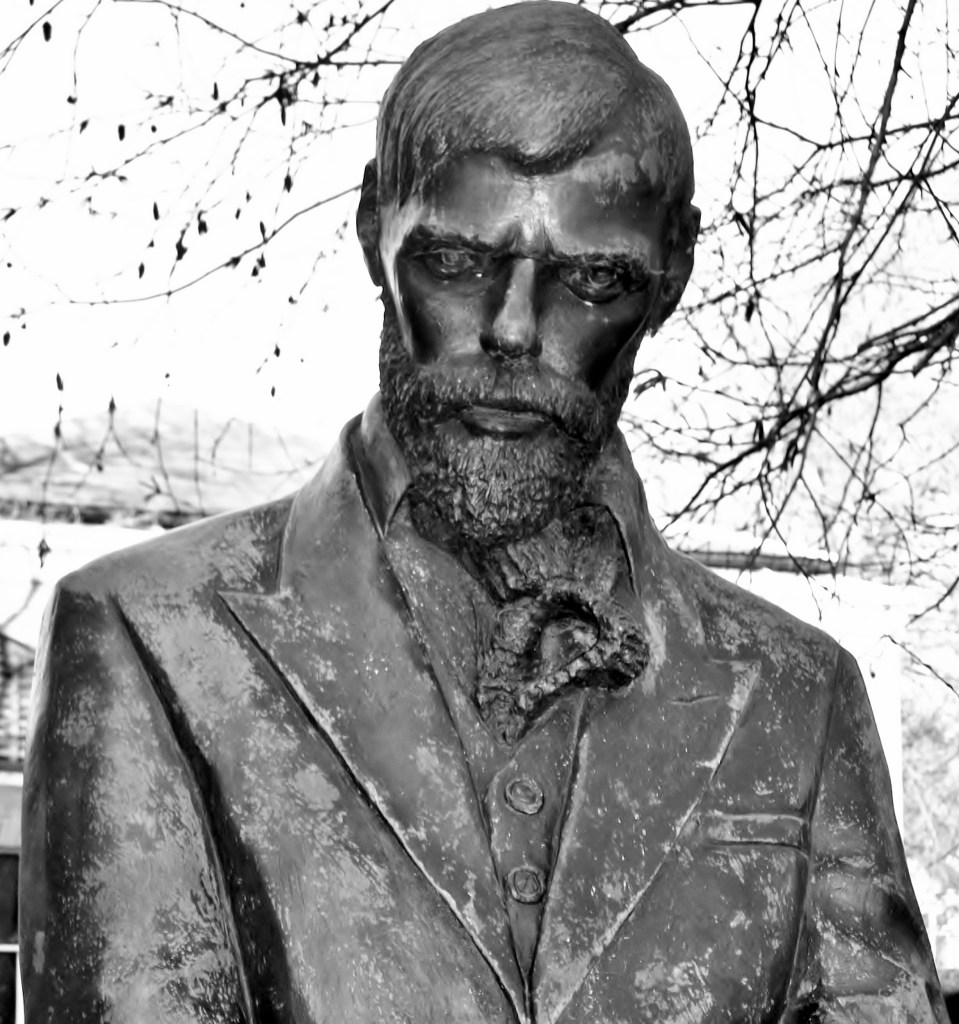
Statue of Lawrence at the University of Nottingham

Lawrence’s early stories and novels also give us a good idea of what were then acceptable distances for walking, either for work or pleasure. In 1905 public transport was limited and bicycles were only for wealthier people. On another occasion in ‘Sons and Lovers’ Paul and Clara are out in the hills after dark and she says that she needs to hurry back to the station to get the last train home to Nottingham. He says:

‘But you could easily walk it Clara, it’s only seven miles to the tram. I’ll come with you’.

It’s hard to imagine any contemporary lover thinking that an extra half hour with their darling was worth a two hour walk!