The Coldwall bridges

Bridging the counties

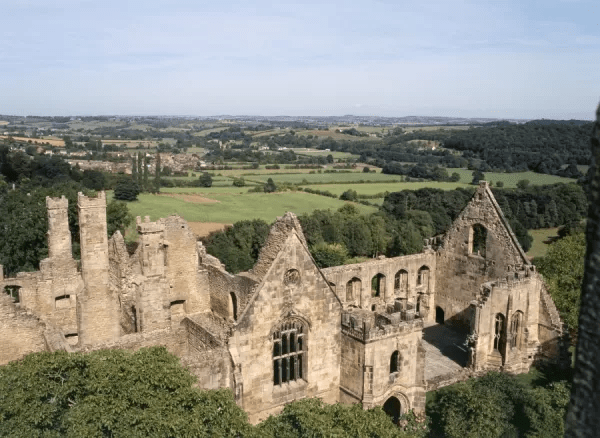
Only a mile from the honeypot of Dovedale are the impressive arches of Coldwall Bridge, a relic of a forgotten turnpike set up in 1762 linking Thorpe with Blythe Marsh. This fine stone structure is today only navigable by farm machinery, though only fifty years ago it was used by cars, a reminder of how quickly a route can become disused. Now it is part of the Limestone Way path, and crosses the River Dove, linking Derbyshire, to the east, with Staffordshire.

The track down from Thorpe

It is difficult to date bridges, since they have often been repeatedly modified, either due to flood damage or increased traffic. This bridge may have been a wooden structure in the sixteenth century, but was probably rebuilt in stone in about 1726 and later widened to its present form when it was incorporated into the turnpike system.

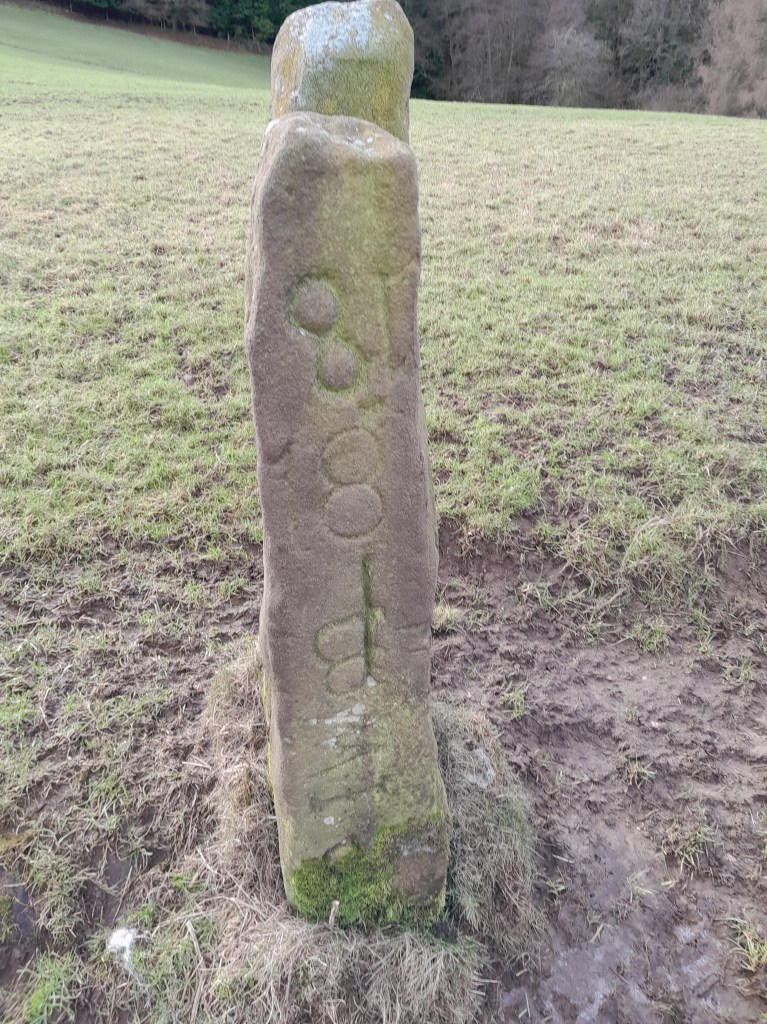
Milestone on the bridge

The bridge can be the focus of a circular walk, starting from the car park near Lady Low, then on the road to Blore, turning left at Blore Hall, and taking the field path to the left. From here there’s a steady descent to the bridge, which looks most impressive from above. At the bridge the walker can either follow the Manifold Trail to Ilam, staying on the Staffordshire side of the river, or for a longer walk, cross the bridge and follow the river path up to Dovedale, then behind the Izaak Walton Hotel to Ilam.

Our romantic royal captive?

The fashionably pale look

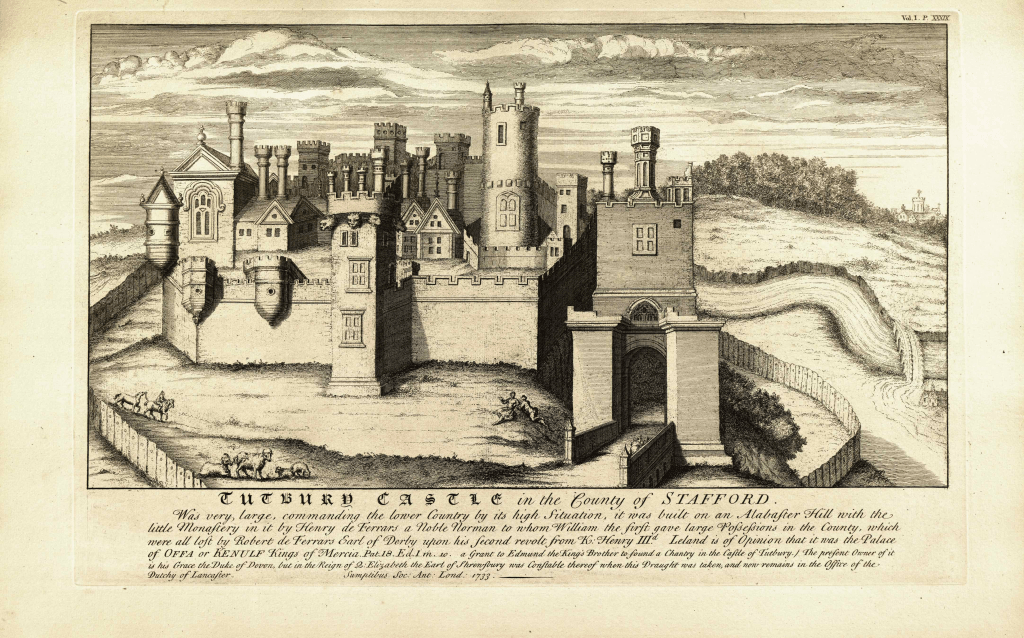
When Mary, Queen of Scots escaped from the rebellious Scottish lords in 1568 to find shelter in England, she could not have imagined that she would spend the next 18 years as a prisoner of her first cousin once removed, Queen Elizabeth. The Earl of Shrewsbury had the misfortune to be chosen as her jailer, and he found himself caught between Mary’s complaints about the quality of her prisons and Elizabeth’s (justified) suspicions of her cousin’s intentions. For most of her imprisonment she was kept at his houses and castles in Sheffield, Hardwick, Chatsworth, and Wingfield, with regular visits to Buxton, but initially she was confined in Tutbury Castle, just over the River Dove in Staffordshire.

As it was

Tutbury was seen as a suitable site, being sufficiently remote from both Scotland and the coast, and she arrived there in February 1569. She didn’t travel light, being accompanied by an entourage of 60, including doctors, ladies in waiting, chaplains and cooks, travelling from Yorkshire via Chesterfield and South Wingfield. You wonder how a small village was able to accommodate and feed so many, although it was common at the time to carry household items like sheets, pillows, and cooking utensils in carts from house to house. Shrewsbury was only allowed £45 a week to feed everyone, which added to his difficulties. In addition to complaining about the cold and the draughts, she also plotted with fellow Catholics to escape either to the Continent or Scotland, so he must have been relieved when he found reasons to cut back her followers and take her to the more convenient Chatsworth.

Wingfield Manor, looking into Nottinghamshire

Mary was moved from place to place during her confinement, including Wingfield Manor, until the exposure of the Babington Plot led to her trial and execution at Fotheringay Castle in 1586. The stress of being her gaoler may have contributed to the breakdown of the marriage of Bess of Hardwick with the Earl of Shrewsbury. Today Mary is still often portrayed as a romantic heroine, but it was her scheming that led to the brutal killing of her fellow plotters. Coincidentally, both Tutbury Castle, managed by the Duchy of Lancaster, and Wingfield, run by English Heritage, are both currently closed to the public on rather flimsy excuses, despite their importance in the national narrative.

Mystery stone

Any offers?

Walkers in the Peak District come across standing stones of various types. The banal gatepost often remains after a wall or hedge has disappeared, and can be identified by the hinge posts which were often fixed in their holes by molten lead. More ancient, crudely shaped stones appear to have been route markers (see previous blogs). Eighteenth century guide stoops are clearly distinguished by the names of the towns carved on each of the four sides. But the stone above, which I found just 100 metres off the Limestone Way, in between Harthill Moor Farm and Youlgreave, is none of these.

1888?

The stone is about four feet high and rectangular, with a square hole cut right through, and the suggestion that it might have been taller, with a piece broken off the top. The inscription is only on one of the narrow sides, and might be the date 1888. Lower down there appears to be a ‘W’. The parish boundary runs along a nearby stream (Bleakley Dike), which may offer a clue as stones were often used as boundary markers, though it’s still not clear why anyone would go to the trouble of cutting the hole. I’d be glad to see photos of anything similar, or suggestions about the function of this one!