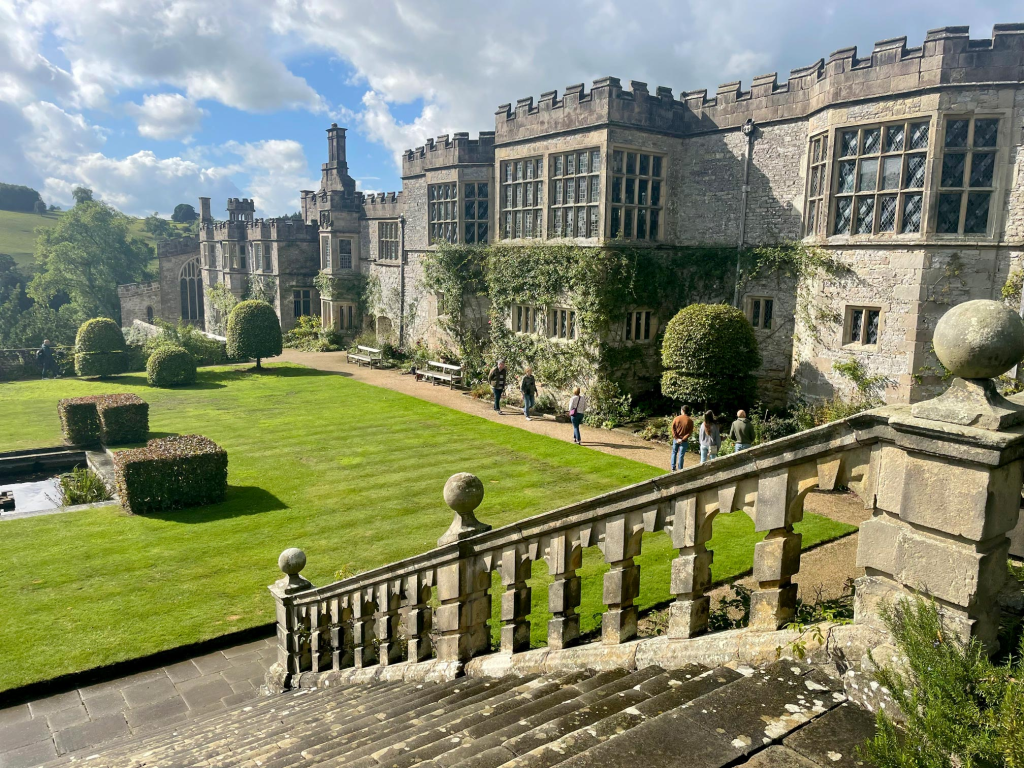
Comings and goings at Haddon

Desirable gentleman’s residence

Haddon Hall, near Bakewell on the River Wye is such a remarkably well-preserved late medieval house it has been irresistible to film makers. Firebrand, the story of Henry VIII and Katherine Parr, is currently on release, and previously Haddon has been the setting for two versions of Jane Eyre (involving burning the building down), Pride and Prejudice, and many others. In the mid-sixteenth century it was the home of Sir George Vernon (born 1503), whose steward kept an account book which gives us a glimpse of the network of transport links which sustained life in a great house at that time.

George Vernon at rest in Bakewell church

The accounts for the Christmas period 1564-5 include payments to entertainers as well as for food and drink. ‘The Earl of Worcester’s players, presumably a travelling theatre group, earned 14/3d (fourteen shillings and threepence), while ‘Wetton the minstrel and his fellows’ were paid over 30/- (nearly £600 in modern values). Hawkers must have been welcome visitors, since John Basford and ‘other hawkers’ were given a Christmas tip of 10/-. Drink was bought in huge quantities: the ‘tenants of Baslow’ were paid 12/3 for bringing a tun (supposed to be 250 gallons, but hard to believe this could be transported) of wine to the Hall, while a gallon of malmsey ‘for the cook’ cost only 2/-. Food was bought from various local markets, especially Chesterfield and Ashbourne, but also Lenton fair near Nottingham, and Derby. ‘Shoes for kitchen boys’ came from Bakewell (5/4), while 3 crannocks of salt cost 30/-, with carriage an extra 10/- (presumably carted from the ‘wiches’).
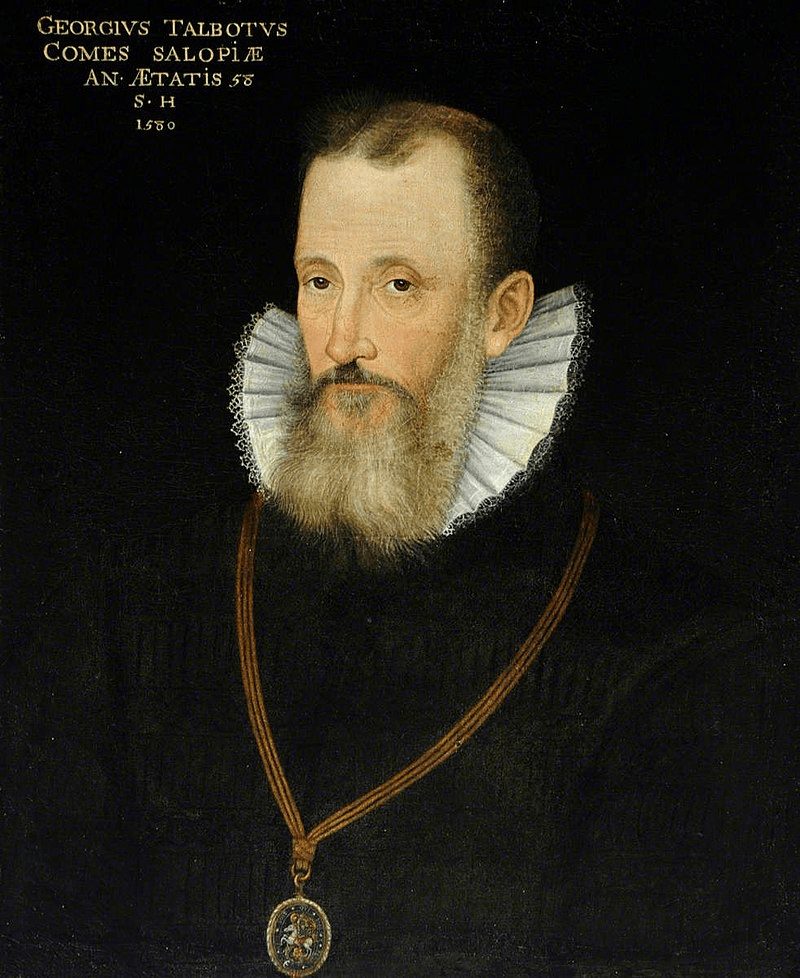
George Talbot, 6th Earl of Shrewsbury

The accounts also reveal regular travel between Haddon and Sheffield. ‘One of my mistress’s men’ was paid 2/- for carrying a letter to ‘my lord of Shrewsbury’ in Sheffield. At this time George Talbot was the Earl of Shrewsbury, who would soon (in 1567) marry Bess of Hardwick. On the 19th of September 1564 George Vernon had gone to Sheffield, presumably to visit Shrewsbury, and was provided with 10/- ‘to play at dice’. He must have gone with an entourage, since it cost 27/- to put them up in Sheffield for five nights. On the way home 4d was spent on ‘bread, cheese and drink’ for the men at Holmsfield, a village on a direct route from Sheffield to Haddon. Clearly a source like this raises as many questions as it answers, but nevertheless does give some fascinating insights into travel nearly 500 years ago.

Sources

Carrington, W. (1894) ‘Selections from the steward’s accounts preserved at Haddon Hall’. DAJ XVI pp 61-85

Hey, D. (2001) Packmen, Carriers and Packhorse Roads. Landmark pp 136-7

Driven by drovers

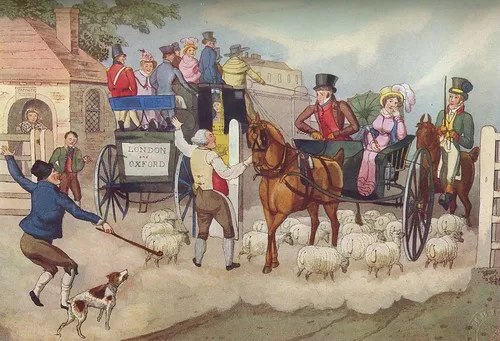
Well into the twentieth century herds of cattle or flocks of sheep were a common feature of rural roads. Even after the coming of the railways, farmers often had little alternative to walking their animals to and from markets. As towns such as Sheffield and Chesterfield grew, the demand for meat meant that beasts had to be walked from further afield. The major drove roads from Wales and Scotland to London passed around the Peak District, but within Derbyshire there was regular movement from upland grazing areas to the Derby and Nottingham markets.

Green lane near Minninglow

For more distant markets where better prices might be found, farmers entrusted their animals to a drover, a well-respected and licensed man who could take the animals to sale in good condition, and even more importantly, bring the cash home! Very few records of these men survive, but droving must have been a hard life, with a seasonal bent – busiest in the autumn when the grass stopped growing. A herd of a hundred cattle or more wouldn’t travel more than ten or twelve miles per day, and would have to be securely kept at night in a field with grazing and water. Drovers (and their essential dogs) would use the same routes regularly, and make arrangements with farmers and innkeepers en route, perhaps sleeping themselves in barns or outhouses. Identifying these routes today is difficult, but wide verges, such as can be seen in Minninglow lane above, may provide a clue, since the cows could have found some fodder on the hoof.

Bit of confusion

Drovers must have avoided turnpike roads where possible, not only to escape the tolls but also to save clashing with faster traffic. The foul state of the road surface after the passage of a hundred cattle can be imagined, especially in wet weather. The herds were not only taken directly to butchers, but were also driven to fairs such as Flash Fair above Beeley, which attracted buyers from a wide radius. One possible drove route identified by Dodd and Dodd runs from Hartington on the Staffordshire border to Biggin, Newhaven, Cardlemere Lane, Minninglow, Summer Lane near Wirksworth, Ambergate, Bullbridge and on to Nottingham. The first half of this provides a decent walk today, and is certainly more relaxing if you don’t have a hundred frisky bullocks to keep in order.

Sources:

Dodd and Dodd (1980) Peakland Roads and Trackways

Hey (2001) Packmen, Carriers and Packhorse Roads

On the road – in style

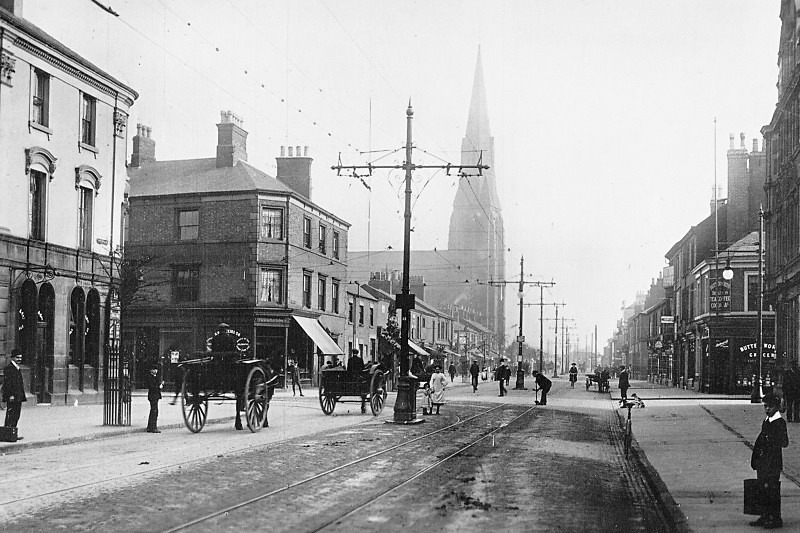
London Road, Derby in 1900

Although few people could have predicted it, in 1900 thousands of years of horse-drawn transport were coming to an end. Since the Bronze Age horses had provided the fastest means of movement, and thanks to better roads the range of vehicles increased dramatically in the nineteenth century, becoming more lightweight. For moving goods the two-wheeled tradesman’s cart, as seen above, was most common, but for personal transport there was a wide variety of choice. Many men and some women preferred the flexibility of riding, but for the elderly, or those who had never learned to ride, light, two-wheeled vehicles like gigs were an option in fine weather.

One lady owner

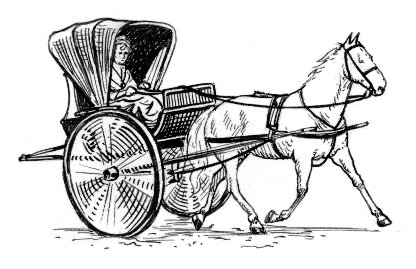
Readers of nineteenth-century novels may feel understandably confused by mention of phaetons, Broughams, Tilburys, Stanhopes, dogcarts and chaises. Clearly, only the wealthier classes could afford to keep any kind of carriage, as this would often mean stabling a horse and employing a driver. But there was considerable social prestige in keeping one’s own carriage, and savings could be made if the carriage could be driven by the owner and pulled by a single horse, such as with Tilburys, chaises and dogcarts.

A lightweight chaise, with folding hood

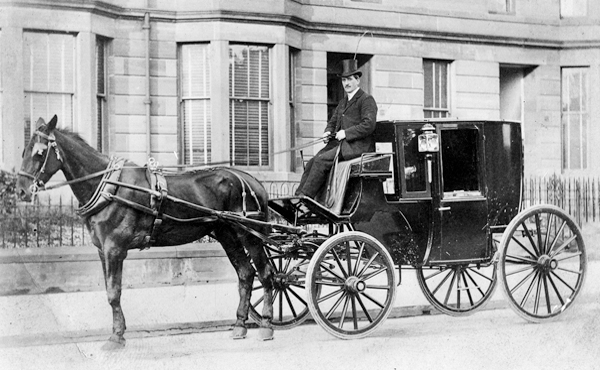
Richer folk could buy a four-wheeler which provided more protection from the weather but needed a pair of horses – an imposing status symbol. Examples include Clarences, Broughams and Victorias, the latter, of course, being the queen’s choice. No doubt she could afford the expense, which Charles Dickens in 1879 calculated at 45 guineas a month for keeping a two-horse carriage, including the coachman. In modern terms that is over £50,000 a year, which makes owning the flashiest car seem like a bargain!

A Brougham, named after a Lord Chancellor, Henry Brougham