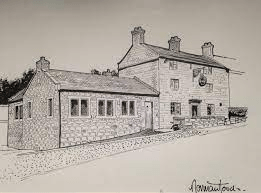
Goodbye to another pub?

The Jug and Glass at Lea Green, pictured above, is the latest in a long list of Derbyshire pubs that have closed in recent years. Just in the Matlock area these include the Lime Tree and the Crown in Matlock itself, the Jovial Dutchman and the King’s Head in Crich, the Yew Tree in Holloway, the Nelson at Bullbridge, the Derwent Hotel at Whatstandwell, the Homesford Cottage on the A6, the George and the Vaults in Wirksworth, and many more. So what accounts for this spectacular collapse of what is still seen as an important English institution?
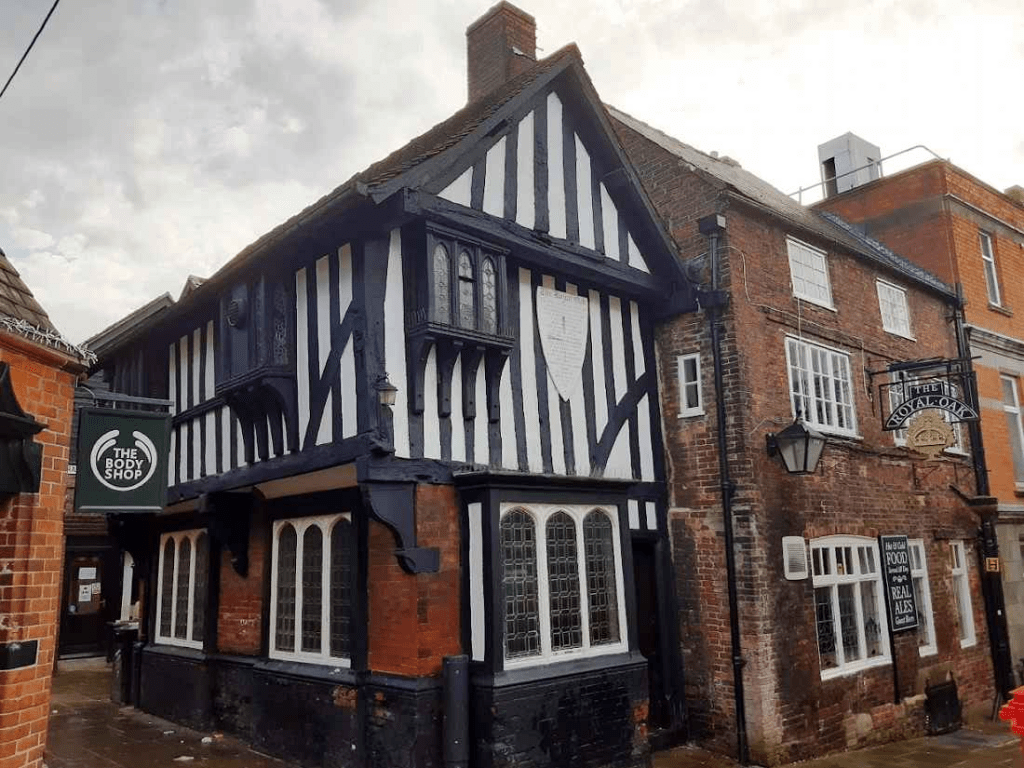
For sale in Chesterfield – The historic Royal Oak

Although pubs are now seen mainly as a community resource and valued for providing a meeting space for local clubs, inns (as opposed to alehouses) originally catered to travellers, and provided meals, beds and a change of horses, as well as drink and company. Inns must certainly date back to Chaucer’s time (c. 1370), since his pilgrims stay at the Tabard in Southwark, and are probably much older. But the arrival of railways reduced their importance, and drink drive legislation was a further blow. Today’s traveller is lucky to find any wayside pub or inn open, since so many have had to restrict their opening hours.
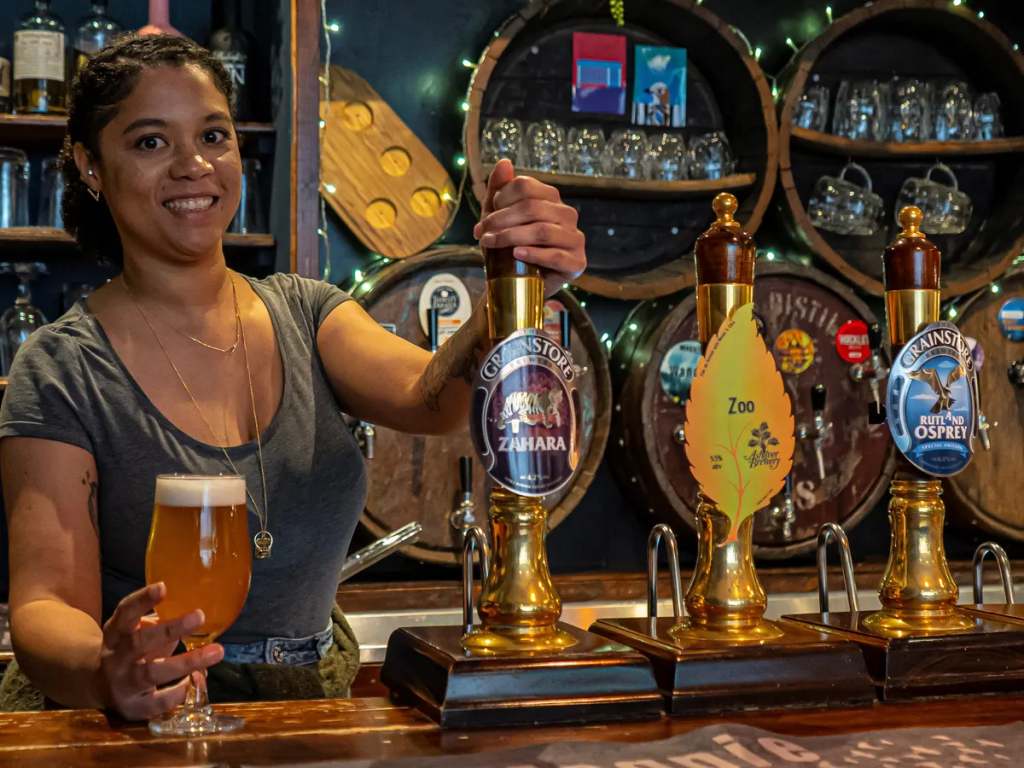
The classic look

There are many reasons for the recent decline in pub-going. The price of beer, pushing £5 a pint in places, and the shortage of staff willing to work unsocial hours, made worse by the folly of Brexit, all contribute. But perhaps the critical factor has been the reluctance of many to enter a communal space, which was exacerbated by the pandemic. ‘Pub’ stands for public house, which means a place where you can meet your neighbours on neutral ground. Yet it seems that more and more people prefer to drink in the safety of home, where the drinks are cheap, and there’s no danger of having to talk to a stranger.

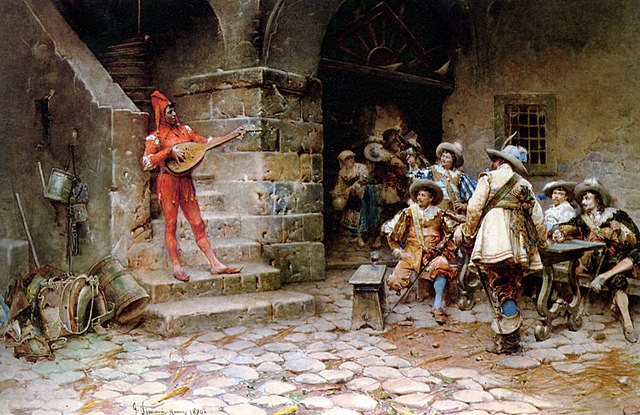
A wandering minstrel I …

There is plenty of evidence that minstrels travelled around the country in the Middle Ages, performing in halls and taverns, and at fairs. But very little is known of the material they performed for their audiences, whether lordly or peasant. Nor do we know how far afield they travelled. However, James Wade of Cambridge University has recently published an article which may provide some answers. He has studied a manuscript in the National Library of Scotland which dates from about 1480, known as the Heege Ms. It was written by a Richard Heege, presumably a native of Heage, near Belper, who was a tutor to the Sherbrooke family at Tibshelf. The manuscript consists of three pieces which might well have formed part of a minstrel’s repertoire.

The items recorded are mainly comical/ nonsensical: a poem called The Hunting of the Hare, a mock sermon, and a nonsense verse called The Battle of Brackonwet (thought to be Brackenfield). The style is clearly suited to oral performance and contains plenty of drinking references, which point to delivery at a feast or celebration: Christmas, a wedding, etc. The place names mentioned are Holbrook, Radford (near Nottingham), Brackenfield and Codnor, which suggest that the minstrel had a circuit or regular beat since all these places are within a couple of hours’ walk of each other.

It is hard to imagine how dull the long winter evenings must have been five hundred years ago, when even for the literate there was little reading material available, and certainly no internet! So the arrival of a minstrel must have been welcome, for both rich and poor. The material that Wade has studied was clearly intended for a mixed audience, since it satirises the behaviour of both landowners and peasants. Although this small collection of minstrel material cannot provide a full picture, it does allow us to imagine how a possibly part-time entertainer could amuse his audience with jokes about local communities behaving badly.

Source: James Wade, Entertainments from a Medieval Minstrel’s Repertoire Book, The Review of English Studies, 2023;, hgad053, https://doi.org/10.1093/res/hgad053