On the road with Joseph Andrews

Henry Fielding (1707-1754)

Many of the earliest novels were effectively ‘stories of the road’, their plots centred on the journeys their heroes were making – books such as Don Quixote and The Pilgrim’s Progress – while the form is still popular today e.g. The Lord of the Rings. This format provided the possibility of introducing a rich cast of characters and a variety of adventures, but also gives the modern reader an insight into travel at that period: naturally a dramatized picture but one that had some basis in reality. One of the best early ‘road novels’ is Joseph Andrews by Henry Fielding, published in 1742. Joseph, the hero, is a poor unworldly servant who flees the unwanted advances of his aristocratic mistress, Lady Booby, in London and sets off to visit his sweetheart, Fanny, in rural parts. He has only walked a few miles before he is robbed and stripped naked by a couple of heartless footpads, who throw his apparent corpse into a ditch.

Joseph resists temptation

Luckily for Joseph a stagecoach pulls up, but every single passenger rejects the idea of rescuing the injured man – the ladies on account of his nakedness – until a lawyer points out that if they don’t take him to an inn they are possible accomplices to his murder. Only the postillion is prepared to lend Joseph his greatcoat, which allows him to board the coach. The coachman takes the injured man to the nearest inn, the Dragon, where he gets a sympathetic welcome from Betty, the chambermaid, who prepares a bed, and Mr Tow-Wouse, the landlord. However, neither Mrs Tow-Wouse, nor the local surgeon, nor the parson are prepared to help Joseph; the landlady complaining bitterly of her husband’s kindness and moaning that Joseph should have gone to an ale-house (inns, of course, preferred customers from the gentry).

Ale-house or inn?

All this in the first few chapters, and there follow enjoyable satires on inn-keepers, surgeons and vicars, culminating in Mrs Tow-Wouse discovering her husband taking advantage of Betty’s good nature, and Betty’s rapid departure. Happily, Joseph meets an old friend and together they set off for more adventures en route to Fanny. None of this needs be taken to be a realistic portrayal of eighteenth-century travel, yet it does reflect popular fears and concerns about the perils of wayfaring.
Clegg’s travels

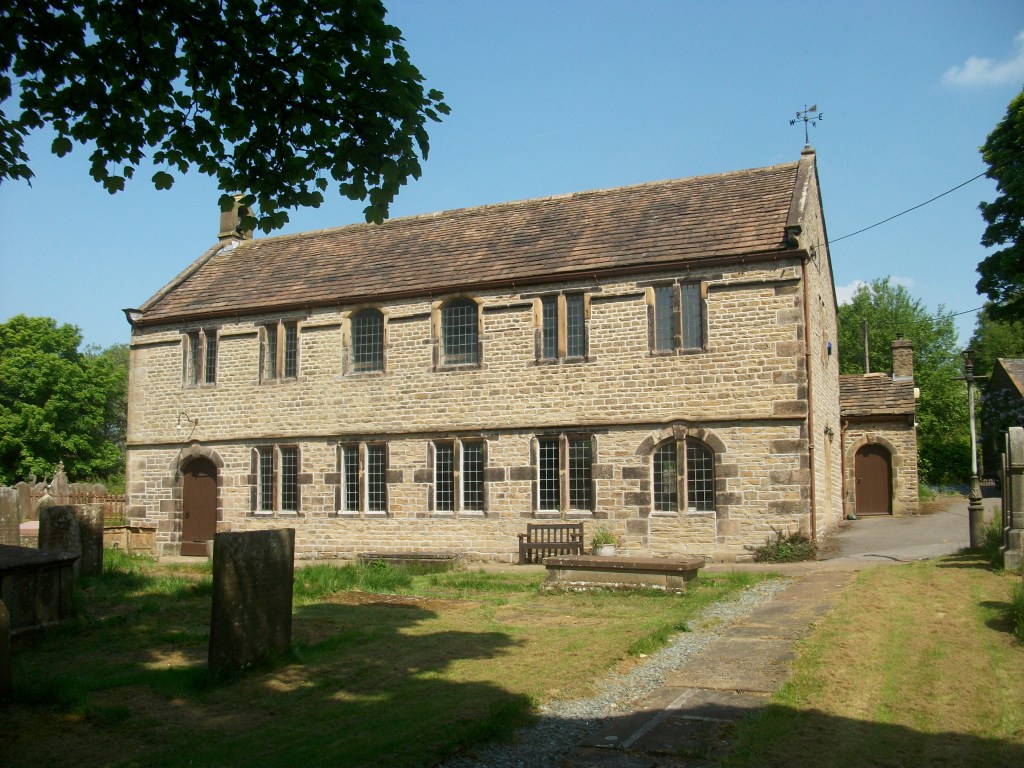
The chapel at Chinley today

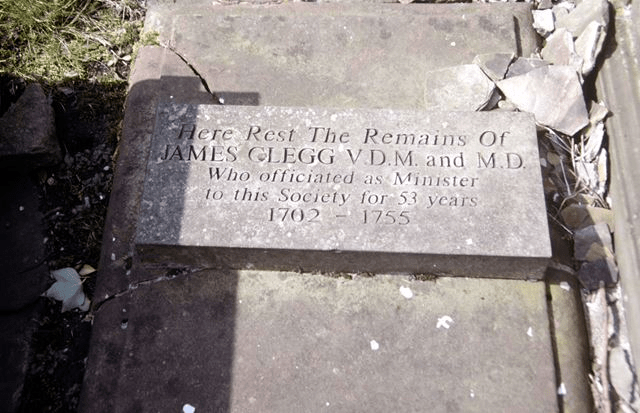
James Clegg (1679 -1755) was for many years a minister at Chinley Chapel, near Chapel-en-le-Frith in north Derbyshire. There are no surviving pictures of him, but we know more about his life than is usual thanks to his diary, which he kept from 1708 until his death. As it was frequently necessary at that time to have several ways of earning a living he also had a farm and trained as a doctor, a vocation which would have fitted in well with his spiritual duties. The record he kept of his journeys in the diary gives us a valuable picture of personal movement in the pre-turnpike era. He was originally from Lancashire, and family concerns caused visits to the Manchester area, as well as to Chesterfield to see his sister, but he also occasionally went to Lincolnshire, Nottingham and Derby, besides Macclesfield and Leek. In addition there were many shorter journeys for medical and religious reasons in the Chapel district.

Clegg’s tomb at Chinley Chapel

The longest journeys he made on horseback were just under thirty miles, and as the average speed of a rider at this time is thought to have been about four miles an hour (given the state of the roads) this journey would have meant seven hours in the saddle. An analysis of his travels in the first six months of 1730 shows that he rode about a thousand miles overall, with a noticeable increase as the days got longer, from 69 miles in January to 286 miles in May. Clegg rode his mare in all weathers, although he rarely mentions this except when extremely snowy. Occasional phrases in the diary remind us of the hazards of travel in the period:

… the night being very dark I narrowly escaped a dangerous fall into a stone pit which my mare jumped into’.

However, despite such episodes Clegg’s 76 years are a testament to his remarkable versatility and vigour.

Afoot with Karl Moritz

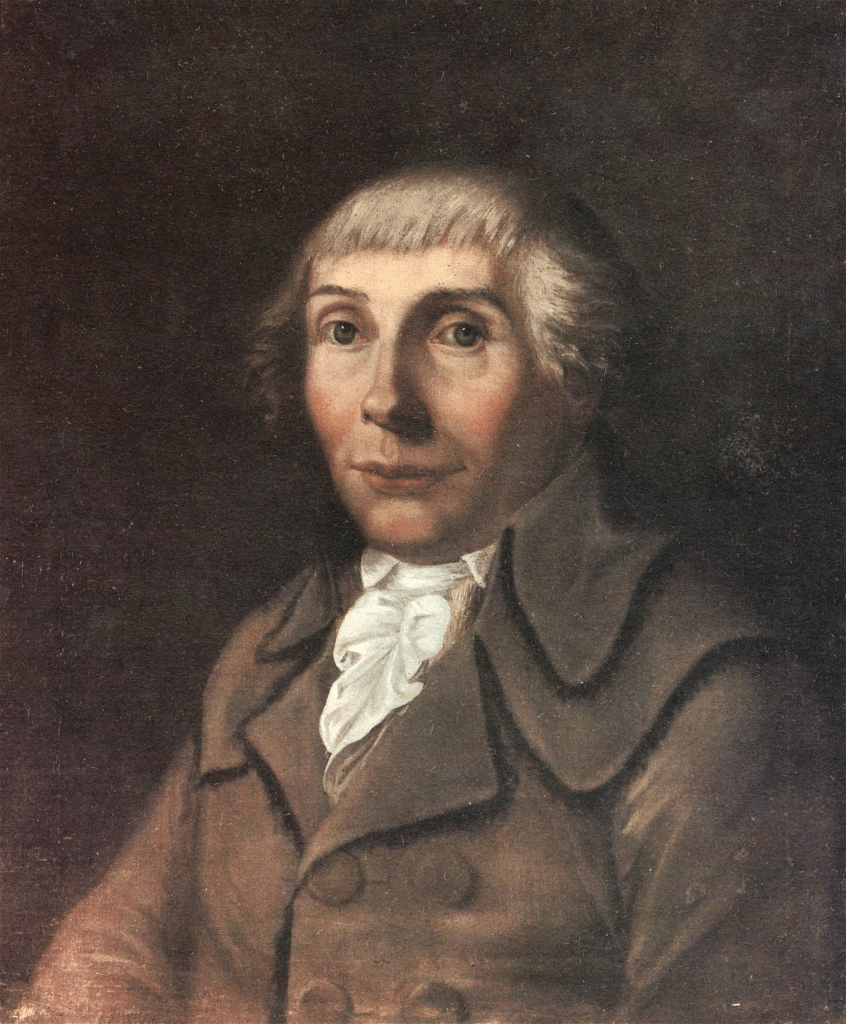
Karl the wanderer

Karl Moritz was a prolific German writer who, in 1782, spent two months touring England, reaching as far north as Derbyshire. Clearly an adventurous character, what is especially striking is that he traveled on foot, when all but the poorest went on horseback. This gives his writings an unusual perspective, and his experiences, at a time when foreigners were rare in these parts, provide an interesting insight into the realities of travel in the late eighteenth century. Leaving Derby (‘a small, but not very considerable town’) he finds the village children very civil, bowing to him as he walked. In Duffield (‘a long and extensive village’) he is pleasantly surprised when, at the inn, he is shown into the parlour for a meal. This is in contrast to previous inns, where foot travellers were relegated to the kitchen.

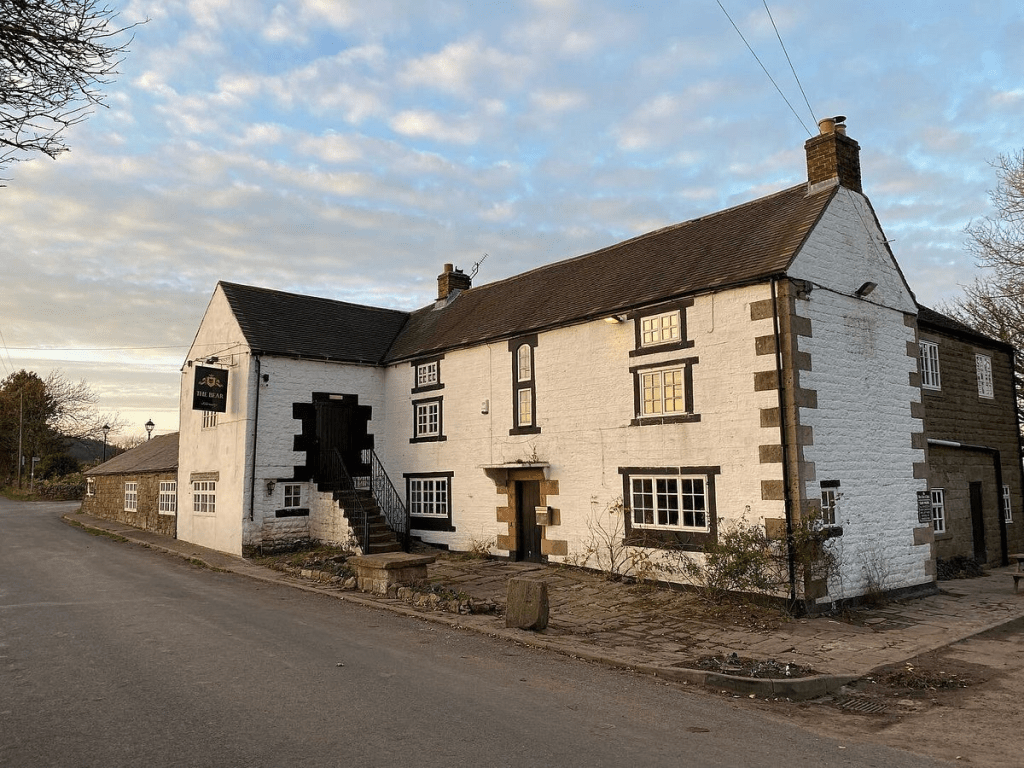
The Bear, Alderwasley, today

It is interesting to try to reconstruct his journey from Duffield to Matlock. The turnpike was a ridgeway through Belper Lane End and on to Bolehill and Cromford, and he speaks of staying the night at an inn ‘about five miles from Matlock’. This could have been the Bear at Alderwasley, which is shown on a map of 1761 as ‘Brown Bare’. Here he finds the kitchen full of boozy farmers, and as he accidentally fails to drink the landlord’s health he is sneered at for his ignorance. Naturally he was pleased to leave ‘this unfriendly roof’ the next morning and head for Matlock Bath, which produced the standard romantic reaction:

The situation of Matlock itself surpassed every idea I had formed of it. On the right were some elegant houses for the bathing company … to the left, deep in the bottom, there was a fine bold river, which was almost hid from the eye by a majestic arch formed by high trees, which hung over it.

Nineteenth-century painting of High Tor, Matlock

After seeing this ‘Paradise’ Matlock town was disappointing (‘scarcely deserves the name of a village, as it consists of but a few and miserable houses’). From there he walked to Bakewell, enjoying the scenery:

The whole country, in this part, is hilly and romantic. Often, my way led me, by small passes, over astonishing eminences, where, in the deep below me, I saw a few huts or cottages lying.

After passing through Ashford, en route to Wardlow, he fell into company with two other walkers, one being a talkative saddler. Karl was surprised to find that he could quote from classical authors such as Homer, reciting passages from memory. The saddler also warned him to avoid Wardlow and head for Tideswell instead, which would offer better lodging.

Moritz’s visit must have been partly inspired by Matlock’s early reputation for romantic scenery, and of course he would be followed by many more tourists in the next two centuries, eager to experience the wonders of the Peak.